
Every era of home design comes with its own set of trends that seem brilliant at the time — and cringe-worthy just a few years later. Some of these ideas swept through neighborhoods so fast that millions of homes ended up looking identical, dated, or just plain impractical. These are the design fads that quietly did more harm than good.
The Era That Broke American Home Design
Somewhere between 1995 and 2010, millions of homeowners looked at perfectly good walls and thought: you know what this needs? Tuscan yellow paint, a rooster border, and a faux-finish glaze on every surface. The result wasn't Mediterranean warmth — it was a kitchen that looked like a theme park gift shop had a yard sale. These are the trends that seemed brilliant at the time and now haunt every listing photo.
The worst part? Some of these are making a comeback. Knowing which ones to avoid the second time around might actually save your resale value — and your dignity.
All-White Interiors
White walls, white cabinets, white counters — designers sold this as 'timeless' somewhere around 2014 and homeowners spent billions chasing it. The problem nobody mentioned: white shows every fingerprint, every scuff, every shadow from bad lighting. The fix costs more than the original renovation. One specific detail that stings — Benjamin Moore's 'Simply White' was their best-selling color for six straight years.
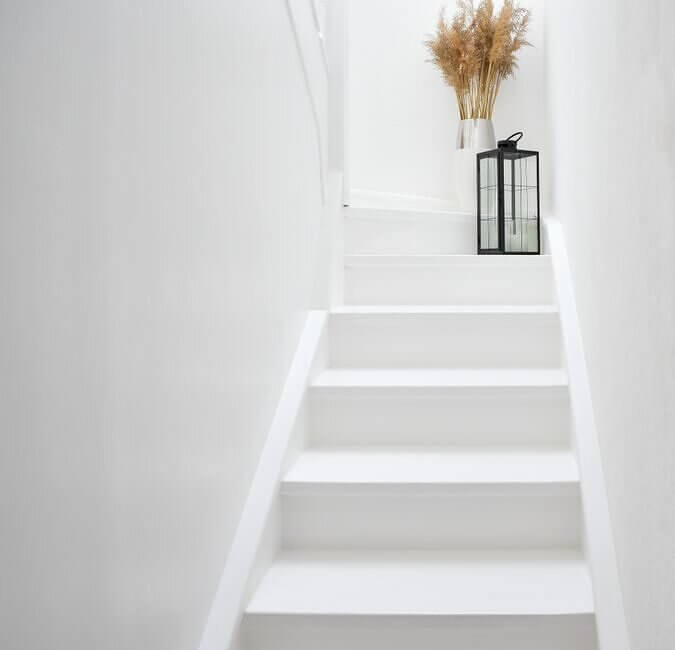
The real villain was whoever told people 'Simply White' was low-maintenance. It is not. It has never been. Your Instagram-worthy kitchen looked dated by 2019 and impossible to keep clean by 2020.
Barn Doors Inside
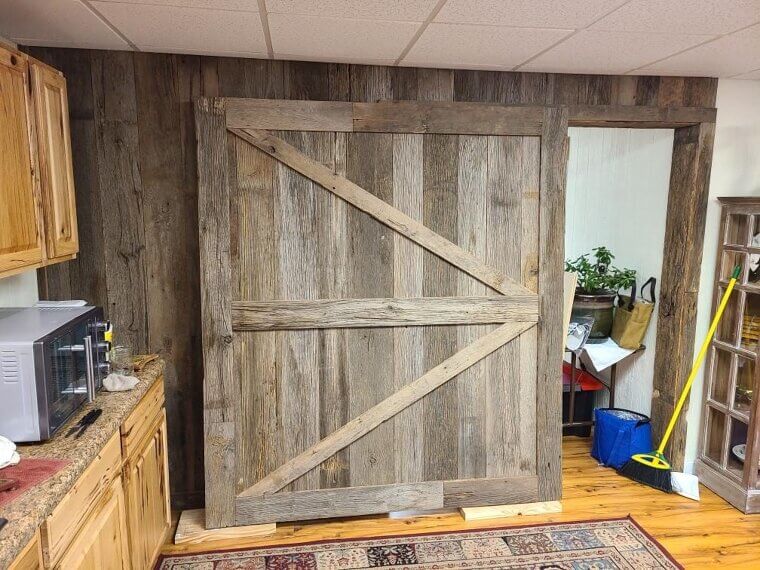
Barn doors look incredible in actual barns. Inside a 1,200-square-foot condo? They block light, they don't seal sound, and they require 5+ feet of clear wall space just to slide open. The fix most designers now recommend: a solid-core pocket door, which disappears into the wall entirely and actually closes. Barn doors peaked around 2015 — your bathroom deserves better.
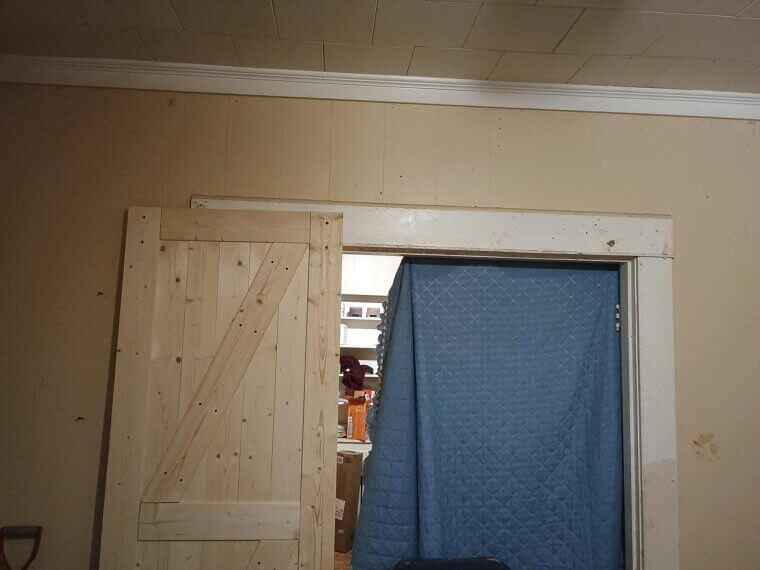
Also, if yours is covering a closet that already had perfectly functional bifold doors, that's a crime against storage space. Next up: the flooring choice that aged even faster.
Vessel Sinks
Vessel sinks peaked around 2005 and somehow never left. The problem isn't just that they look dated — it's that a bowl sitting on top of a counter forces the faucet height up, which means water hits the basin wrong and splashes everywhere. Fix it by swapping to an undermount with a standard 8-inch faucet. Your countertop suddenly looks twice as expensive.
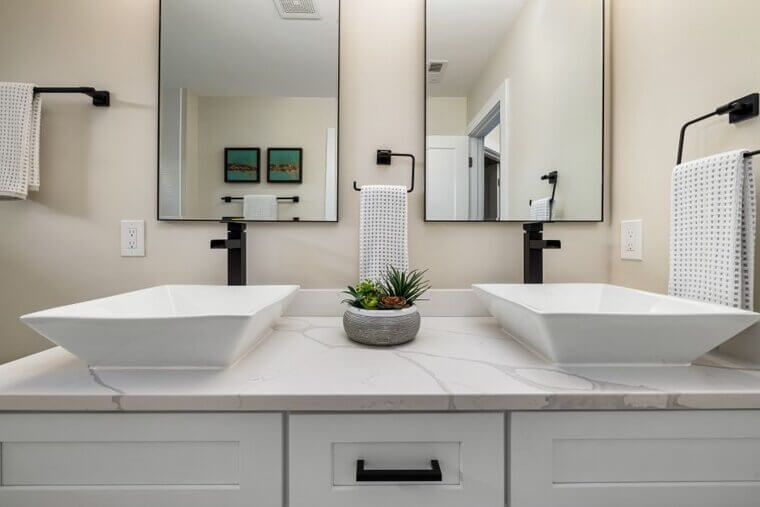
Bonus: undermount sinks are dramatically easier to clean. No caulk seam collecting black mold around the base. Next up is the trend that ruined more kitchens than vessel sinks ever dreamed of.
Open Kitchen Shelves
Open kitchen shelves looked incredible in the Magnolia Network photoshoot and lasted about three weeks in real life. The problem isn't the shelves — it's the grease. Kitchens produce airborne oil mist constantly, and it coats everything within six feet. Your artfully stacked white bowls become sticky dust magnets by month two. The fix most designers skip: limit open shelving to one low-traffic zone, far from the stove.
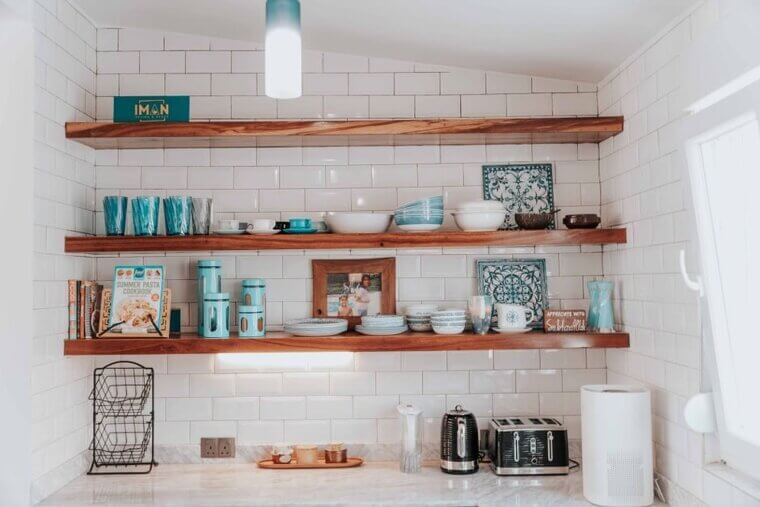
If your shelves are within splatter range of the burners, you're not decorating — you're just building a harder-to-clean cabinet. The trend that made living rooms feel like a Restoration Hardware catalog — and just as impossible to actually live in — is coming up next.
Grey Everything
Grey took over around 2012 and didn't stop. Grey walls, grey floors, grey cabinets, grey countertops — entire homes where the only color was the family dog. The fix is easier than a full repaint: swap out one textile layer (throw pillows, a rug, curtains) in a warm terracotta or sage. Your eyes will thank you within 48 hours.
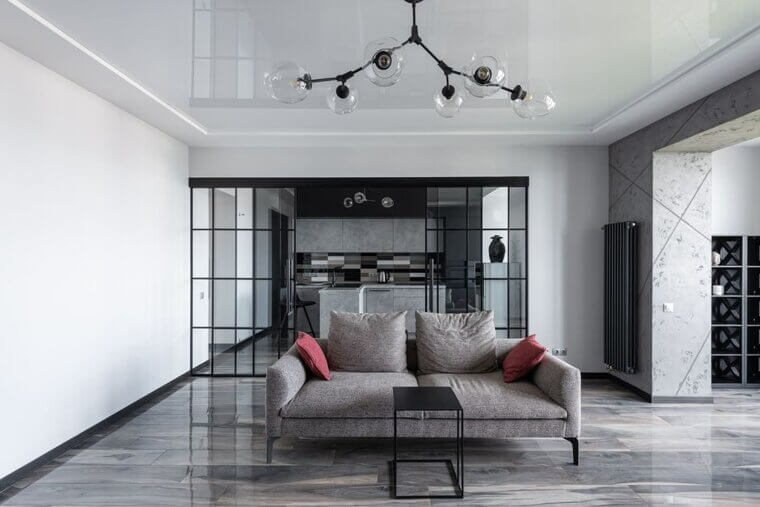
The wild part? Grey paint was marketed as 'timeless.' Realtors are now actively flagging all-grey interiors as a selling obstacle. The bathroom fixture trend coming up makes grey walls look subtle by comparison.
Faux Wood Ceiling Beams
Faux wood ceiling beams — hollow polyurethane shells painted to look like structural timber — peaked in the mid-2000s as a shortcut to 'rustic character.' The problem is proportion. Real structural beams are massive because they're holding something up. These decorative versions are four inches wide and hang from the ceiling like oversized pool noodles. One dead giveaway: tap them. The hollow knock is audible from across the room.
Sellers have started removing them before listing because buyers immediately ask 'are those real?' — and the answer tanks the perceived quality of everything else in the room.
Industrial Everything
Exposed pipes, raw concrete, Edison bulbs, and steel shelving looked incredible in a converted Brooklyn warehouse circa 2014. In an actual home? You've essentially paid a contractor to make your house look unfinished. The worst offenders went full commitment — ripping out warm wood cabinets, plastering over brick, then installing fake brick wallpaper to get the look back.
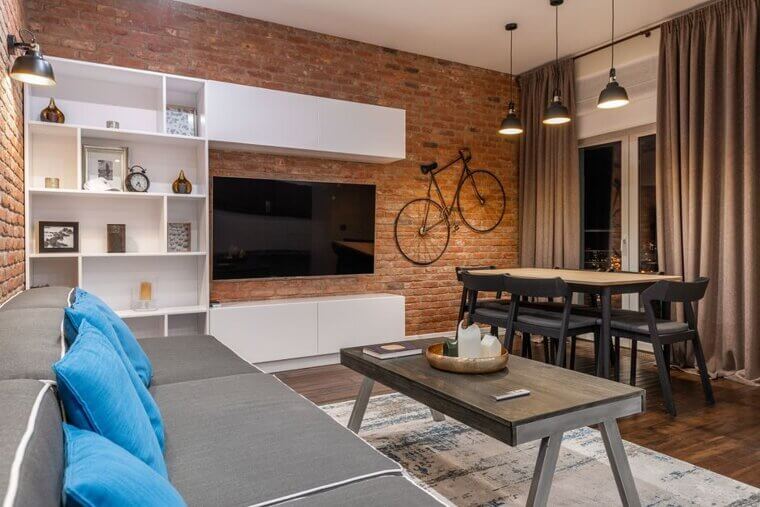
Cold floors, echo acoustics, and zero softness anywhere. Your living room shouldn't feel like a place where someone processes meat. Next up: the color that ate entire neighborhoods.
Faux Brick Panels
Faux brick panels were sold as the 'all the charm, none of the work' shortcut — and homeowners bought it hard through the 1970s and 80s. The problem is that real brick has depth, variation, and shadow. These panels have exactly one shadow, printed at the factory, pointing the same direction in every single room. Your eye catches it immediately, even if your brain takes a second to name why something feels off.
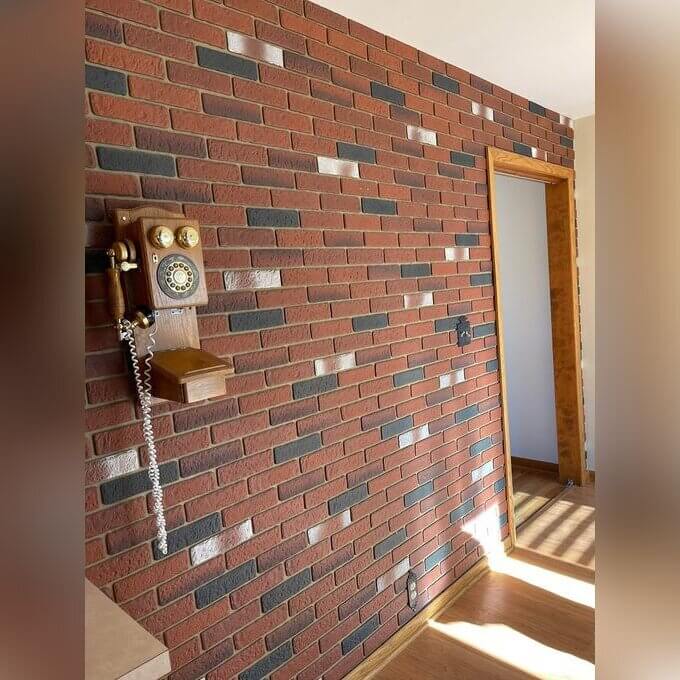
Removing them usually reveals perfectly good drywall underneath, which makes it even sadder. Up next: the furniture trend that charged you premium prices for damage that wasn't even real.
Excessive Shiplap
Shiplap peaked around 2015 when Chip and Joanna Gaines turned it into a religion on HGTV's Fixer Upper. The fix for every bland wall, apparently. But somewhere between 'one accent wall' and 'every surface in the house,' people lost the plot. Real shiplap is a structural material — it belongs in barns. Your living room isn't a barn. One wall, max. Painted white on white makes it disappear entirely, which defeats the whole point.
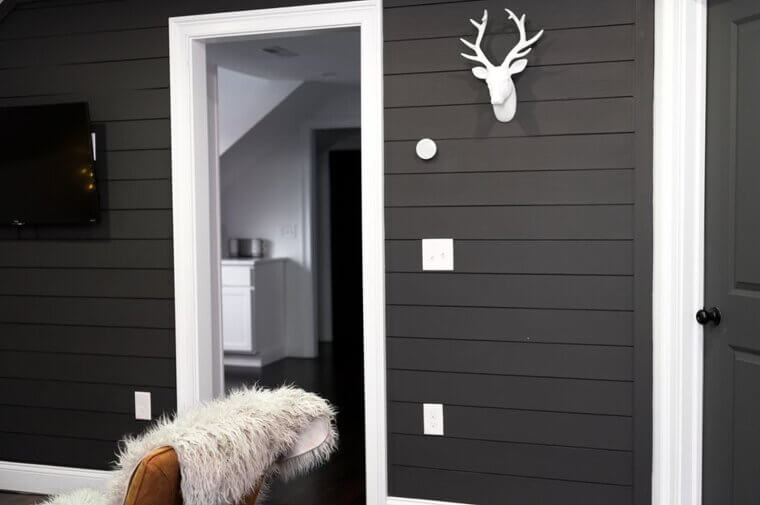
If your home has shiplap in the kitchen, bathroom, AND bedroom, that's not a design choice — that's a Joanna Gaines hostage situation. Up next: the matching furniture set that turned every living room into a showroom floor.
Matching Furniture Sets
Furniture stores love selling you the matching set because it's easy — one decision, done. But a sofa, loveseat, coffee table, and entertainment center all wearing the same fabric and finish don't say 'designed.' They say 'showroom floor.' Interior designers call this the 'furniture suite trap.' The fix is deceptively simple: buy your sofa and your chairs from completely different places.
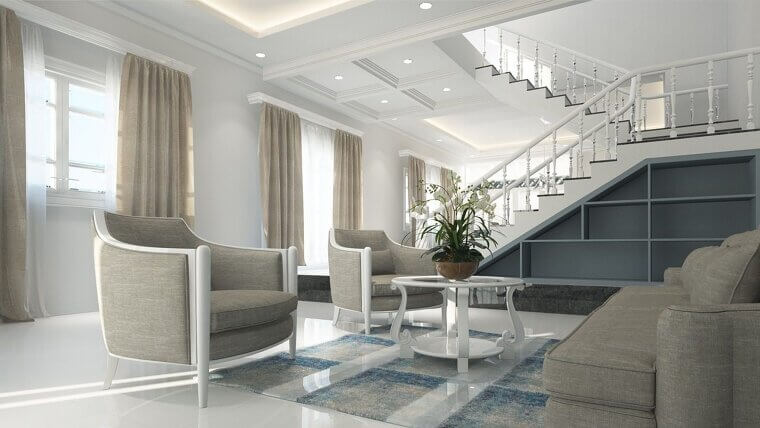
Even swapping one piece — a vintage side table, a different-toned accent chair — breaks the catalog look instantly. Up next: the wall decor trend that made motivational posters look tasteful by comparison.
Wall Decals With Cheesy Quotes
Somewhere around 2009, every kitchen in America acquired the word 'GATHER' in a rustic font, and every bathroom got 'Soak. Relax. Unwind.' as if the toilet needed a mission statement. Wall decals felt like decorating without commitment — peel, stick, done. The problem is they aged like milk, yellowing at the edges and peeling at the corners within two years, leaving ghost outlines that screamed 'a choice was made here.'

The fix is a single coat of paint, which costs $40 and takes an afternoon. The specific detail: 'Live Laugh Love' resale homes sell for 1.5% less on average, according to Zillow's own data. Next up: the flooring trend that's somehow still spreading.
Themed Rooms
A pirate bedroom sounds fun until your kid turns 12 and suddenly hates everything about it — including you for building it. Themed rooms lock you into a single moment in time, and repainting isn't enough when you've got a ship's wheel bolted to the wall and a porthole window that cost $800 to install. The fix isn't avoiding themes entirely. It's keeping them in the textiles, not the architecture.
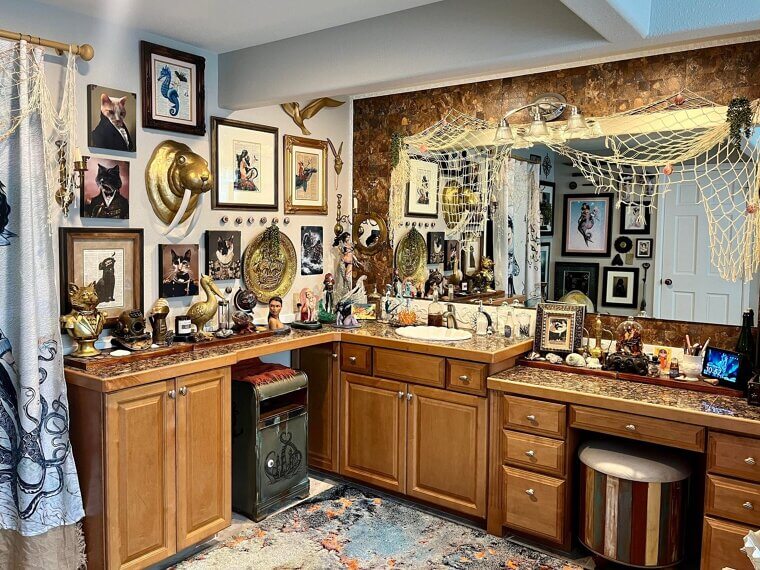
Murals, built-in bunk beds shaped like castles, custom ceiling beams — all permanent. All expensive to undo. The next trend on this list somehow managed to ruin rooms that weren't even themed.
Tiny Tiles Everywhere
Tiny mosaic tiles — the 1x1 inch kind — peaked around 2008 and somehow ended up in every bathroom remodel for the next decade. The grout lines alone multiply your cleaning surface by about 400%. One designer estimated a standard shower surround in tiny tiles has over 2,000 grout joints. Larger format tiles (12x24 or bigger) cut that number dramatically and actually make small rooms look bigger, not smaller.
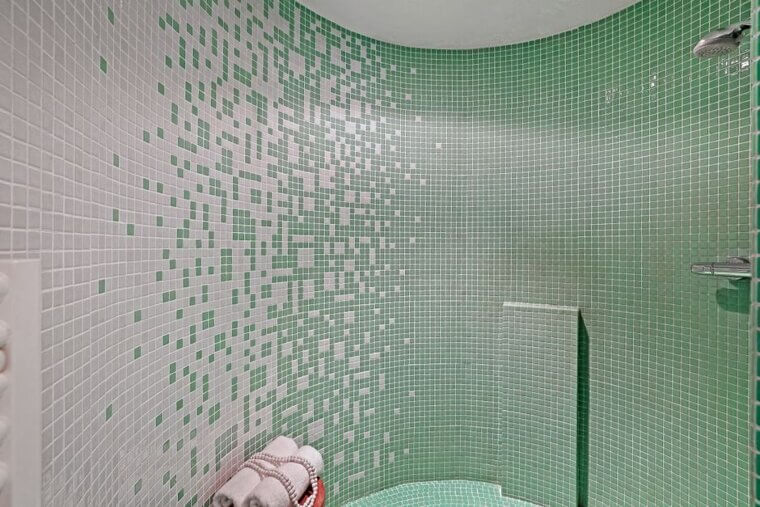
The cruel irony: people chose tiny tiles to add 'texture and interest,' then spent every Sunday with a grout brush regretting that decision. Next up is somehow even worse.
Sunken Living Rooms
Sunken living rooms peaked in the 1970s, and interior designers have spent fifty years trying to undo the damage. The concept sounds luxurious — a cozy conversation pit, a few steps down, very James Bond villain. The reality is a sprained ankle waiting to happen, a furniture arrangement nightmare, and a resale liability that makes buyers visibly flinch during open houses.
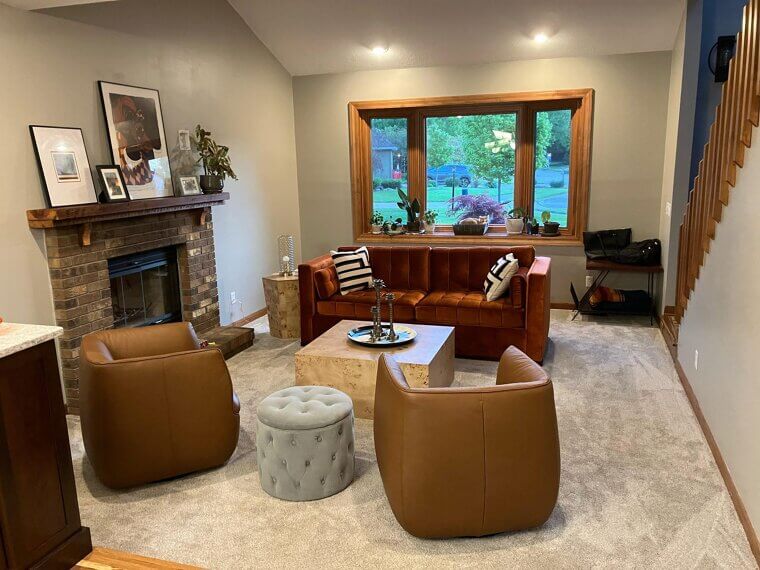
Contractors report that filling one in correctly — not just slapping plywood over it — runs $10,000 to $30,000. The next trend on this list was somehow even more expensive to fix.
Overdone Accent Walls
An accent wall works when one wall genuinely deserves attention — a fireplace surround, an architectural niche, something the room already points toward. The trend went sideways when people started painting random walls in 'Tricorn Black' or gluing reclaimed wood to whatever surface was closest. Now the room doesn't have a focal point. It has a wall that's trying too hard and three others that look embarrassed.
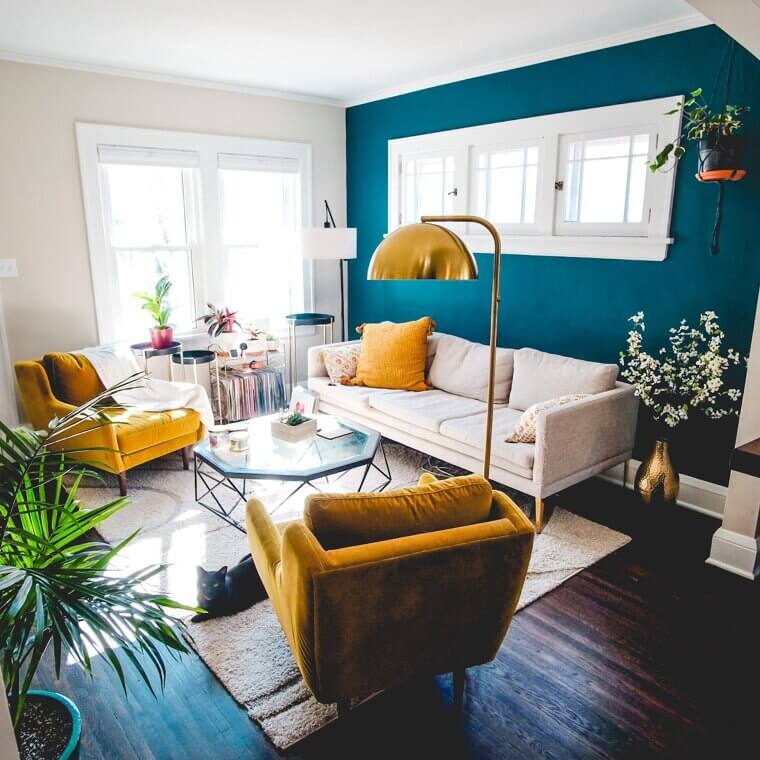
Fix: pick the wall your eye naturally lands on when you walk in. If you have to think about it, that's not the wall. Up next: the mantel with no fireplace behind it — somehow even more confusing.
Fake Fireplace Mantels
A fireplace mantel with no fireplace behind it is basically a picture frame for a wall. Builders started installing these hollow boxes in the early 2000s to add 'character' without the cost of actual fireplaces — and somehow it worked, briefly. The fix is brutally simple: remove it entirely or commit fully with an electric insert. A floating shelf does the same decorative job without the existential confusion.
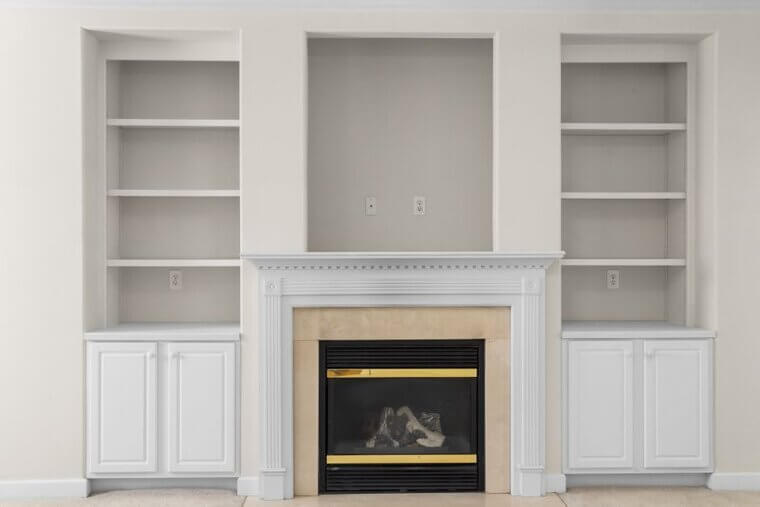
Nothing says 'we ran out of budget' quite like a mantel framing a blank wall. Up next: the floor plan that promised freedom and delivered a house where you can hear everything.
Open Floor Plans
Open floor plans promised a breezy, connected home — and delivered a living room that smells like last night's salmon at 9am. The fix most designers now recommend: a partial wall or kitchen peninsula that creates visual separation without closing things off. Specific detail that matters: even 42 inches of countertop barrier drops perceived cooking odor spread by a measurable amount. Your nose will thank you.
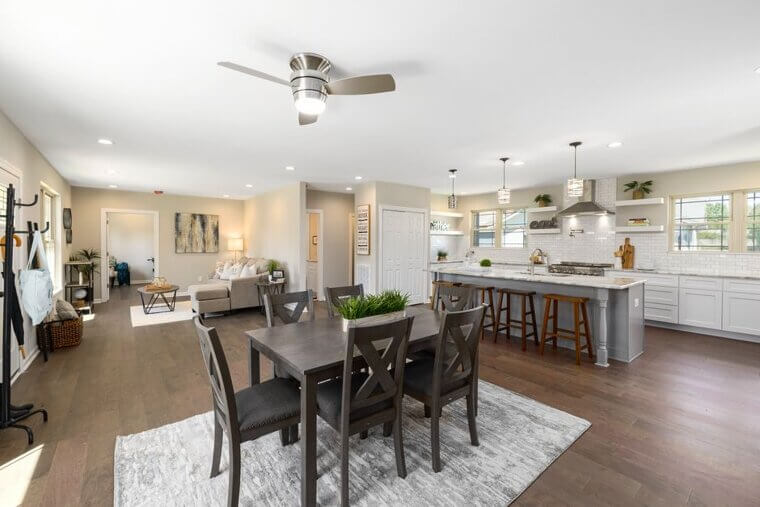
The irony? 'Open concept' became the selling point that's now quietly tanking resale appeal in markets where buyers want actual rooms again. Next slide hits different.
Mirrored Closet Doors
Mirrored closet doors peaked in the 1980s and somehow never got the memo that the decade ended. The fix is easier than you think: peel-and-stick frosted film (about $25 on Amazon) covers the mirror without a single screw. Or swap the whole panel for a bifold door with wood slats — IKEA's PAX system runs under $200 and immediately reads as intentional rather than leftover.
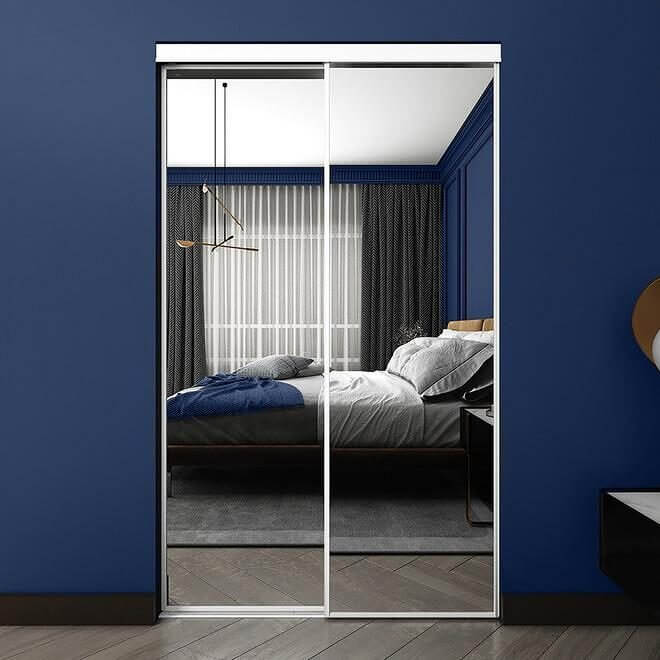
The wild part? Builders were still installing these in new construction through the mid-2000s. Check the guest bedroom — there's a solid chance one's hiding back there right now.
Glass Block Walls
Glass block walls peaked in the late '80s and refused to leave quietly — they were still showing up in new construction well into the 2000s. The fix most homeowners reach for is a full demo, but that's load-bearing overkill in many cases. Swap the blocks for a steel-framed frosted glass panel and you keep the privacy, ditch the dated grid, and actually gain light transmission.
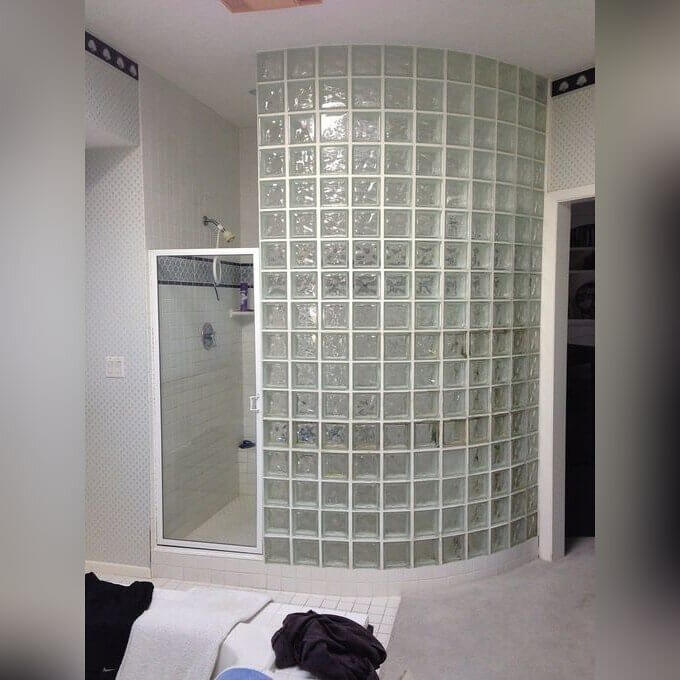
The grid pattern is the real villain here — frosted glass does the same job without making your bathroom look like a municipal swimming facility. Next up: the trend that ate entire living room walls.
Overuse of Wallpaper
Wallpaper isn't the villain here — scale is. One accent wall in a dining room? Genuinely beautiful. Wallpaper on all four walls, the ceiling, AND the built-in shelving? You've accidentally recreated a Victorian asylum. The pattern-on-pattern effect tricks your eye into thinking the room is smaller, and once you notice it, you can't unsee it. Strip one wall and the whole space exhales.
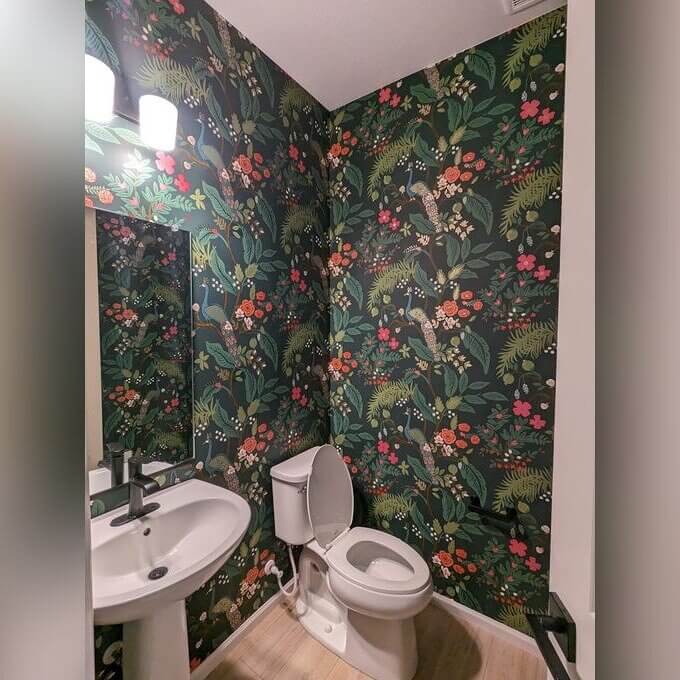
The ceiling is where wallpaper goes to die. If yours is currently papered in a floral print, that's the first thing buyers clock — and the first thing they subtract from their offer. The bathroom fixture coming up makes wallpaper look like a minor offense.
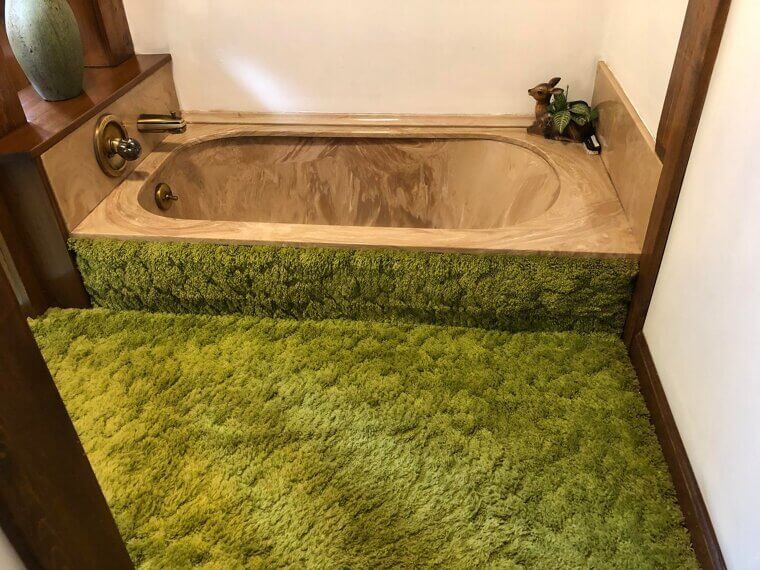
Carpeted Bathrooms
Carpeted bathrooms peaked in the 1970s, and somehow survived into the '90s in millions of American homes. The pitch made sense on paper — warmth underfoot, softer landings. The reality: a wet mat that never fully dries, absorbing everything a bathroom produces. Mold sets in within months, usually underneath where you can't see it. Ripping it out almost always reveals tile that's in surprisingly decent shape.
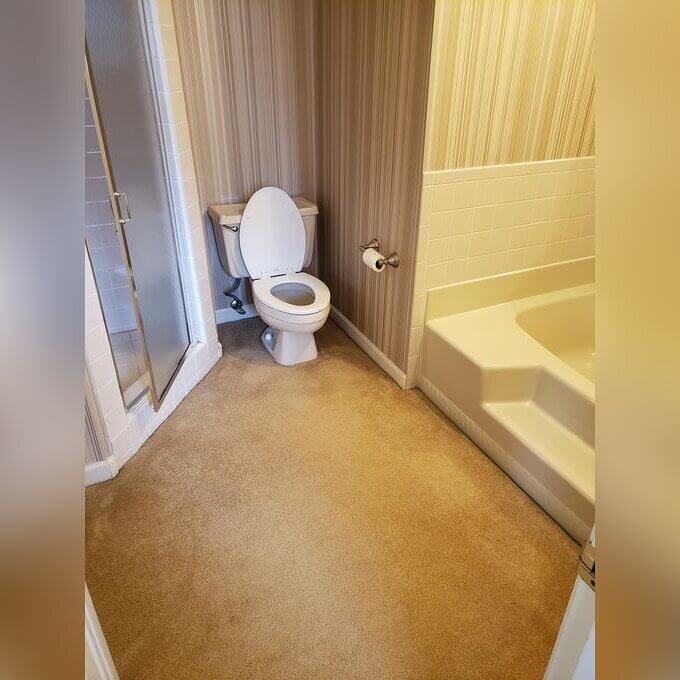
If your house still has it, the subfloor underneath has opinions about that decision. Next up: a 'cozy' wall treatment that aged even worse.
Bead Curtains as Room Dividers
Bead curtains peaked in 1972 and somehow refused to die. The pitch was always 'open concept but with privacy' — which sounds great until you've walked face-first into 400 wooden beads for the third time that week. They don't divide a room. They just make it noisier and harder to navigate. The fix that actually works: a half-wall with an open top, or a slatted wooden screen that stays put.

Every college dorm in America had one by 2004. Every apartment by 2006. Designers have spent the last two decades quietly reversing the damage. Next slide is somehow worse.
Overly Distressed Furniture
Distressed furniture has a place — a genuine 1940s farmhouse table with honest wear tells a story. But somewhere around 2012, furniture manufacturers started factory-distressing brand-new pieces with sanders and chains, and people paid premium prices for fake damage. The fix is embarrassingly simple: if it looks equally beat-up everywhere, it's fake aging. Real patina concentrates at edges and contact points, not uniformly across every surface.
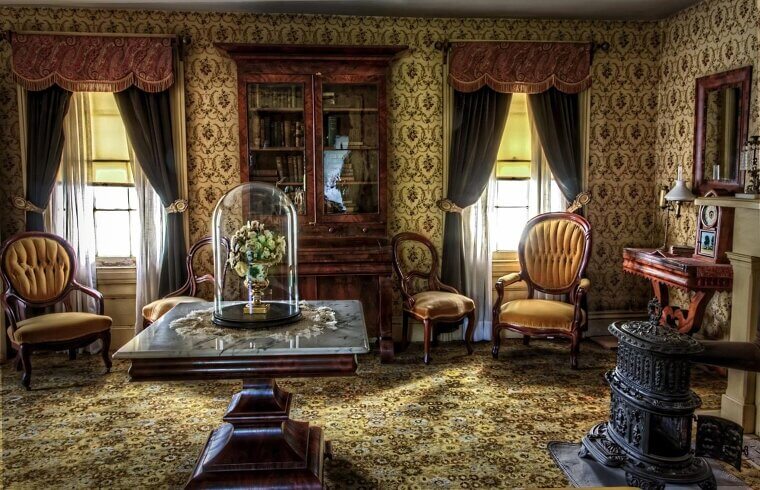
A $900 'rustic' dresser with perfectly symmetrical fake scratches is just a new dresser someone attacked with a belt sander. Up next: the ceiling texture that added 'character' and subtracted thousands from your resale value.
Popcorn Ceilings
Popcorn ceilings peaked in the 1970s because they were cheap, fast, and hid sloppy drywall work. Builders loved them. Homeowners tolerated them. Then someone tested the texture and found asbestos — common in any ceiling sprayed before 1978. If your house predates disco's death, get it tested before you scrape a single flake. Remediation runs $1,000–$4,500 depending on square footage, but that beats the alternative.
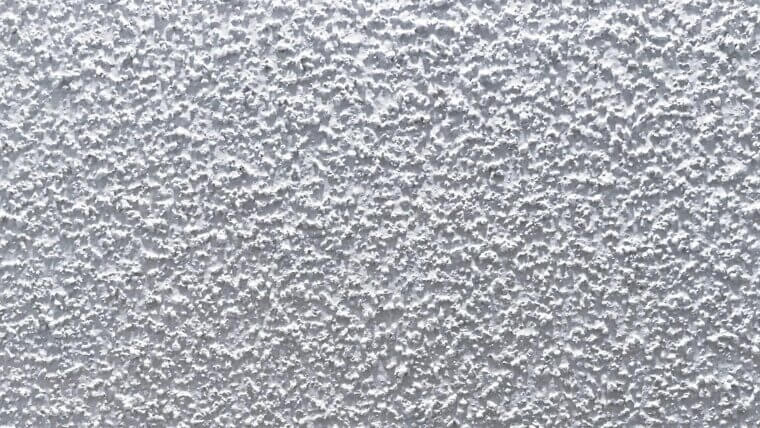
The good news: smooth ceilings add genuine resale value. The bad news: whatever trend replaced popcorn in the '90s wasn't exactly an upgrade either. Slide 26 proves it.
Pastel Bathroom Fixtures
Avocado green toilets. Harvest gold tubs. Dusty rose sinks. Pastel bathroom fixtures ruled American homes from the 1950s through the 1980s, and homeowners are still paying for it — literally. Replacing a single vintage colored toilet runs $300–$800, but matching it to a discontinued sink and tub? Good luck. Contractors routinely quote full gut-renovations just because nobody makes that shade of pink anymore.
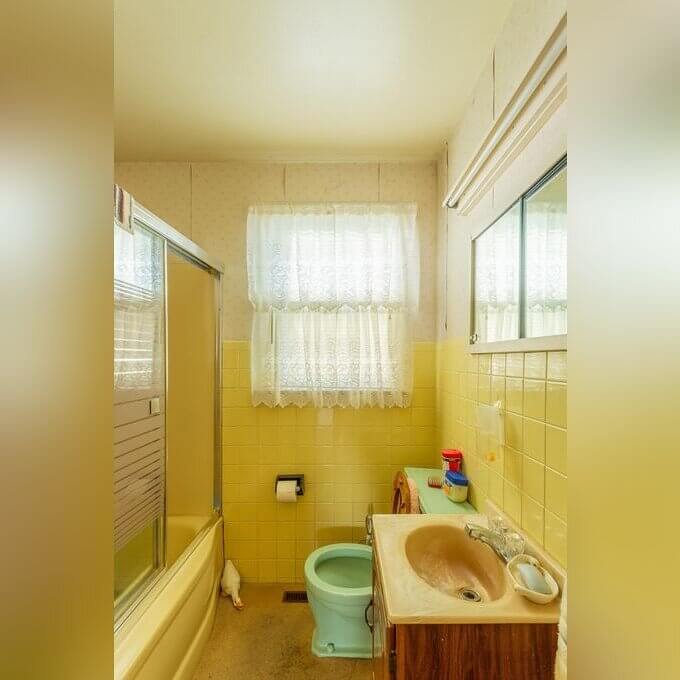
The cruel twist: those same fixtures are now collectible. Salvage yards sell working avocado toilets for $200+. You ripped yours out in 2003, didn't you. Next up is somehow worse.
Overuse of Chevrons
Chevrons had about a 14-month window where they were genuinely fresh — somewhere around 2012. Then every home goods store from HomeGoods to Target flooded the market, and suddenly every throw pillow, backsplash, and accent wall in America was zigzagging. The fix is ruthlessly simple: one chevron element per room, max. Let it breathe. Let it mean something.
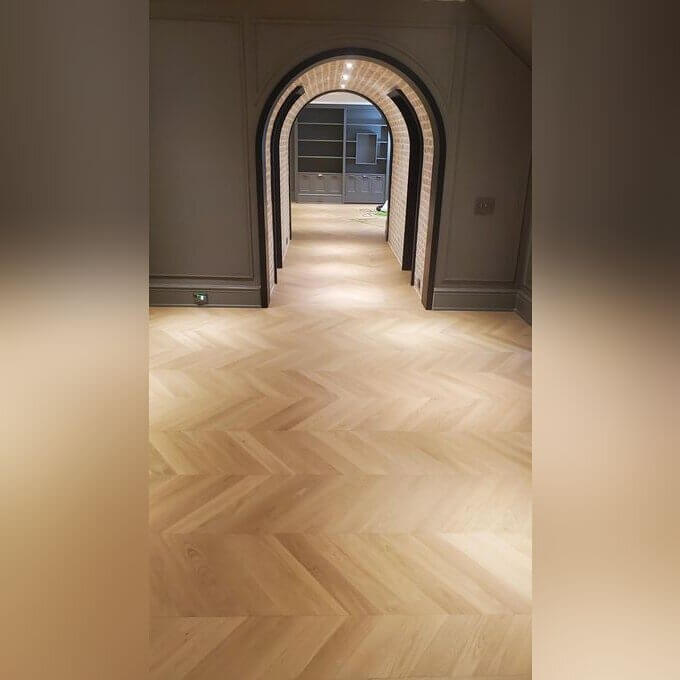
If you have chevron floors AND chevron curtains AND a chevron rug, your room isn't decorated — it's having a seizure. Next up: the trend that made every kitchen look like a Pinterest funeral.
Glass Countertops
Glass countertops peaked around 2008, when designers convinced homeowners that translucent surfaces with LED underlighting were the future of kitchen design. The reality? Every fingerprint, crumb, and water spot shows up like evidence at a crime scene. They scratch from normal use, chip at the edges, and cleaning them properly takes longer than cooking the actual meal.
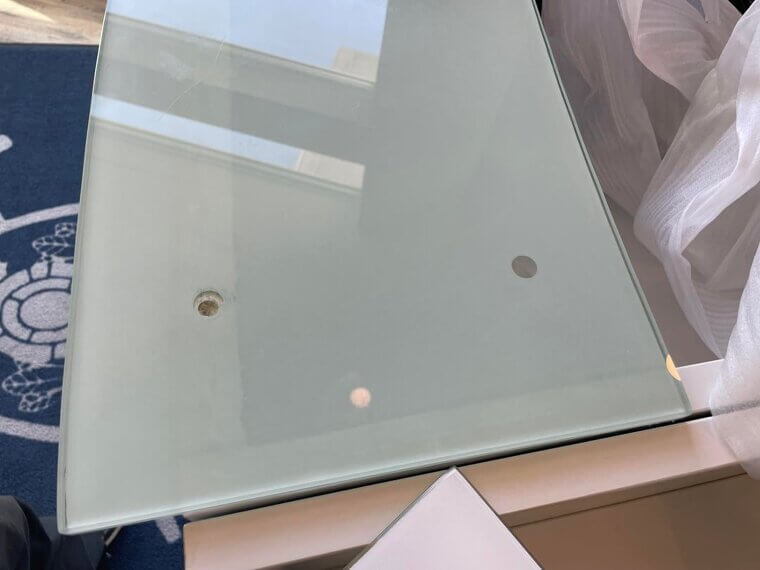
The backsplash trend that followed glass countertops somehow made things even worse. You'll want to brace yourself for slide 29.
Wall Niches for Electronics
Somebody convinced an entire generation that the solution to 'too many cords' was to cut a hole in their drywall. Wall niches for TVs, routers, and cable boxes looked sleek in 2009 showrooms — and then technology moved on. Your 2010 plasma TV was 4 inches deep. Your 2024 OLED is 1.5 inches. Now you've got a $600 custom indent housing a router and a prayer.
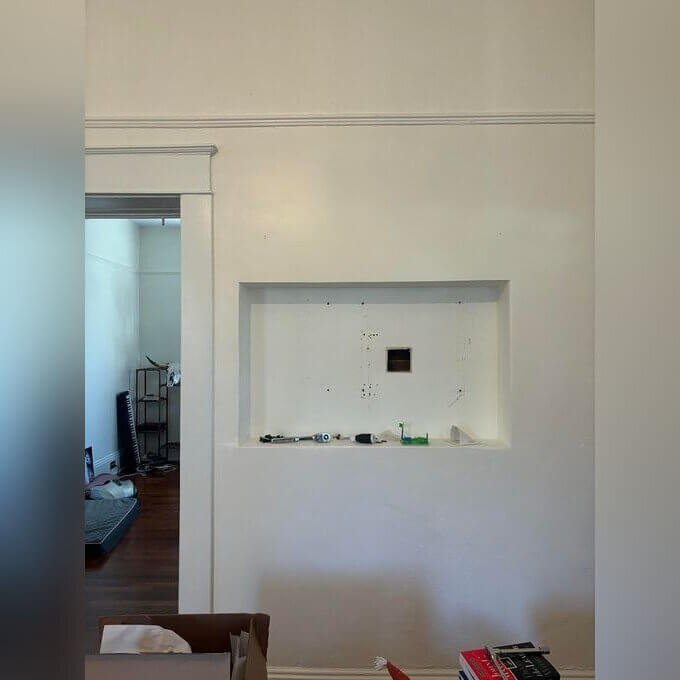
The fix isn't cheap either — patching and repainting a niche runs $300 to $800 depending on your walls. The next trend somehow made cords look even worse.
Tuscan-Style Kitchens
Tuscan kitchens peaked around 2004 and somehow never left. You know the look: terracotta floors, fake wrought-iron pot racks, distressed cabinetry in a color called 'Venetian Gold,' and a rooster somewhere — always a rooster. The fix isn't a full gut job. Swap the hardware to brushed nickel, paint those cabinets a clean white or sage, and suddenly you're not in a Olive Garden anymore.
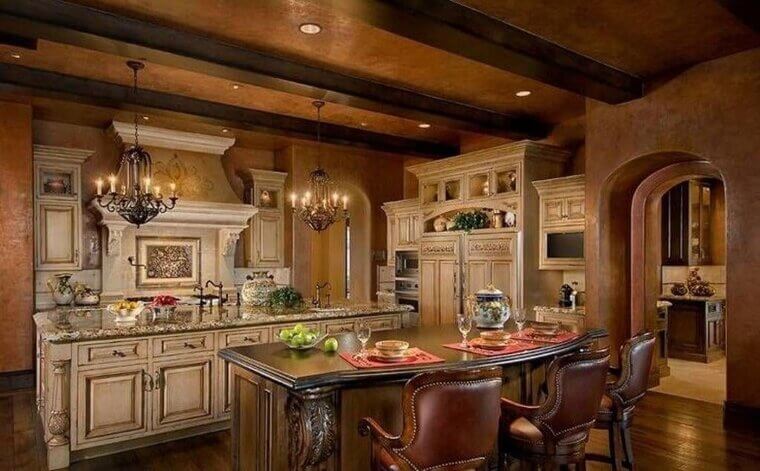
The rooster stays if you love it — no judgment. But those faux-stone backsplash tiles? They're the single fastest thing aging your kitchen by 20 years. Next slide might sting.
Too Many Pendant Lights
Three pendants over a kitchen island looks curated. Five looks like you're lighting a parking garage. The sweet spot almost nobody hits: odd numbers, yes, but scaled to the island length — one pendant per every 2 feet of counter, hung 30 to 36 inches above the surface. Go lower and you're ducking. Go higher and the whole thing reads as an afterthought.
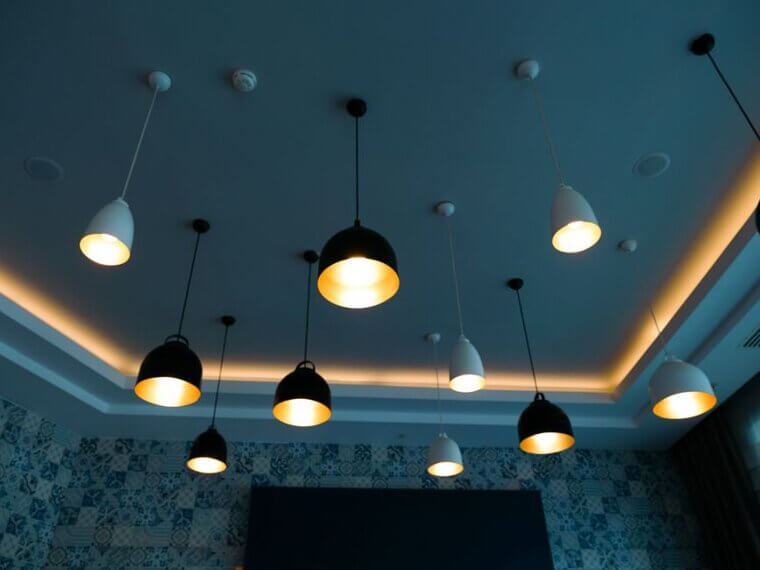
Also: matching your pendants perfectly to every other fixture is how you accidentally design a hotel lobby. A little mismatch is doing more work than you think — next slide proves it.
Faux Finishes on Walls
Sponging, ragging, and color-washing had a moment in the late '80s and '90s that lasted way too long into the 2000s. The pitch was texture and depth. The reality was walls that looked like someone sneezed terracotta paint across every surface in a 1,200-square-foot ranch house. Fixing it isn't a simple repaint either — those layered finishes grab fresh paint unevenly and usually need a full prime coat first.
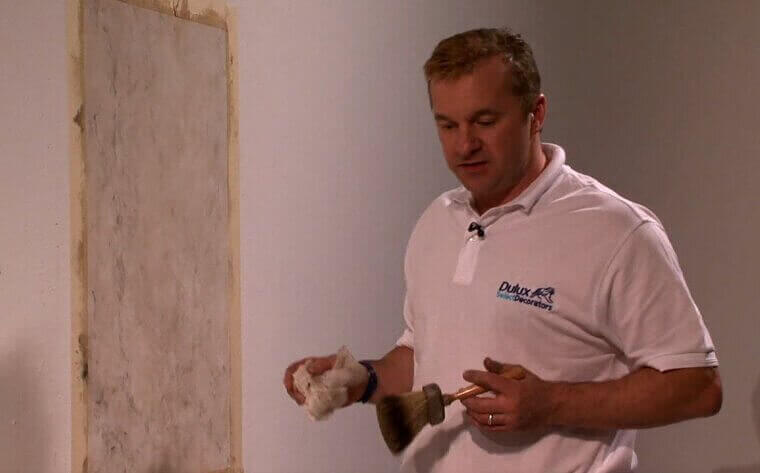
If your walls have more visual texture than your furniture, that's not a design choice — that's a weekend project waiting to happen. Up next: the lighting swap that turned dining rooms into parking garages.
Ripping Out Chandeliers
Somewhere around 2010, every design blog declared chandeliers 'too formal' — and homeowners yanked them by the thousands, replacing them with recessed lighting that turned dining rooms into airport terminals. That was the real mistake. A chandelier anchors a room in a way recessed cans physically cannot. The trick nobody tells you: size up. Most replacement fixtures are 12 inches too small and just float there looking lost.
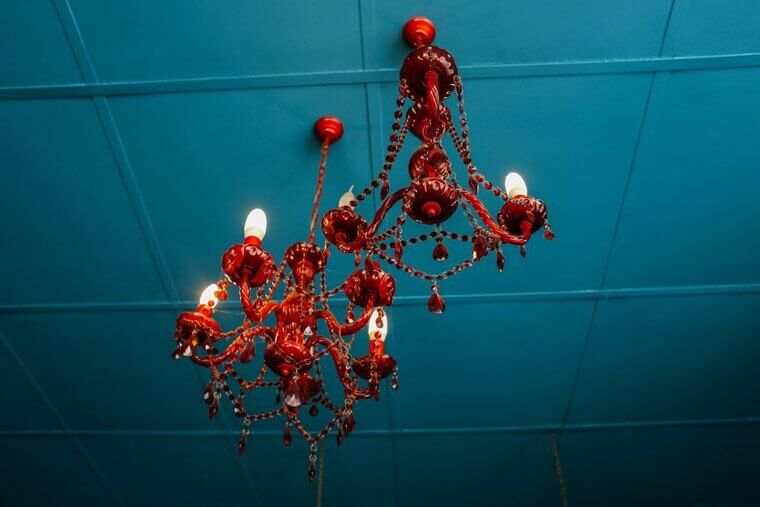
The rule is simple — add the room's length and width in feet, convert to inches. That's your minimum diameter. Most people are eating dinner under something half that size, wondering why the room feels cold.
Built-In Desks
Built-in desks looked incredible in the 2010s Pinterest era — custom millwork, floating shelves, the whole deal. The problem: they were designed for desktop computers that no longer exist. Now you've got a fixed, immovable structure optimized for a monitor you replaced in 2019, eating square footage you desperately need. A freestanding desk costs $300 and moves when your life does.
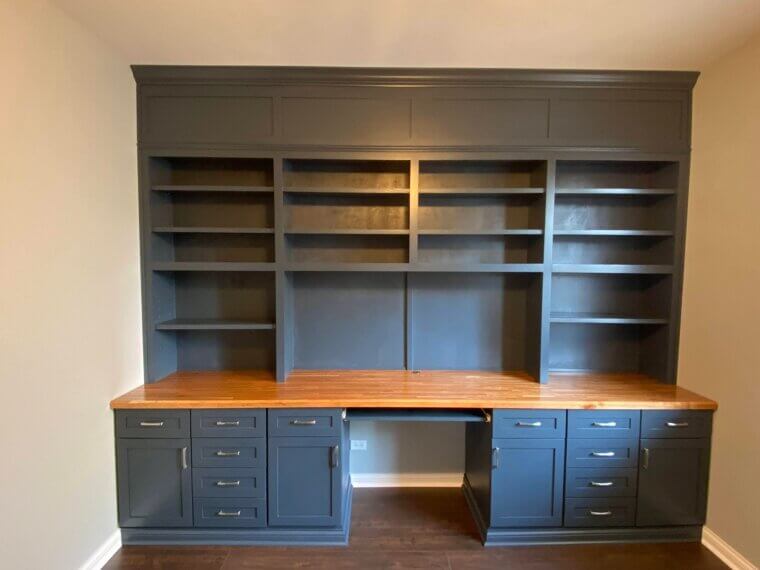
The cruelest part? The built-in usually cost $4,000 to install and will cost another $2,000 to rip out. Slide 35 is somehow worse.
Tiled Countertops
Tiled countertops peaked in the 1980s and never should have survived the decade. The grout lines — those thin little trenches running every four inches — collect everything: raw chicken juice, coffee, red wine, yesterday's ambitions. You can scrub them forever and they'll still look gray within a month. Solid surface countertops exist. Quartz exists. There was no reason to keep doing this.
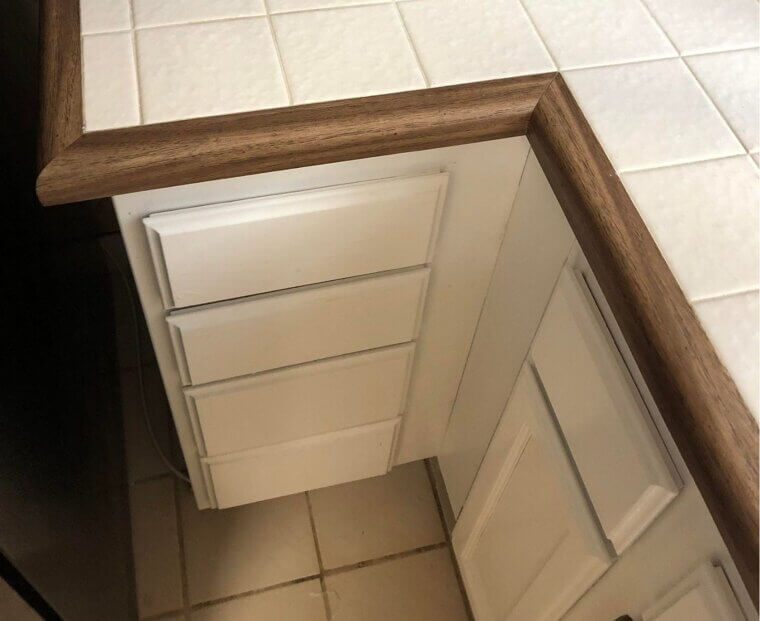
The worst part? Someone spent real money having this installed. Intentionally. On purpose. And the next trend on this list somehow convinced even more people to ruin their kitchens.
Excessive Faux Plants
Faux plants had one job: look alive. Somewhere along the way, 'a tasteful fake succulent' became 'forty-seven dusty plastic ferns crammed into every corner like a botanical fever dream.' The fix is brutal but necessary — keep two, maximum three, and make sure they're high-quality silk, not the $4 gas station variety with suspiciously blue leaves.
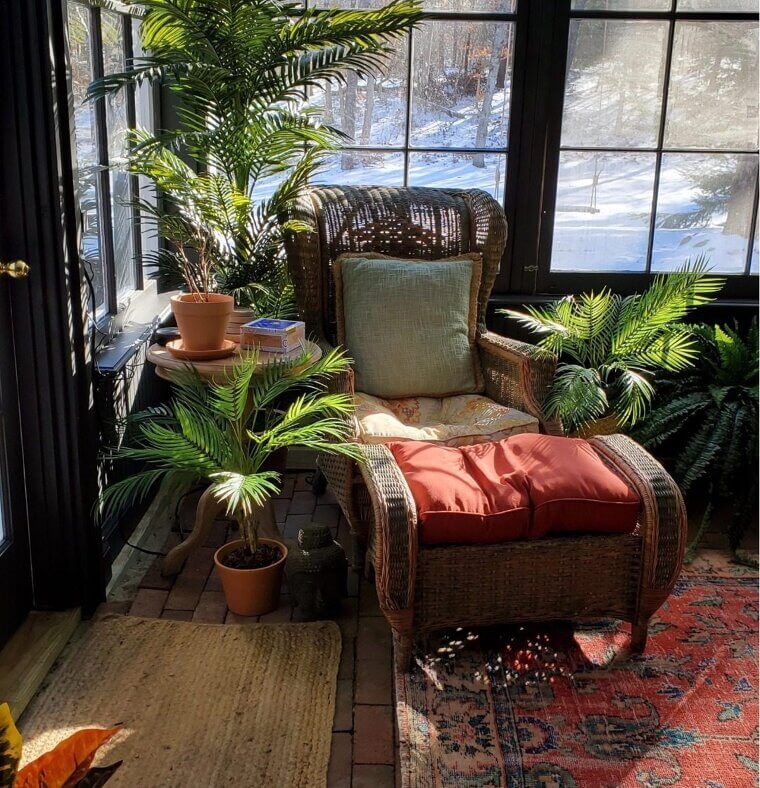
Real talk: if your guests are squinting at your plants trying to figure out if they're alive, you've already lost. And if you recognized more than ten things on this list — your home has a story to tell. Hopefully one with a good ending.