
Before screens took over the living room, kids of the 1960s were spinning, building, shooting, and bouncing their way through childhood with toys that felt genuinely magical. Some of these classics are now worth serious money. Others are just gloriously weird. All of them hit different when you remember begging for one under the Christmas tree.
Spinning Fun with the Hula Hoop
Wham-O sold 25 million Hula Hoops in just four months after launching in 1958, and by the early 60s every kid on every block had one. The premise was beautifully dumb: spin a plastic ring around your hips without dropping it. No batteries, no instructions, no screen required. Neighborhood competitions got intense. Someone always claimed a world record. Nobody fact-checked them. A vintage original in the box today fetches around $20–$40 — still the best deal on this list.

Cheap, simple, and somehow endlessly entertaining, the Hula Hoop proved that the best toys don't need to do anything complicated. Just spin and hope your hips cooperate.
Building Worlds with Lincoln Logs
John Lloyd Wright invented Lincoln Logs in 1916, but the 1960s were their golden era — every playroom had a canister of those notched wooden cylinders. Kids built log cabins, forts, and occasionally skyscrapers that defied both gravity and logic. The satisfaction of locking the corners together was oddly profound. Parents loved them because they were quiet. Kids loved them because they felt like actual construction. A complete vintage set in original packaging now runs $30–$75 depending on condition.
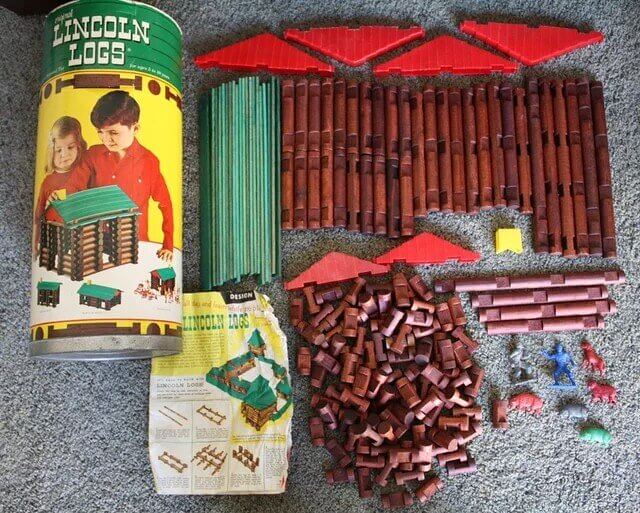
Lincoln Logs taught spatial reasoning before anyone called it that. Generations of architects probably owe their careers to a red cardboard canister on a rainy afternoon.
The Magic of the Etch A Sketch
Picture this: two white knobs, a gray screen, and the maddening challenge of drawing a perfect circle. The Etch A Sketch launched in 1960 and immediately broke children's confidence in their own artistic abilities. The aluminum powder inside moved with the knobs to create lines — and erasing meant shaking the whole thing like you were trying to wake it up. Street artists still use them today. A mint-condition 1960s original can pull $50–$150 at auction, though the real value is the nostalgia-fueled rage.
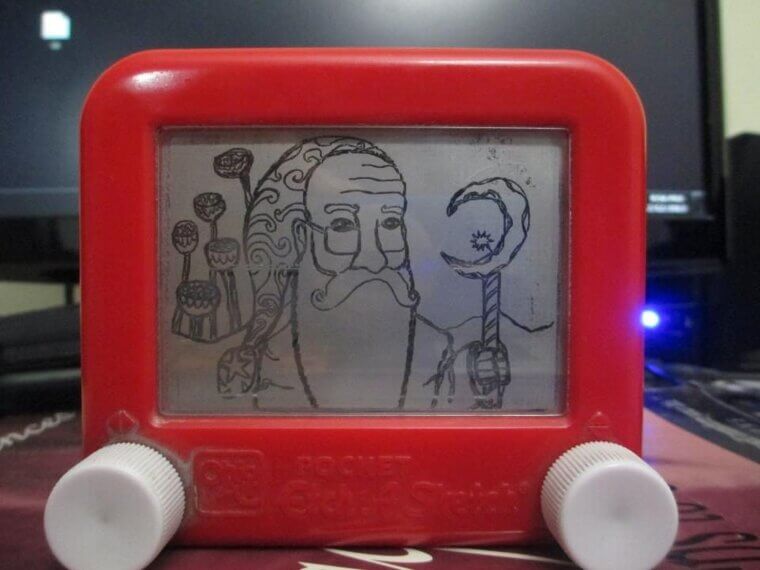
The Etch A Sketch is one of the few toys that made failure part of the fun. Every accidental shake was just a fresh start — whether you wanted one or not.
Creepy Crawlers and the Thingmaker Oven
Mattel handed children a small electric oven and a tray of liquid plastic and said: go for it. The Thingmaker Creepy Crawlers kit, released in 1964, let kids pour Plastigoop into bug-shaped molds and cook them into rubbery insects. The oven ran hot enough to cause real burns, the fumes were questionable at best, and parents somehow kept buying them. Collectors love the original molds most — certain complete Thingmaker sets with original Plastigoop tins now sell for $200–$400. The danger tax is real.
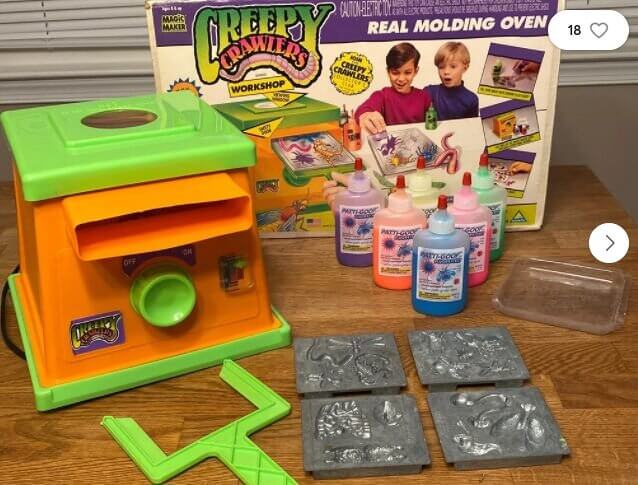
No modern toy manufacturer would survive the Thingmaker's safety profile for a single week. That's exactly why 60s kids remember it so fondly — it felt genuinely dangerous.
Riding High on the Pogo Stick
Would you hand a seven-year-old a metal spring-loaded stick and tell them to jump as high as possible on concrete? The 1960s said absolutely yes. Pogo sticks had been around since the 1920s, but the 60s brought them back with chrome finishes and aggressive marketing. The learning curve involved at least three scraped knees. Mastering it felt like a superpower. Vintage chrome pogo sticks from the era are surprisingly collectible today, with nice examples hitting $60–$120 at estate sales.
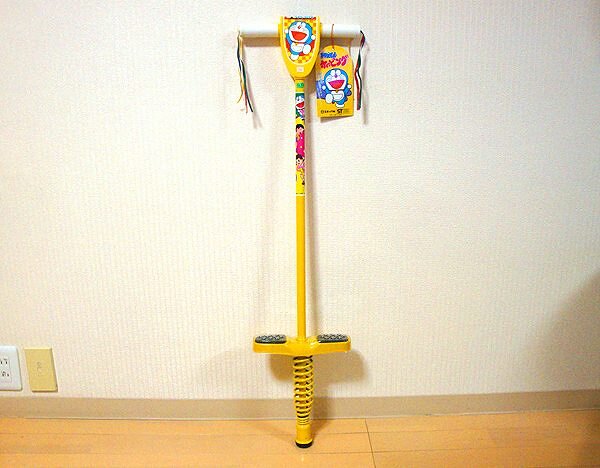
The pogo stick required commitment — and a complete disregard for your own shins. Kids who cracked it became the undisputed royalty of the driveway.
Mystery and Fun with the Ouija Board
Parker Brothers didn't invent the Ouija board, but they made it a living room staple in the 1960s — which is a genuinely strange corporate achievement. Marketed as a game, it occupied an eerie middle ground between toy and something your grandmother definitely didn't want in the house. Slumber parties were never the same. The board supposedly communicated with spirits; in reality, it demonstrated the ideomotor effect. Either way, it sold millions. A 1960s original Parker Brothers edition in good condition goes for $40–$90 today.
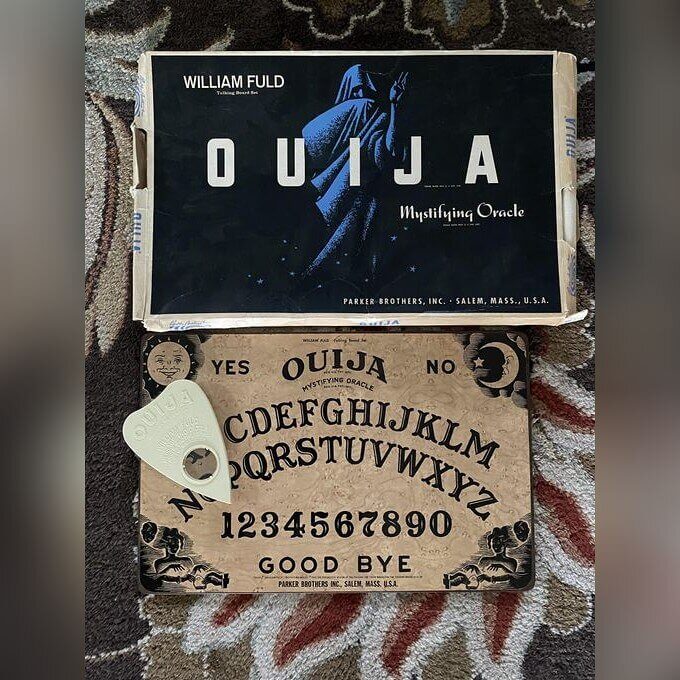
Whether you believed in the spirits or not, someone at every sleepover absolutely did. That one true believer made the whole experience worth every terrified giggle.
Easy Bake Oven for Tiny Chefs
Kenner launched the Easy-Bake Oven in 1963 and sold 500,000 units in the first year alone. The genius was almost accidental — a 100-watt light bulb generated just enough heat to actually bake tiny cakes from a mix. Kids felt like real chefs. The cakes tasted like warm cardboard with frosting, but nobody cared. The ritual was everything: mix, pour, slide the pan in, wait. A working 1960s Easy-Bake Oven with original mixes still sealed can fetch $150–$300, because nostalgia has no ceiling.
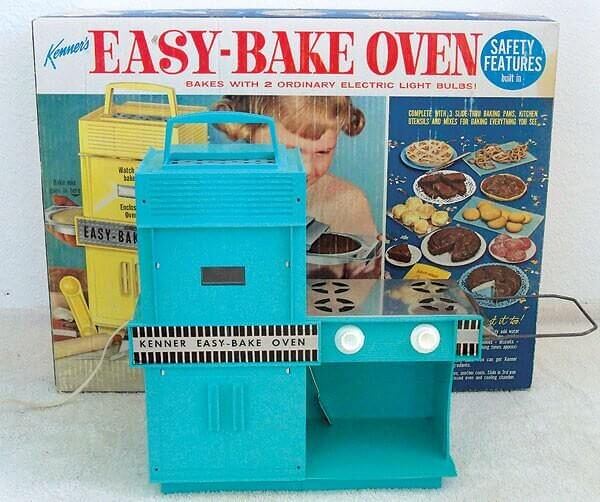
The Easy-Bake Oven turned a light bulb into a culinary experience. Those miniature cakes were objectively terrible and absolutely perfect at the same time.
Zooming Around on the Schwinn Stingray
The Schwinn Stingray hit dealerships in 1963 and rewrote what a kid's bike could look like. Banana seat, high-rise ape-hanger handlebars, small rear wheel — it looked like a motorcycle and every kid knew it. Schwinn sold over a million in the first two years. Riding one made you the coolest person on the street, full stop. Today, a fully restored 1960s Stingray in original colors can command $800–$2,500 depending on the model. The Krate versions push even higher.
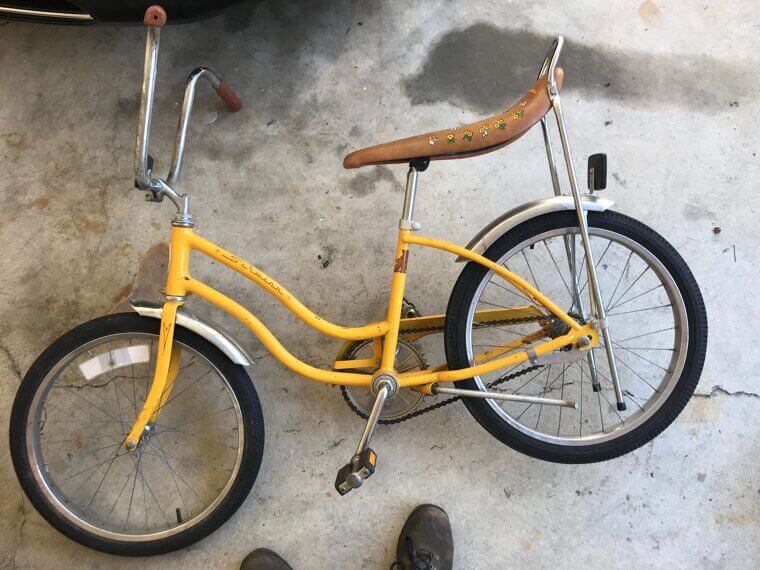
The Stingray didn't just change bike design — it created a cultural moment. Kids who had one still talk about the color like they're describing a first car.
Colorful Fun with Spirograph Sets
Kenner's Spirograph arrived in 1965 and turned geometry into something genuinely beautiful. The set of interlocking plastic gears and rings let kids create perfectly symmetrical designs that looked almost impossible to draw by hand. The trick was keeping the pen pressed at exactly the right angle without slipping — which happened constantly. The resulting rage was part of the experience. A complete 1960s Spirograph set with all original pens and wheels intact now sells for $75–$150. Missing one gear? Value drops hard.
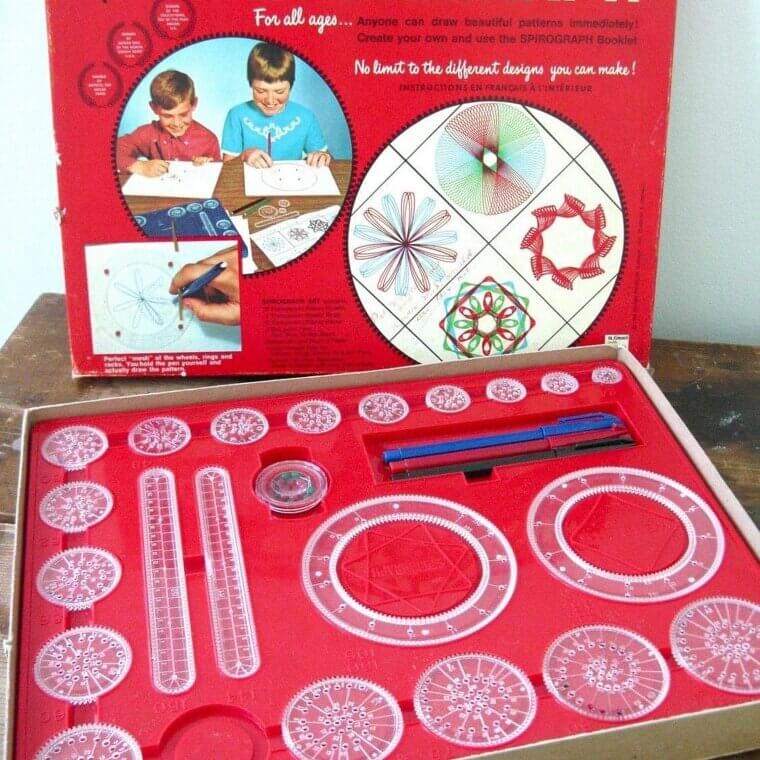
Spirograph made math cool before anyone admitted that's what it was doing. Every completed design felt like proof you were secretly a genius with a ballpoint pen.
Army Men Battles on the Living Room Floor
A bag of green plastic army men cost about a quarter in the 1960s, which meant every kid could afford an entire battalion. The living room carpet became a jungle. The backyard dirt became Normandy. Elaborate campaigns lasted entire afternoons with rules that changed whenever someone was losing. No batteries, no screens, no instructions — just imagination and a willingness to make explosion sounds with your mouth. Vintage bagged sets from the era, especially Marx brand originals, now go for $30–$80 sealed.
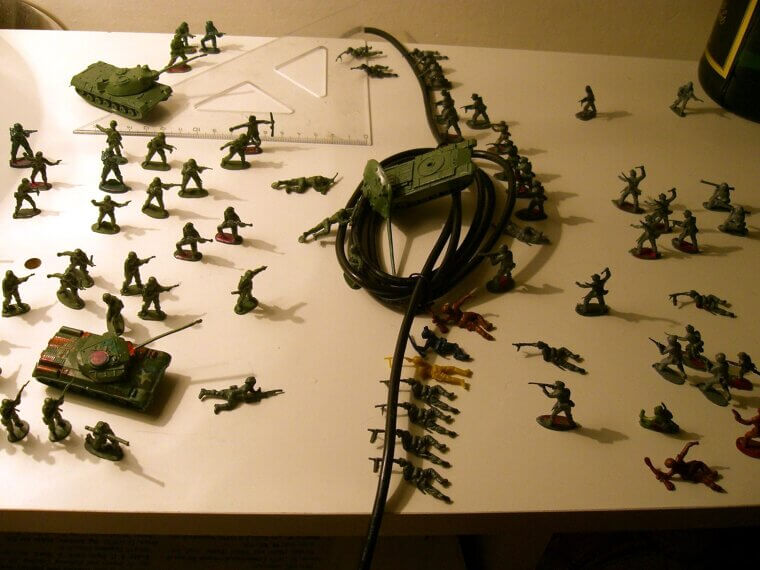
Army men were the original open-world game. The only limit was how many you owned and whether your mom would let you use the good couch cushions as bunkers.
The Beloved Chatty Cathy Doll
Mattel released Chatty Cathy in 1959 and she dominated the early 60s toy market with an iron grip. Pull the string and she'd say one of eleven phrases — a technological marvel at the time. She was the second best-selling doll in history behind Barbie. Parents found her charming. Older siblings found her terrifying at 2 a.m. when the string got stuck mid-phrase. A mint-condition original Chatty Cathy in working order with original box now sells for $200–$500. The talking mechanism adds significant collector value.
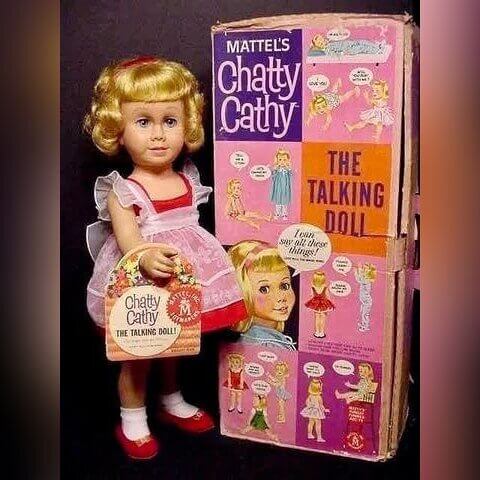
Chatty Cathy's voice box degraded over time, which meant aging units developed a slow, distorted drawl. That detail has haunted exactly as many people as you'd expect.
Rocking the Slinky Down the Stairs
Richard James accidentally invented the Slinky in 1943 when a tension spring fell off his desk and walked across the floor. By the 1960s, it was a household staple — that mesmerizing coil of steel that walked downstairs in a perfect arc if you angled it just right. 'Just right' took about forty minutes to figure out and required a very specific staircase. The original metal Slinkys from the 60s have a different weight and sound than modern versions. Boxed originals in excellent condition now sell for $40–$100.
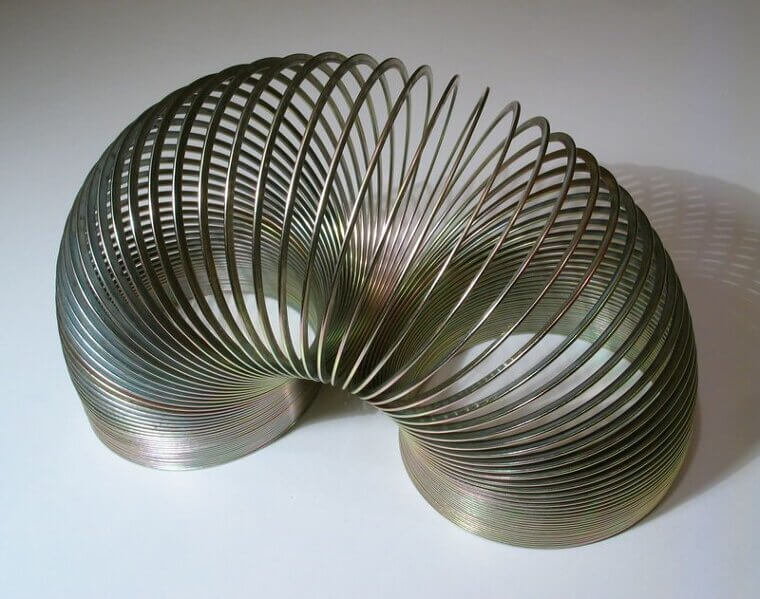
The Slinky's greatest trick was making physics feel like magic. Its greatest flaw was becoming an irreversible tangle after exactly one unsupervised afternoon with a younger sibling.
Stacking and Balancing with Barrel of Monkeys
Milton Bradley launched Barrel of Monkeys in 1965 and the premise was almost insultingly simple: hook plastic monkeys together in a chain using their curved arms. That's it. That's the whole game. And yet it was genuinely compelling — the challenge of linking them without dropping the chain created real tension. Dentist offices had them. Waiting rooms had them. Every grandparent's house had them in a kitchen drawer. A complete original 1965 set in the original barrel container with all 12 monkeys runs about $25–$60 today.
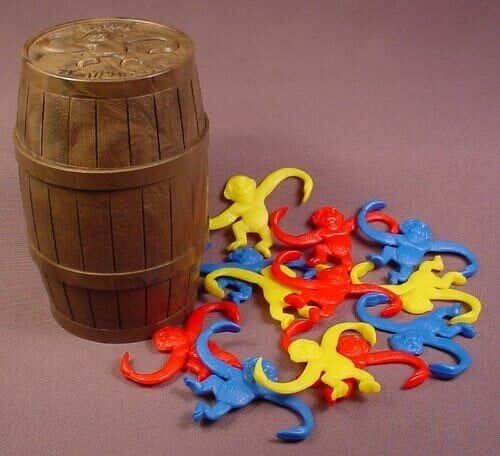
Barrel of Monkeys proved that elegantly simple design beats complexity every time. Sixty years later, you still know exactly how to play it without reading a single instruction.
Drawing in 3D with Lite Brite
Hasbro introduced Lite-Brite in 1967 and it sold out before Christmas was even close. The concept — push colored translucent pegs through black paper into a backlit grid — created glowing pictures that looked genuinely impressive in a dark room. Kids felt like artists. The tiny pegs, however, were a carpet infiltration nightmare that parents discovered barefoot at midnight. A complete 1967 original Lite-Brite with original peg sets and paper sheets now commands $100–$250. The light-up factor makes it a standout collectible.
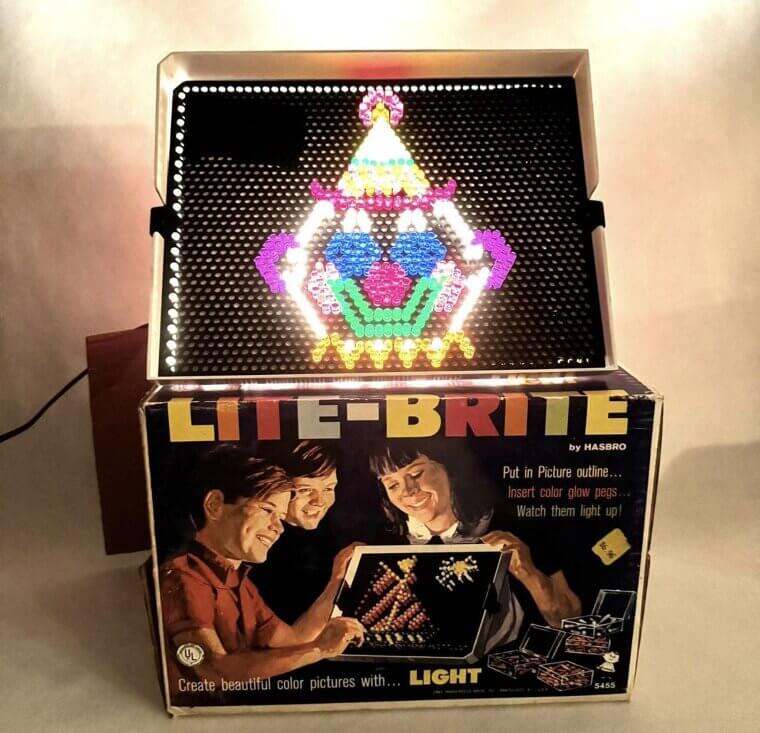
Lite-Brite was essentially an LED display 40 years before LEDs were everywhere. The fact that it ran on a regular bulb and colored plastic makes that achievement even more impressive.
Sewing Style with the Suzy Homemaker Set
Topper Toys rolled out the Suzy Homemaker line in the mid-60s as a full domestic fantasy set for young girls — miniature iron, vacuum, washing machine, and kitchen appliances that actually worked at small scale. The iron genuinely heated up. The vacuum had real suction. By today's standards the marketing is a time capsule of its era, but the engineering was legitimately impressive for a toy line. Complete Suzy Homemaker sets are now serious collector items, with full kitchen sets fetching $300–$600 at specialty auctions.
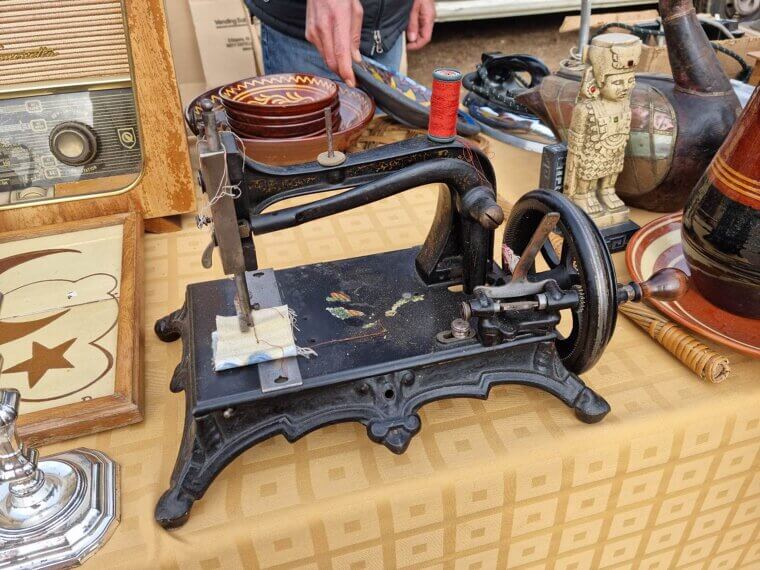
Whatever you think of the gender messaging, the Suzy Homemaker appliances were engineered to actually function — which made them far more dangerous and far more beloved than modern toys.
Wild Races with Hot Wheels Track Sets
$500. That's what a complete original 1968 Hot Wheels Super-Charger track set in mint condition with original cars can pull from serious collectors today. Mattel launched Hot Wheels in 1968 and immediately destroyed the competition — the die-cast cars ran faster, looked cooler, and cost less than Matchbox. The orange track clicked together in infinite configurations. Every kid wanted more track, more cars, more loops. The 16-car collector case from that first year is its own holy grail. Some individual cars from the original 1968 lineup sell for over $1,000.
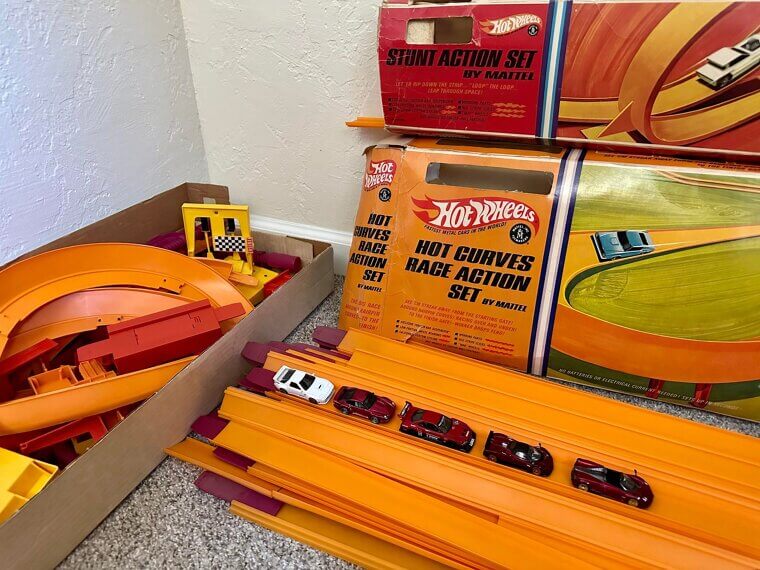
Hot Wheels didn't just win the toy car war — it ended it. Mattel has sold over six billion cars since 1968, making it the best-selling toy in history. Yes, really.
Shooting Fun with the Cap Gun
Cap guns were everywhere in the 1960s — every Western on TV meant every kid needed one on their hip. The satisfying pop of a paper cap roll, the smell of gunpowder smoke, the plastic handle that cracked if you dropped it on concrete. Hubley, Mattel, and Leslie-Henry all made versions that ranged from dime-store plastic to die-cast metal masterpieces. The die-cast Hubley Cowboy cap guns are the ones collectors want today. A matched pair in original holster sets? You're looking at $150–$400 easily.
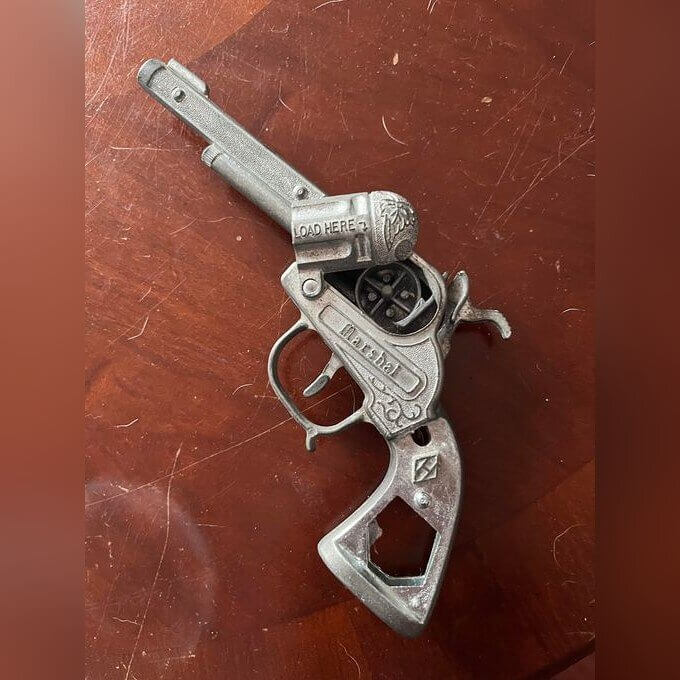
The smell of a fired cap is one of the most universally recognized childhood scents for anyone who grew up in the 60s. It's basically Proustian at this point.
Twisting and Turning with Twister
Milton Bradley released Twister in 1966 and Johnny Carson played it with Eva Gabor on The Tonight Show — which was essentially the 1960s version of going viral. Sales exploded overnight. The game put players in genuinely awkward physical contact, which made it controversial and wildly popular in equal measure. Some stores initially refused to stock it, calling it 'sex in a box.' That description probably helped sales more than Carson did. A 1966 first-edition Twister set with original spinner in excellent condition now sells for $80–$180.
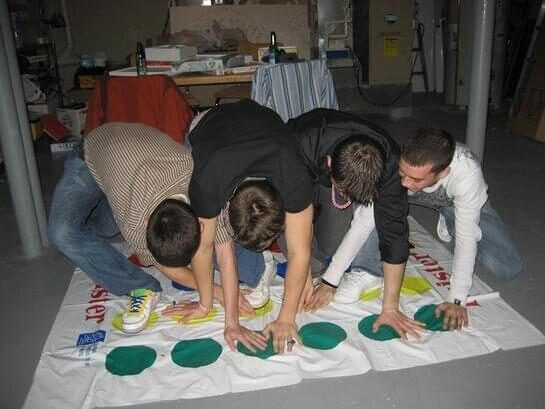
Twister was the first mainstream party game to use the human body as a playing piece. The controversy it generated in 1966 feels almost quaint now, but it was genuinely scandalous then.
Painting by Numbers for Young Artists
Paint by Numbers swept American households in the late 50s and peaked in the early 60s — at one point, more Paint by Numbers canvases were being sold than original artwork in the United States. The kits came with pre-outlined canvases, numbered sections, and tiny pots of oil paint. Kids and adults both bought them. The finished products hung on walls with genuine pride. Vintage 60s sets from Craft Master or Palmer Paint in sealed, original condition now run $50–$120. The ones with unusual subjects — space scenes, exotic animals — fetch the most.
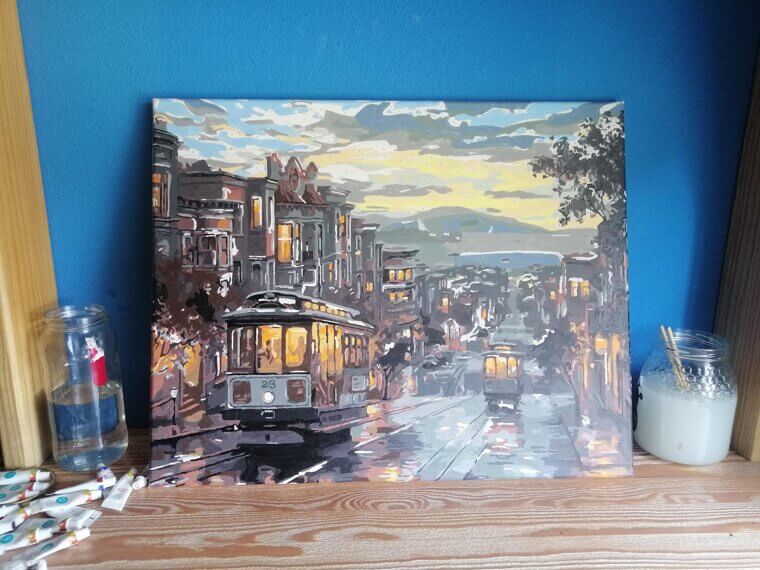
At the height of the craze, critics called Paint by Numbers a threat to real art. The Smithsonian eventually acquired examples for its collection, which seems like the last laugh.
The Thrilling Johnny Seven OMA Rifle
The Johnny Seven OMA — One Man Army — launched in 1964 and was immediately the most wanted toy on every boy's Christmas list. It was seven weapons in one: grenade launcher, anti-tank rocket, armor-piercing shell, repeating rifle, tommy gun, pistol, and a detachable cap-firing pistol. It was nearly three feet long. It retailed for about $6. It was the best-selling boys' toy of 1964. Today, a complete Johnny Seven OMA with all original components and box is a serious collector piece — clean examples sell for $400–$900.
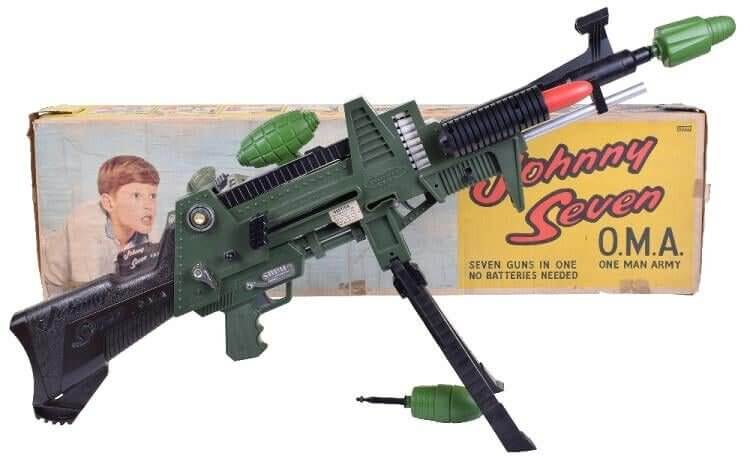
Seven weapons. One child. Zero parental hesitation. The Johnny Seven OMA represents a specific moment in American toy history that simply could not be replicated today.
Imaginative Play with the Mr. Machine Robot
Ideal Toy Company released Mr. Machine in 1960 — a transparent wind-up robot that walked, waved his arms, rang a bell, and let you see every gear turning inside his plastic body. The whole point was the visibility: kids could watch the mechanism work in real time. It was basically a toy that taught itself. The original 1960 version is distinct from the 1978 reissue, and collectors know the difference immediately. A working original 1960 Mr. Machine in original box commands $300–$700 today. Non-working versions still pull $150+.
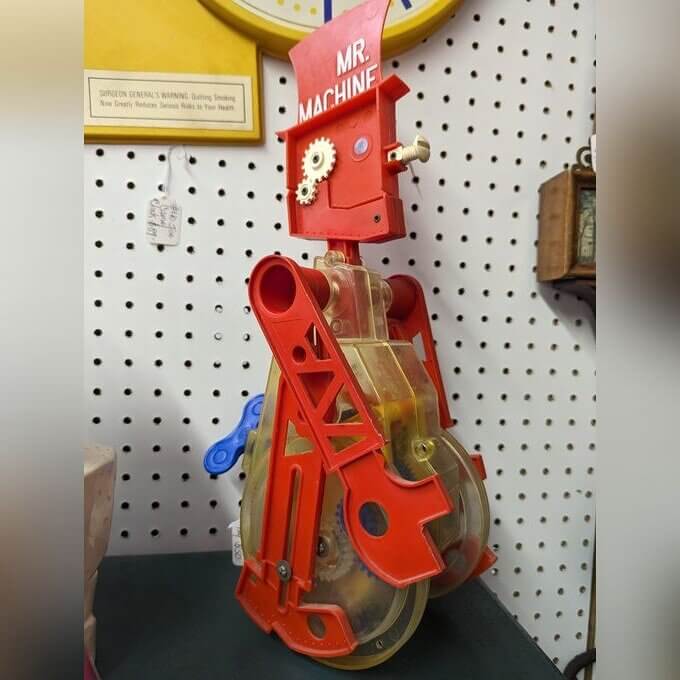
Mr. Machine was transparent by design — Ideal wanted kids to see how things worked. That single engineering choice made it both a toy and an accidental science lesson.
Crafting with the Kenner Give-A-Show Projector
Kenner's Give-A-Show Projector arrived in 1959 and stayed popular well into the 60s — a battery-powered slide projector that let kids beam cartoon stories onto their bedroom wall. The slides featured Hanna-Barbera characters: Yogi Bear, Huckleberry Hound, The Flintstones. You narrated the story yourself as you advanced the slides. It was essentially a child-operated movie theater for one. Complete sets with original slide strips in good condition now sell for $75–$200. The Hanna-Barbera character sets are the most sought-after.
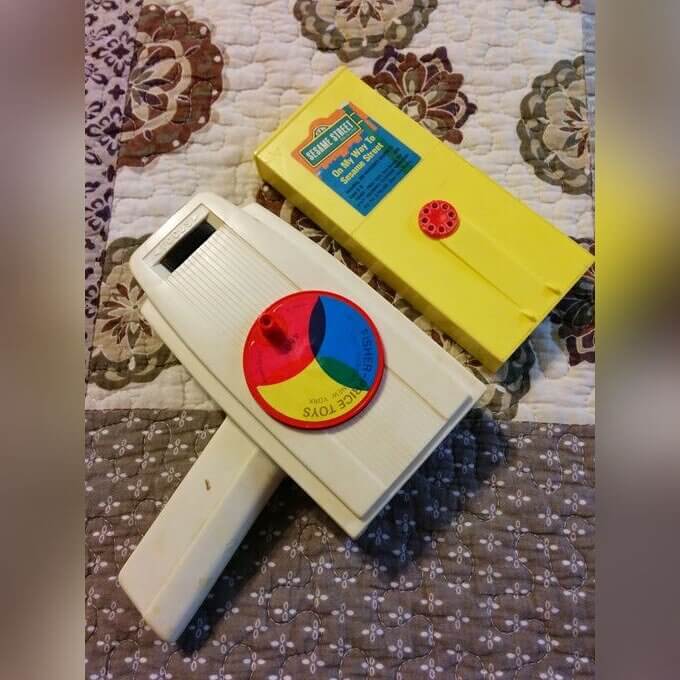
The Give-A-Show Projector turned any white wall into a cinema. Kids who owned one had the most powerful sleepover invitation on the block, no contest.
Solving the Mystery with Clue Board Game
Parker Brothers introduced Clue — called Cluedo in the UK — in America in 1949, but the 1960s editions are the ones most collectors obsess over. The wooden weapons. The specific color of the cards. The satisfying weight of the miniature lead pipe. The game taught deductive reasoning disguised as a murder mystery, which is either brilliant or deeply strange depending on your perspective. A complete 1960s Parker Brothers Clue set with all original wooden weapons and no missing cards sells for $60–$150. The wooden pieces are the key detail.
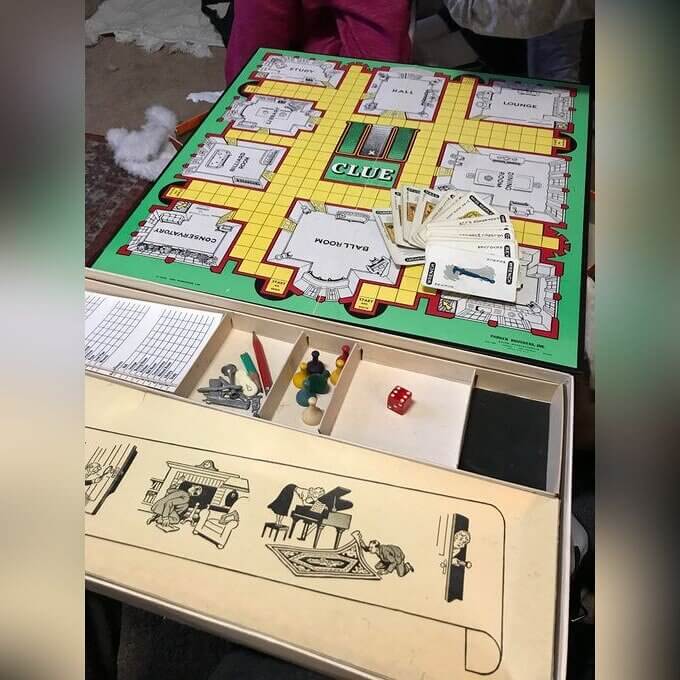
Clue's genius was making logical deduction feel like drama. Every accusation carried genuine stakes — get it wrong and you handed the win to whoever was playing Professor Plum.
Flipping Fun with Tiddlywinks
Tiddlywinks sounds like something a Victorian child played in a parlor — because it is. But the 1960s brought it back with colorful plastic sets and genuine competitive leagues. Yes, leagues. Cambridge and Oxford had Tiddlywinks societies that took the game with complete seriousness. The game involves flipping small plastic discs into a cup using a larger disc called a squidger. Terminology alone makes it worth knowing. Vintage 1960s sets in original tins are charming collectibles at $20–$50, but the real value is knowing what a squidger is at a dinner party.
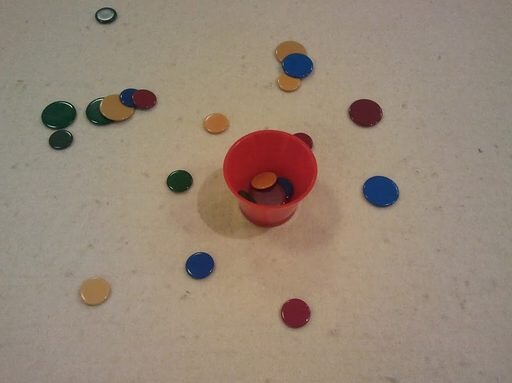
Tiddlywinks has an active competitive community to this day with its own governing body and official tournaments. The 60s kids who played it casually had no idea they were touching sporting history.
Stomping Around in Stilts for Kids
Stilts for kids in the 1960s came in two varieties: the wooden pole kind you strapped to your feet, and the can-on-a-string variety that every summer camp craft session produced. Both required the same skill set — balance, nerve, and a total willingness to fall forward onto grass. The wooden strap-on stilts gave you maybe eight inches of height, which felt enormous at age seven. Neighborhood kids who mastered them became legends. Vintage wooden children's stilts from the era are oddly charming antiques today, selling for $30–$80 at flea markets.

There's something specifically 1960s about handing a child two wooden poles and saying 'figure it out.' The resulting scraped knees were considered part of the learning process.
The Mesmerizing Magic Eight Ball
The Magic Eight Ball has been around since 1950, but it hit peak cultural saturation in the 1960s — every bedroom had one, every decision got outsourced to the icosahedron floating in blue liquid. Ask a question, flip it over, wait for the die to surface: 'Outlook not so good.' 'Reply hazy, try again.' 'It is decidedly so.' The twenty possible answers were written by a psychic named Mary Carter. The original Alabe Crafts versions from the early 60s are distinct from later Mattel editions and sell for $60–$150 in good condition.
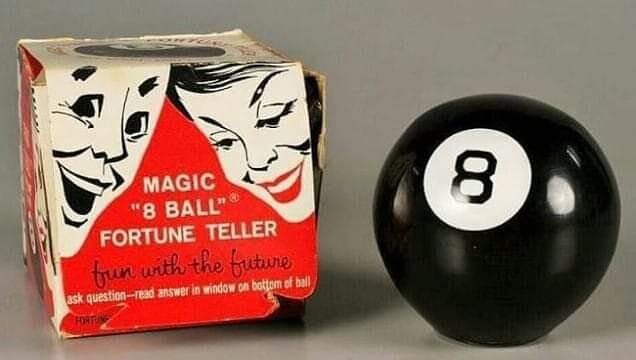
The Magic Eight Ball's answers were deliberately vague enough to apply to almost any question — which is either brilliant design or accidental philosophy, depending on how seriously you took it.
Stacking Rings on the Classic Ring Toss
Ring toss sounds too simple to be interesting — and that's exactly why it worked for generations of kids. A wooden post, a set of rubber or rope rings, a line on the ground. The 1960s versions came in bright primary colors with painted wooden bases that looked cheerful enough to survive any playroom. Carnival versions were everywhere. Backyard versions were cheaper and arguably more fun because nobody was trying to win a giant stuffed animal. Vintage wooden ring toss sets from the 60s are genuine folk-art collectibles now, selling for $25–$70.
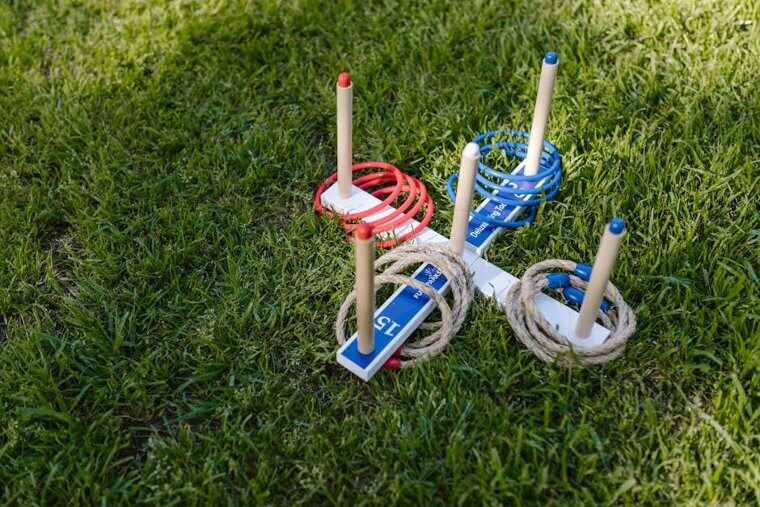
Ring toss is one of those games that looks completely mastered until you actually try it. The gap between 'how hard can this be' and 'why can't I land a single one' is the whole experience.
Adventures with the GI Joe Action Figure
Hasbro launched G.I. Joe in February 1964 — the first action figure ever marketed to boys, a deliberate rebranding of what was essentially a doll. At 11.5 inches tall with 21 points of articulation, he came with military gear, vehicles, and enough accessories to consume an entire allowance. The original 1964 G.I. Joe with his sewn-on uniform and patent pending markings is the one collectors hunt. A complete original 1964 G.I. Joe in excellent condition with original box can sell for $500–$2,000. Certain rare accessories push individual pieces past $5,000.
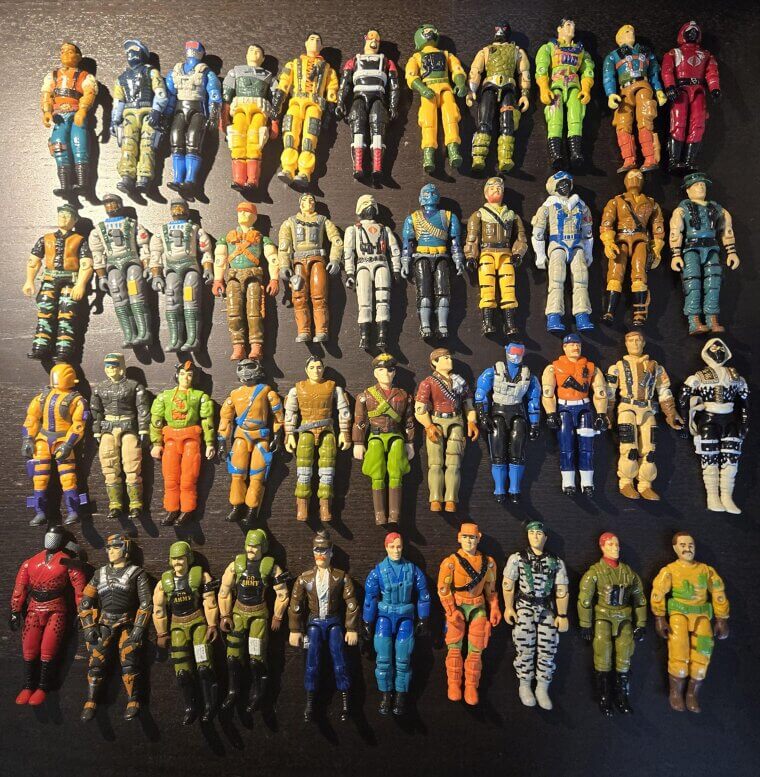
Hasbro's marketing team invented the term 'action figure' specifically to avoid calling G.I. Joe a doll. That single word choice changed the entire boys' toy industry permanently.
Whirling Fun with the Gyroscope Toy
The gyroscope toy taught physics better than most classroom demonstrations — spin the wheel fast enough and it defied gravity, balanced on a string, tilted without falling. It was genuinely magical if you didn't know the science, and genuinely satisfying if you did. Chandler Price and Tedco both made popular versions in the 1960s. The metal ones with the heavy brass wheel are the best performers and the most collectible. A vintage Tedco gyroscope in original box with string and launch pedestal sells for $30–$80 today — still one of the best pure-physics toys ever made.
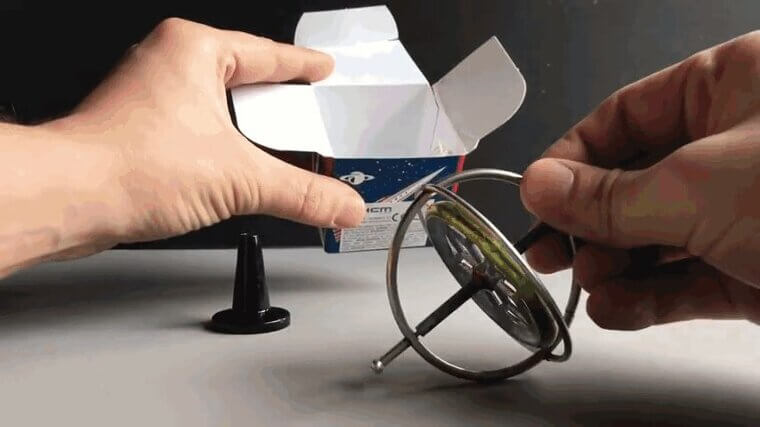
A gyroscope in full spin looks like it's breaking the rules of the universe. It isn't, obviously — but explaining angular momentum to a seven-year-old kind of ruins the moment.
Riding the Waves on a Skate Scooter
Before skateboards went mainstream, kids in the early 1960s were riding scooters built from wooden planks, roller skate wheels, and milk crates nailed upright as handlebars. These weren't store-bought — they were backyard engineering projects. The milk crate scooter was a rite of passage in neighborhoods across America and the UK. Finding the right wheels from a worn-out skate was half the challenge. No two were exactly alike. These handmade relics almost never survive, which makes documented examples genuine folk artifacts worth $100–$300 to the right collector.
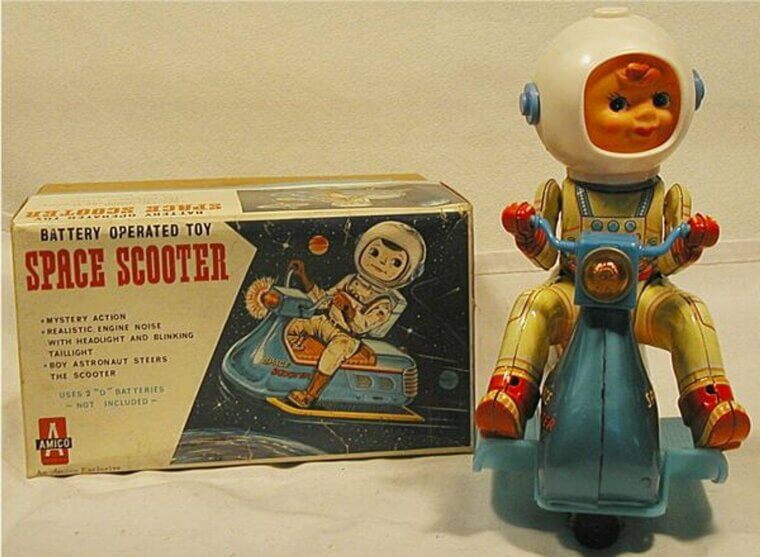
The homemade milk crate scooter represents something no modern toy can replicate: the pride of riding something you built yourself from parts you scrounged. That feeling was the whole point.
Playing House with the Barbie Dream House
Mattel introduced the first Barbie Dream House in 1962 — a cardboard fold-out structure that cost $4.98 and immediately became the most coveted item on every girl's wish list. It came with lithographed furniture printed directly onto the cardboard walls. A fireplace. A kitchen. A patio. The genius was that it folded flat for storage, which meant parents could actually live with it. The 1962 original is now a serious collector's piece. A complete first-edition Dream House in excellent condition with original furniture sells for $400–$900.
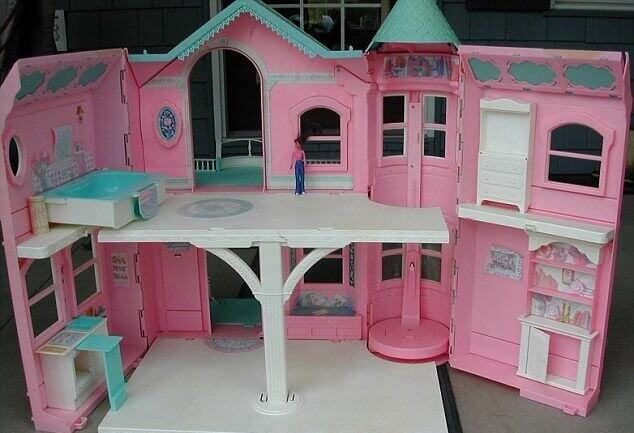
The original Dream House was cardboard and cost five dollars. Today it sells for nearly a thousand. That's either the best investment in toy history or proof that nostalgia has completely lost its mind.
Launching Rockets with the Vac-U-Form Machine
Mattel's Vac-U-Form machine from 1962 let kids heat a small sheet of plastic and vacuum-form it over a mold to create their own shapes — basically a miniature industrial manufacturing process in a toy. It ran hot, the plastic smelled when heated, and it produced genuinely usable objects. Kids made masks, car bodies, creature faces. The combination of real heat, real suction, and real results made it feel like actual factory work. Complete Vac-U-Form sets with original molds and plastic sheets in working condition now sell for $200–$500.
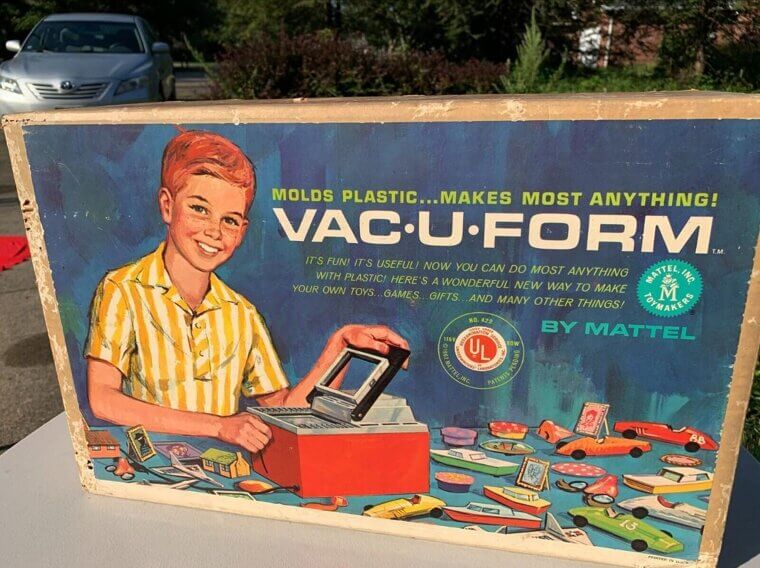
The Vac-U-Form was essentially a miniature plastics factory for children. The fact that it worked exactly like the real industrial process — and ran just as hot — was the entire appeal.
Bouncing Around on the Space Hopper
The Space Hopper — called the Hoppity Hop in the U.S. — arrived in 1968 and immediately colonized every backyard in the Western world. An oversized orange rubber ball with handle horns, designed for sitting astride and bouncing. The face molded into the front looked either cheerful or mildly threatening depending on the angle. British kids called it the Space Hopper; Americans called it the Hoppity Hop; everyone called it exhausting. Original late-60s examples in good rubber condition are surprisingly rare — intact ones sell for $80–$200 at vintage toy fairs.
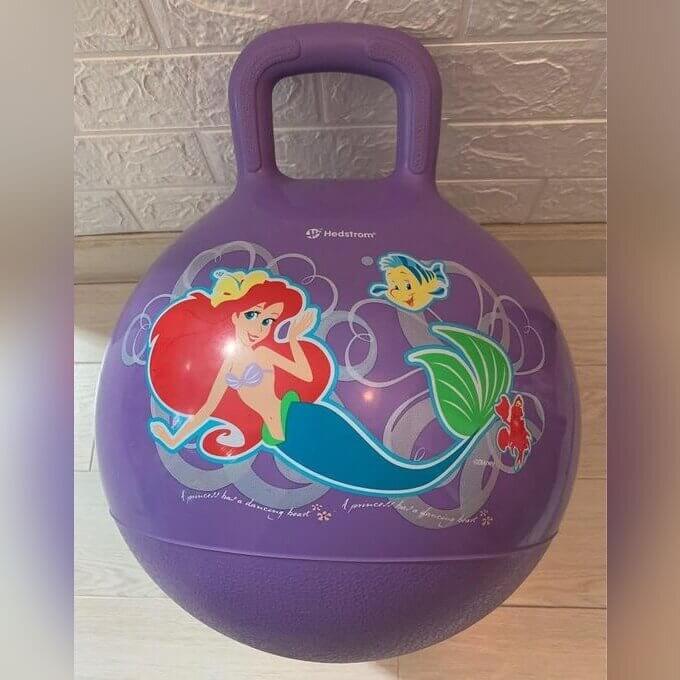
The Space Hopper required absolutely no skill, burned enormous amounts of energy, and made a sound that could be heard from three gardens away. Parents tolerated it because it tired children out completely.
Rolling Fun with the Duncan Yo-Yo
Duncan didn't invent the yo-yo, but they made it an American obsession — and the 1960s were the peak of their empire. Duncan sponsored demonstrations in schools and shopping centers where professional yo-yo artists performed tricks with names like 'Walk the Dog' and 'Around the World.' Kids who mastered even three tricks became playground celebrities. The 1965 bankruptcy of the Duncan company is one of toy history's great tragedies. Pre-bankruptcy Duncan yo-yos from the early 60s in original packaging now sell for $40–$120. Tournament-grade models push higher.
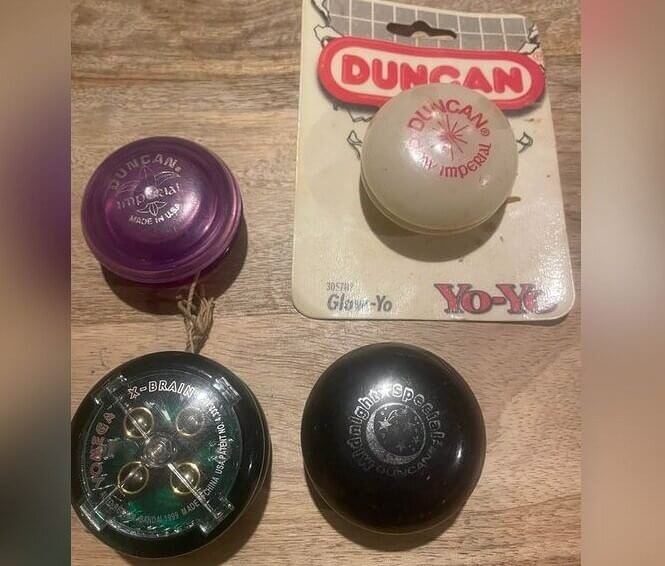
Duncan's professional demonstrators were essentially the first sponsored athletes in toy history. They traveled the country performing tricks, and every kid who watched them immediately needed a yo-yo.
Colorful Creations with Shrinky Dinks
Here's the timeline: Shrinky Dinks were actually invented in 1973, not the 60s — but they belong spiritually to this era and their 60s-adjacent origin story is worth telling. K&B Innovations founders Betty Morris and Kate Bloomberg discovered that #6 polystyrene plastic shrinks dramatically when heated, after a Girl Scout leader experimented with plastic lids in an oven. The resulting toy let kids color pre-printed plastic sheets and shrink them into hard, small charms. Early 70s first editions are now $50–$150 in original packaging. The 60s spirit lives in every one.
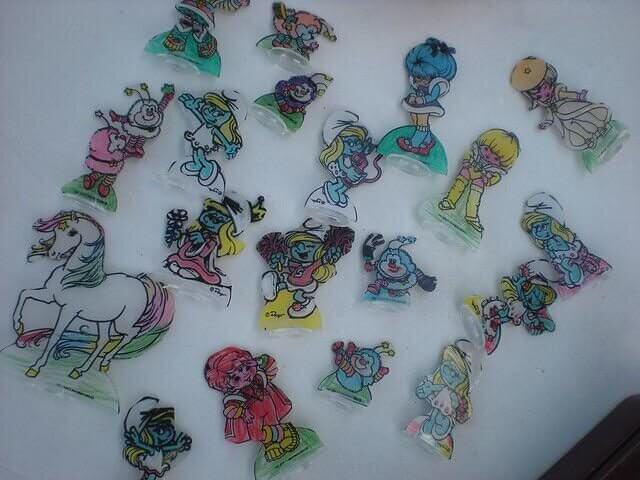
Shrinky Dinks were born from a happy accident in a Girl Scout meeting. The discovery that oven heat could miniaturize colored plastic became one of the most beloved craft toys of the era.
Building Bridges with Erector Sets
A.C. Gilbert launched the Erector Set in 1913, but the 1960s versions — with their red steel beams, real nuts and bolts, and electric motors — were engineering playgrounds that produced actual engineers. Gilbert claimed his sets inspired more American engineers than any school program. That might be marketing, but the alumni list is impressive. The sets came in numbered sizes; a Number 10½ Master Builder set was the ultimate prize. A complete 1960s Gilbert Erector Set in original wooden case with all parts and working motor now sells for $400–$1,200.
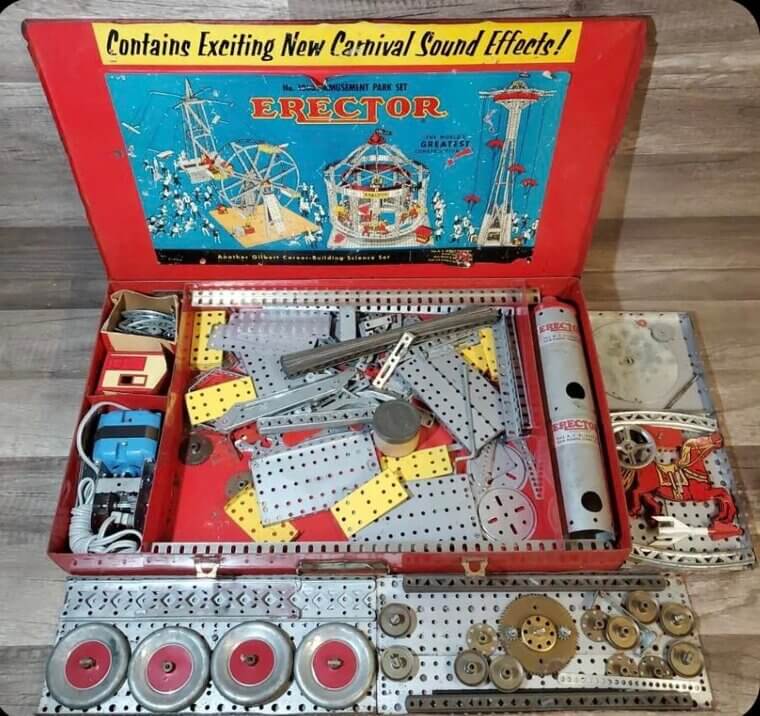
Gilbert's Erector Sets came with actual blueprints for real structures — bridges, cranes, Ferris wheels. Kids who built the Ferris wheel and got it spinning felt something that no video game has ever replicated.
Marbles Games in the Backyard Dirt
Marbles were ancient before the 1960s — children have been playing with them for thousands of years, which makes them one of the longest-running toys in human history. But the 60s had a specific marble culture: steelies, cat's eyes, aggies, and the prized shooter. Games had names — Ringer, Poison, Potsies — and serious players kept their best marbles in a velvet bag. Losing your favorite shooter to a better player was genuinely devastating. Vintage handmade German glass marbles from the early 60s now sell for $5–$50 each depending on pattern. Rare sulfides push into the hundreds.
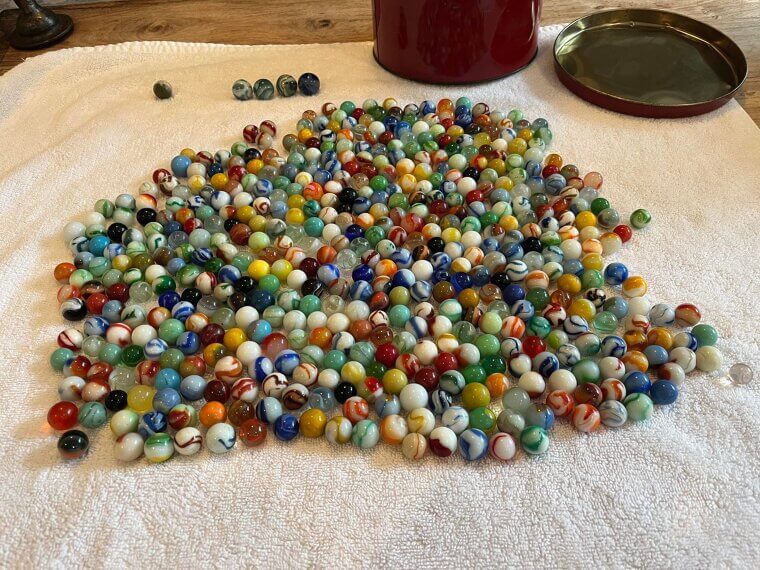
Marbles were one of the last toys where kids could actually lose their possessions to each other in fair competition. That genuine stakes element made every game feel like it mattered.
Soaring High with the Balsa Wood Glider
A balsa wood glider cost a dime and lasted about four flights before something snapped. That was fine. The ritual was buying another one. The simple fuselage-and-wing design, assembled by sliding the pieces together at slots, produced a surprisingly capable glider if you threw it at exactly the right angle. Throw too hard: it looped and crashed. Too soft: it fell flat. The sweet spot was magic. Vintage sealed balsa glider kits from the 1960s — especially the branded ones from Comet or Sterling — now sell for $15–$45. Cheap then, charming now.
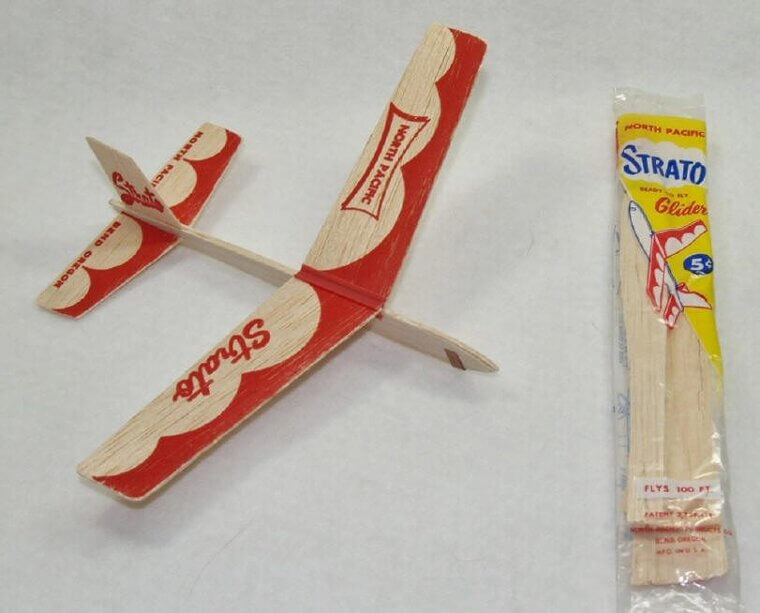
The balsa wood glider had a roughly 20-minute lifespan before a wingtip broke off. The solution was always the same: tape it, fly it twice more, then accept the loss with dignity.
Silly Putty That Stretched Imaginations
Silly Putty was a World War II accident — a GE engineer named James Wright was trying to create synthetic rubber in 1943 and produced a bouncy, stretchy silicone polymer instead. Nobody knew what to do with it for years. By the 1960s, it came in the iconic plastic egg and had found its true purpose: copying comic strips from the Sunday paper. Press it on newsprint, peel it off, and the image transferred perfectly — then stretch it for a funhouse mirror effect. A sealed 1960s Crayola-era Silly Putty egg in original packaging sells for $30–$80.
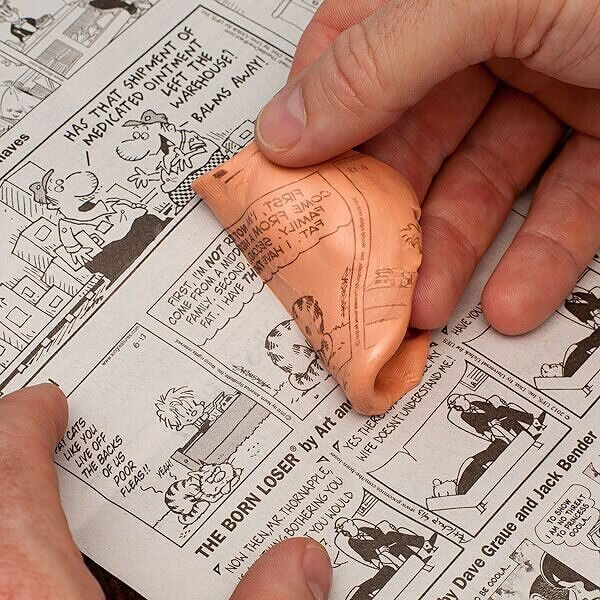
Silly Putty's greatest feature was entirely accidental — nobody designed it to copy newsprint. A child discovered that trick and it became the defining use of the product for decades.
The Wobbly Wonder of Weebles Figures
$4,000. That's what a complete, mint-in-box set of original 1971 Weebles — the first release, the year Hasbro Romper Room launched them — can pull from serious collectors today. 'Weebles wobble but they don't fall down' became one of the most recognizable toy slogans in history. The egg-shaped plastic figures with weighted bottoms were indestructible, unchokeable by design, and endlessly entertaining to toddlers. The 1960s-adjacent playsets — the Haunted House, the Weeble Treehouse — are the crown jewels. Single rare figures from limited sets sell for $200–$500 each. The wobble is worth every penny.
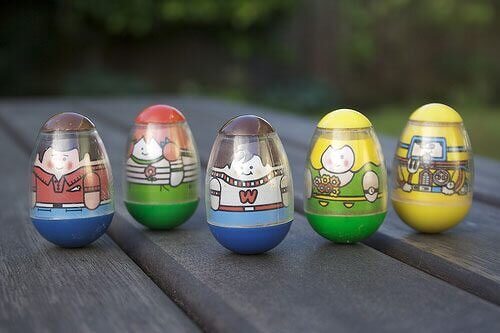
Weebles ended this era the way it deserved to end: with a toy that literally cannot be knocked down. After 40 slides, that feels less like a product description and more like a philosophy.