
Every town has that one sign that makes you slow down just to read it again. Turns out, the world is full of road signs that were meant to be perfectly serious — but landed somewhere between confusing and absolutely hilarious. From a street that technically has no name to a wind advisory that sounds like a philosophy lecture, these 30 signs earned their comedy reputations the hard way.
The "No Name" Street Sign Steals Scenes
You've seen them everywhere — those green street signs that simply read "No Name" in clean white letters. Every town seems to have at least one No Name Road or No Name Street, and every single time, someone pulls over convinced the city ran out of ideas. Tourists pose beneath them with exaggerated shrugs. Parents snap photos with their kids pointing up in disbelief. The joke writes itself, and it never gets old.
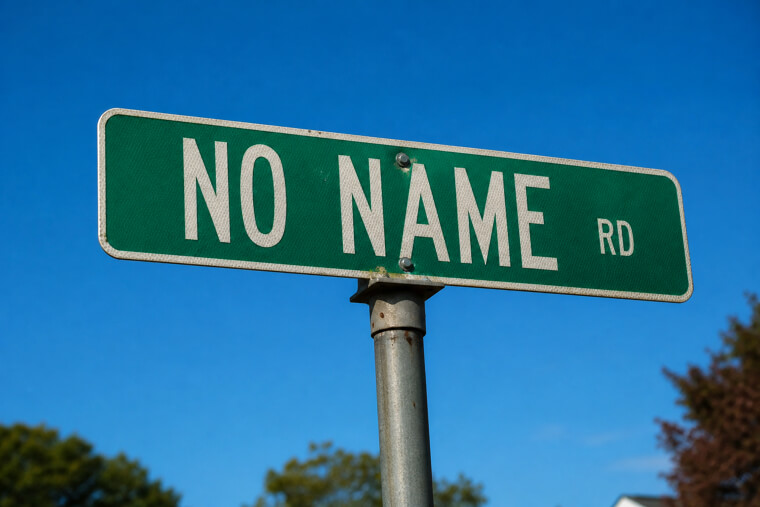
Here's the thing: these streets were deliberately named "No Name" because municipal databases require an entry for every road. The placeholder became permanent, and the comedy became legendary. But wait until you see what happens when a missing comma turns a safety sign into a neighborhood insult.
Caution: "Slow Children" Playing Ahead
Everyone knows the "SLOW CHILDREN" sign. It's been planted in neighborhoods across America for decades, warning drivers to watch for kids at play. But read it fresh, without the implied hyphen or comma, and it sounds like the city is publicly roasting every kid on the block. Parents noticed this long ago, turning these signs into one of the most photographed suburban comedy staples in existence.
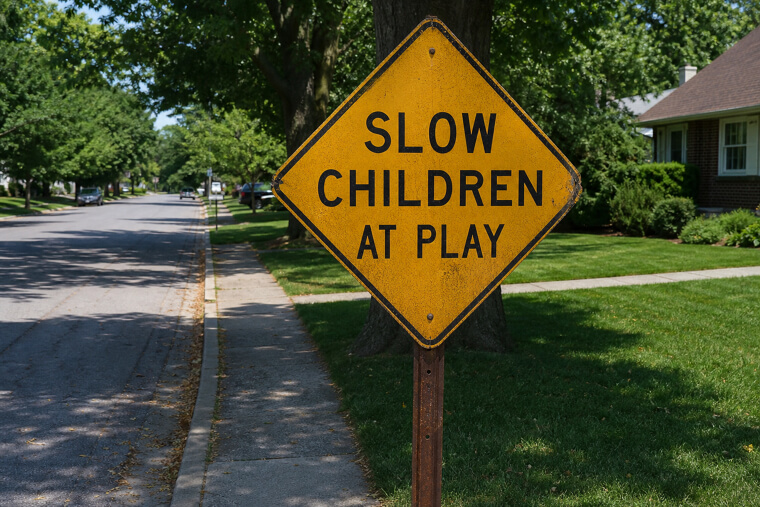
Some towns eventually caved, rewording signs to "SLOW — CHILDREN AT PLAY" after the jokes went viral and residents started asking uncomfortable questions at city council meetings. A few originals still survive in older neighborhoods, cherished by locals who appreciate the unintentional shade. Speaking of unintentional humor, there's a DOT-approved sign that makes entire carloads lose it every single time.
"Speed Hump" Signs That Launch Giggles
You already know the "SPEED HUMP" sign. It's the bright yellow diamond posted by every traffic-calming bump in suburban America, and it uses the perfectly correct Department of Transportation terminology. Nobody cares that it's correct. Every carload of teenagers, every family road trip, every rideshare passenger reads those two words and dissolves into laughter. The sign is so irresistibly funny that it's become one of the most stolen pieces of municipal property in the country.
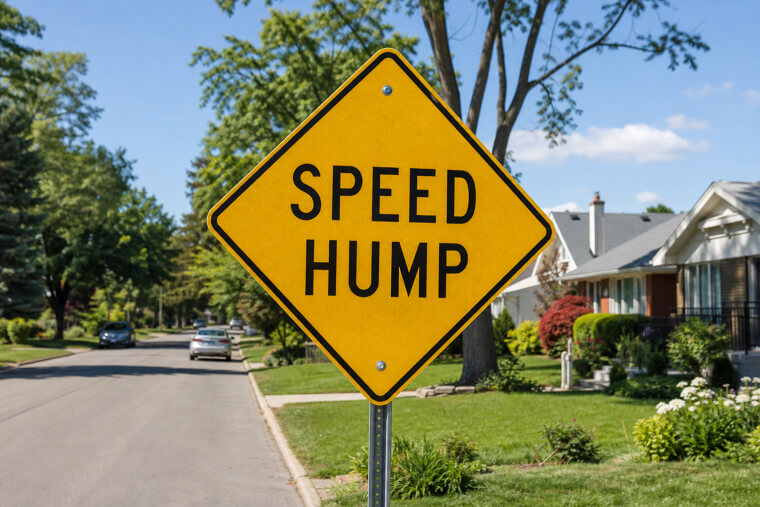
Several cities quietly switched to "SPEED TABLE" or "SPEED BUMP" specifically because they were bleeding money replacing pilfered signs. The DOT terminology hasn't changed, though — meaning somewhere right now, a city worker is bolting up a fresh one that won't last the weekend. Next up: a highway sign that once pointed drivers toward a town called Nothing.
The "Nothing" Sign in Arizona's Ghost Town
Somewhere along US Route 93 in Arizona, a green highway sign once read "Nothing 1 Mile" — and it was telling the absolute truth. Nothing, Arizona was a real place: a gas station, a garage, and exactly zero residents by the time it fully collapsed. But that sign became arguably the most photographed road marker in the entire Southwest. Travelers would pull over in the desert heat just to capture proof that the government was officially directing them toward Nothing.
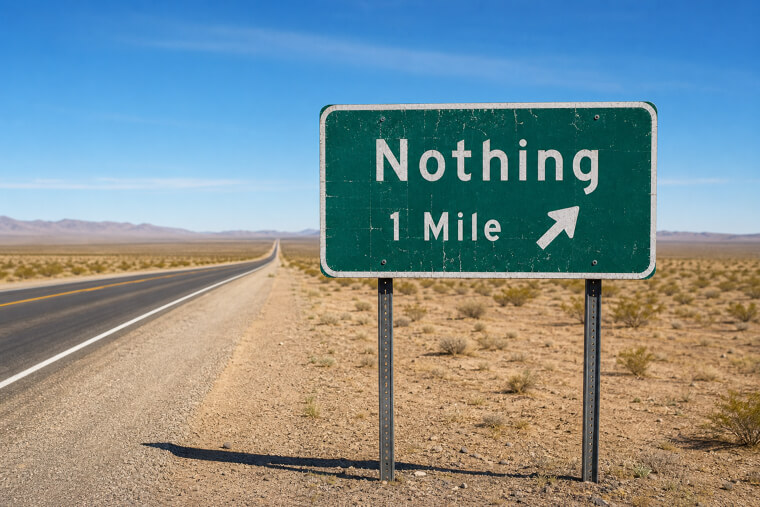
When the town was finally abandoned and the sign removed, something unexpected happened. Surviving photographs became genuine collector's items, shared across forums and framed in Arizona homes. The sign that pointed nowhere now means everything to the people who caught it in time. Across the Atlantic, British road signs have their own way of raising eyebrows — especially when they promise humps for miles.
Britain's "Humps for 3 Miles" Warning
Driving through the British countryside, you'll encounter a sign that stops American tourists mid-sip of their coffee: "HUMPS FOR 3 MILES." No context. No diagram. Just a bold promise stretched across a yellow warning plate on some quiet rural road. In British English, it's a perfectly mundane alert about speed bumps ahead. To everyone else, it reads like the tagline for something you'd find behind a curtain.
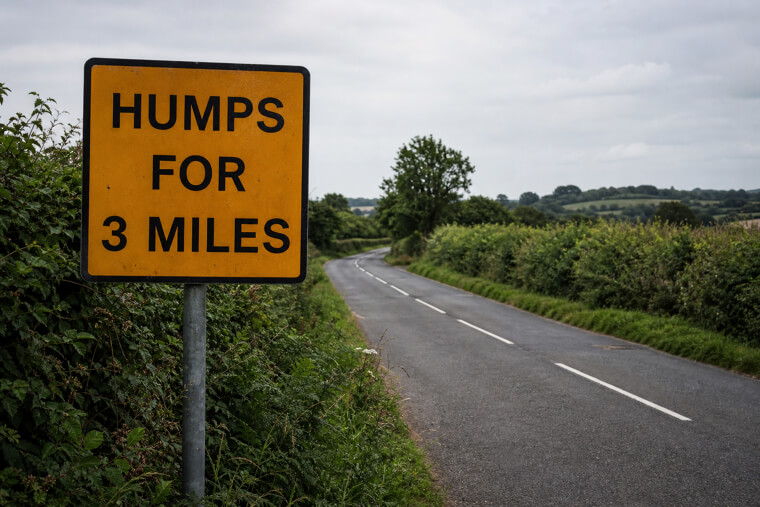
The sign has appeared in so many travel blogs and comedy specials that it's become unofficial proof of George Bernard Shaw's famous observation — two nations divided by a common language. British officials see nothing funny about it, which honestly makes it even better. Up next: a sign featuring a tiny frog that accidentally became a genuine lifesaver.
Why "Frog Crossing" Signs Actually Save Lives
Those frog crossing signs — featuring a little amphibian silhouette mid-leap — look like someone in local government lost a bet. But towns across rural England and in places like Amherst, Massachusetts, installed them during spring migration season when thousands of frogs cross roads to reach breeding ponds. The results were startling. Communities reported amphibian roadkill dropping by as much as 50 percent after installation.
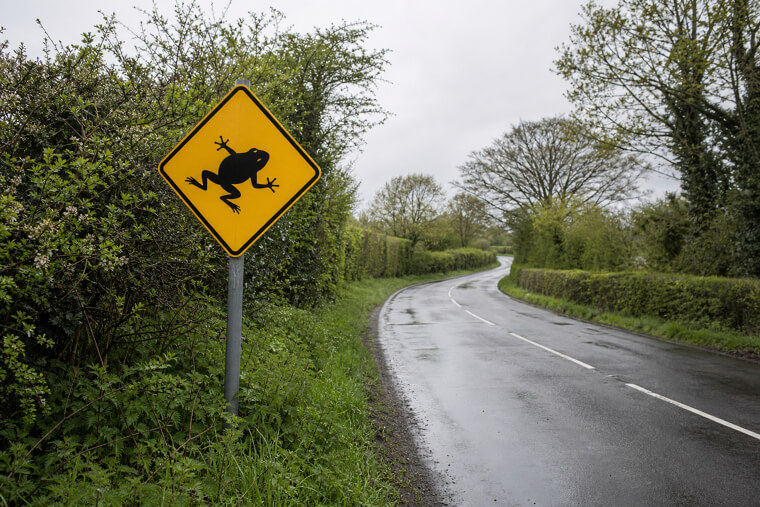
Here's the accidental bonus nobody predicted: drivers slowed down so much for the funny frog signs that nearby school zones saw reduced speeding too. A joke-worthy silhouette was quietly doing more for child safety than the actual school zone signs nearby. Speaking of signs reinforcing national stereotypes, wait until you see what a Canadian construction crew apologized for.
The Canadian "Sorry" Detour Sign Goes Viral
If you're ever driving through Ontario and spot a construction zone, slow down and grab your camera. Somewhere in the Greater Toronto Area, a detour sign became the most Canadian thing ever captured on film: the word "SORRY" printed in massive block letters across the top, with "for the inconvenience" slightly smaller beneath it, and the actual directional arrow — the sign's entire functional purpose — shrunk to nearly invisible at the bottom. Priorities, clearly.
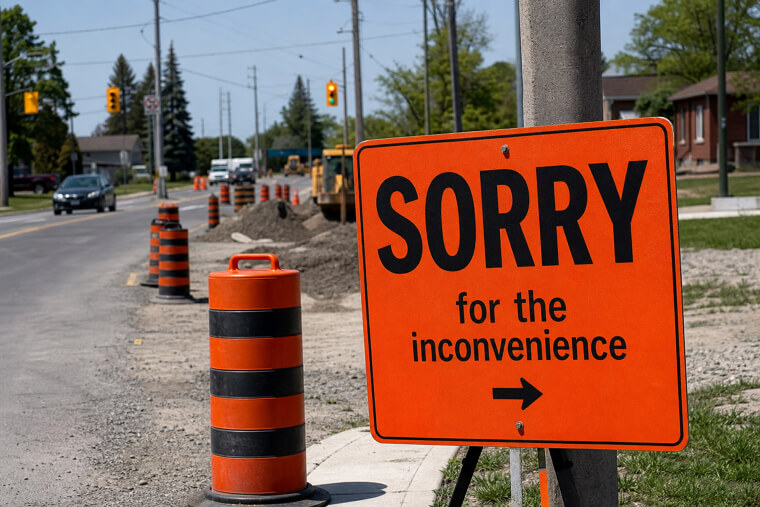
The photo went viral almost instantly, confirming every stereotype the internet already held about Canadian politeness. Now tourists actively hunt for their own apologetic construction signs during Ontario road trips. Some visitors have reported finding gems like "THANK YOU FOR YOUR PATIENCE" on barriers blocking completely empty work sites. It's become a legitimate travel activity — construction zone tourism. But what happens when a perfectly ordinary highway sign accidentally sounds like a snack invitation?
"Dip" Signs That Confuse Hungry Travelers
Here's a highway sign that accidentally started a food fight. The standard yellow "DIP" warning — meant to alert drivers about a dip in the road ahead — has become one of the most memed signs in America. Travelers photograph themselves next to it holding bags of tortilla chips, looking around in exaggerated confusion for the salsa. The joke is so widespread that at least two Mexican restaurants located near DIP signs seized the marketing opportunity, adding "We Have the Dip" to their own signage.
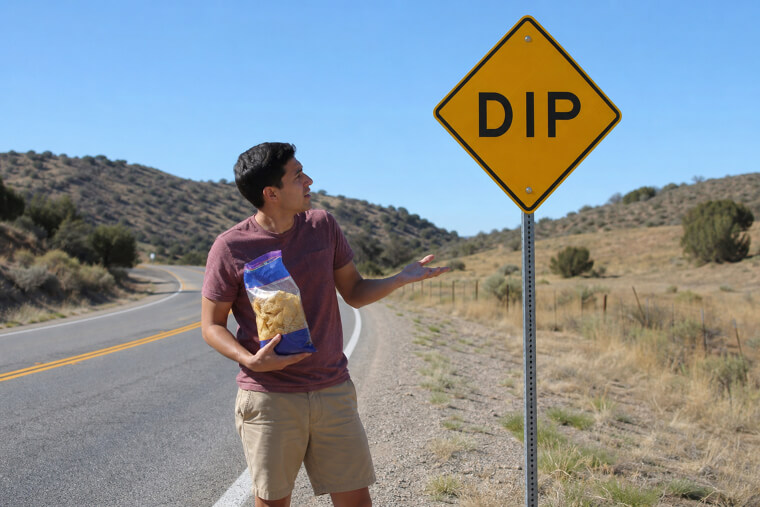
One taqueria in Texas reportedly saw foot traffic jump after embracing the gag, proving that sometimes the best advertising is an accident planted by your state's Department of Transportation. Next up, a country where even the warning signs look like they belong in a children's storybook.
Finland's "Beware of Reindeer" Diamond Sign
Finland's triangular reindeer warning signs are arguably the most commercially successful road signs on Earth — they outsell postcards in Lapland gift shops. But here's what most souvenir buyers don't know. The reindeer silhouette you see today isn't the original. Finnish transport officials quietly redesigned it in the 1990s because the first version depicted the reindeer with its legs positioned in a way that made it look like it was dancing.
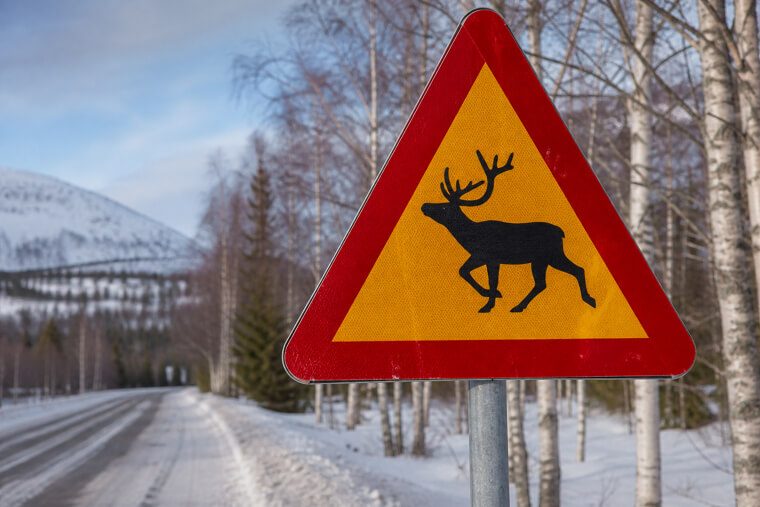
Officials worried the cheerful pose undermined the genuinely serious collision risk — Finland records thousands of reindeer-vehicle accidents annually. So they stiffened the silhouette into a more dignified stance, essentially giving a cartoon reindeer a professional makeover. Australia took a very different approach with its wombat signs.
Australia's "Wombat Crossing" Road Markers
If you're planning a drive along Tasmania's west coast, keep your eyes peeled for one of Australia's most charming road signs: the wombat crossing marker. It features a beautifully pudgy wombat silhouette mid-waddle, and it's become so beloved that tourists steal them constantly. Transport authorities replace them regularly, which is partly why the silhouette now lives a second life as Australia's best-selling wildlife fridge magnet.
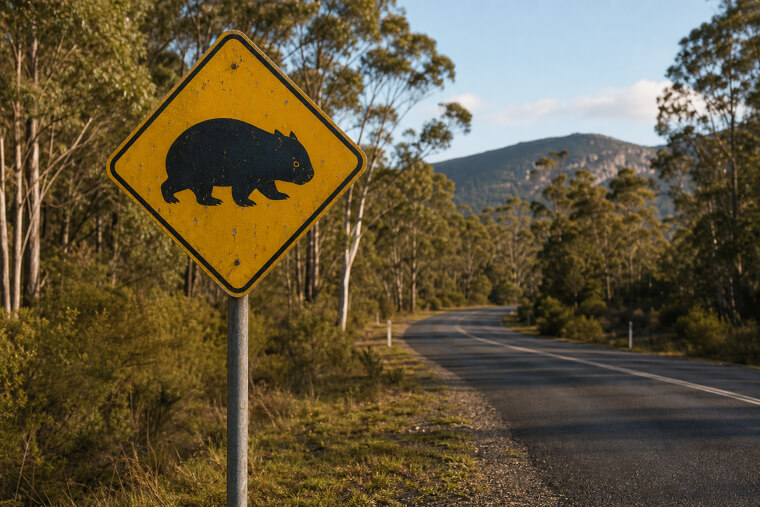
For the best chances of spotting originals still standing, drive the rural stretches between Strahan and Queenstown, where replacement signs haven't been pinched yet. Pair the drive with dusk timing and you might even see an actual wombat crossing. But what happens when a road sign warns about flooding in a place that hasn't seen rain in months?
"Road May Flood" Next to a Desert Highway
You're driving through the Nevada desert. Sand stretches to every horizon. The air shimmers with heat. And then you spot it — a bright yellow "ROAD MAY FLOOD" sign standing in what looks like the driest place on Earth. Your first instinct is to laugh, maybe snap a photo of what seems like a bureaucratic blunder. But this sign isn't a joke. Desert arroyos — dry creek beds that look completely harmless — can transform into raging torrents within minutes during a sudden storm.
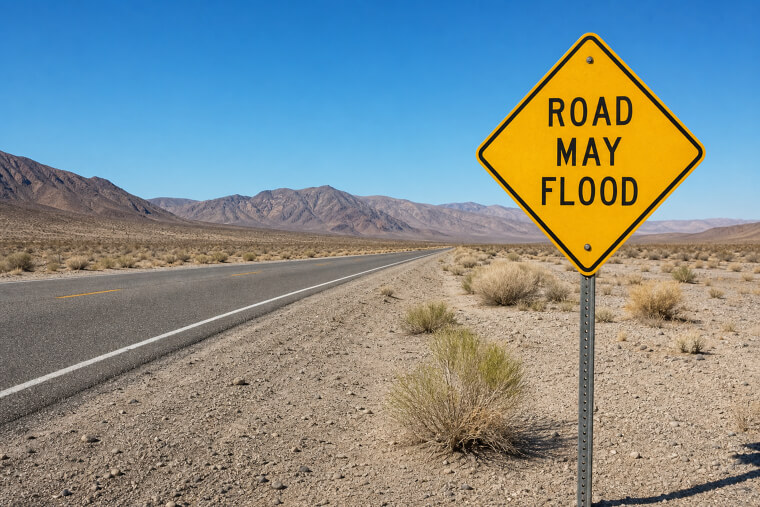
Flash floods in the American Southwest kill more people annually than almost any other regional weather event. The bone-dry landscape can't absorb sudden rainfall, so water rockets across the surface with terrifying speed. That ridiculous-looking sign might be the most important one you'll ever ignore at your own peril. Speaking of signs that sound more like personality diagnoses than traffic warnings, wait until you meet the UK's brutally honest "Accident Prone Area."
The Legendary "Accident Prone Area" Sign
The UK's "ACCIDENT PRONE AREA" signs are scattered across roads in England and Scotland, and they read less like traffic warnings and more like something a therapist would write in your file. The blunt phrasing assigns clumsiness to an entire stretch of asphalt, as if the road itself needs an intervention. But here's where the irony gets dangerously real: insurance companies have documented cases where drivers distracted by photographing these signs actually caused collisions — the very accidents the signs were installed to prevent.
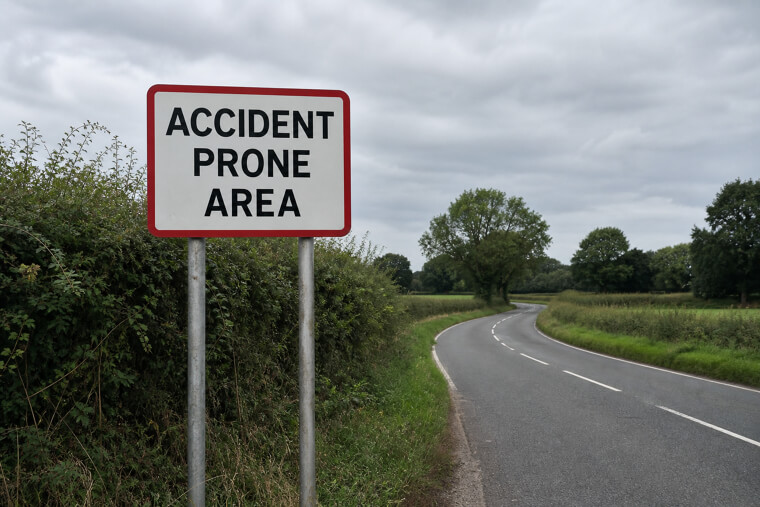
Transport officials face a genuine dilemma. Removing the signs could increase risk, but keeping them creates a self-fulfilling prophecy of rubbernecking drivers fumbling for their phones. It's a feedback loop where comedy and consequence are locked in an endless dance. And speaking of signs that practically beg to be stolen, South Carolina's highway department has a recurring headache with one particular exit.
Why "Pee Dee" Exit Signs Get Stolen Constantly
South Carolina DOT workers know the drill: drive out to the Pee Dee River exits along I-95 and I-20, replace the stolen signs, wait a few weeks, repeat. The name comes from the Catawba-speaking PD tribe — a legitimate piece of Indigenous history anglicized into something that reads like a bathroom joke to passing motorists. Replacement costs run into thousands annually, and crews have experimented with higher mounting poles and tamper-resistant bolts.
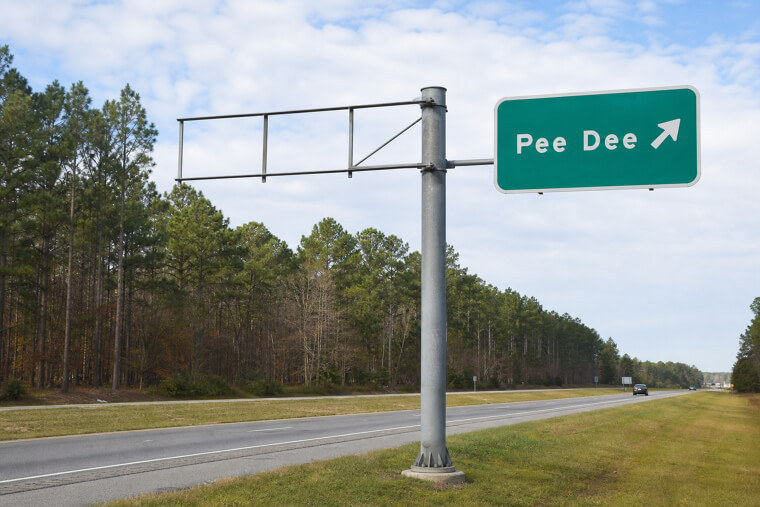
None of it works for long. Insider tip: the signs along secondary Route 378 survive slightly longer because fewer travelers pass through, making them the best place to actually photograph one still standing. Up next, a humble Swedish moose sign accidentally revolutionized how the entire auto industry tests car safety.
Sweden's "Moose Test" Warning Became a Car Review
A triangular yellow sign showing a moose silhouette — standard on Swedish highways since the 1950s — accidentally became the namesake of one of the auto industry's most feared safety evaluations. Swedish automotive journalists developed the "moose test" to simulate a driver swerving to avoid a sudden animal in the road. It was a niche Scandinavian procedure until 1997, when a brand-new Mercedes-Benz A-Class dramatically flipped onto its roof during the maneuver.
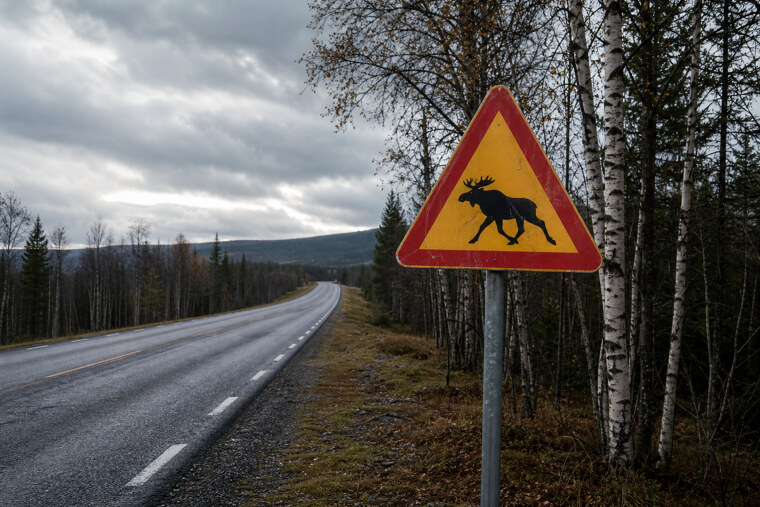
The footage went global. Mercedes recalled 130,000 vehicles, redesigned the car's suspension, and made electronic stability control standard — a feature now required in vehicles worldwide. All because someone took a moose sign seriously. Meanwhile, in Miami, someone installed an ice warning sign where it never freezes.
The "Watch for Ice" Sign in Miami, Florida
Miami, Florida — where sunscreen outsells winter coats a thousand to one — has a "WATCH FOR ICE ON BRIDGE" sign perched on an overpass that hasn't seen ice since, well, possibly ever. Temperatures in Miami rarely dip below 50°F, making the warning feel like a practical joke played by a bureaucrat with a dry sense of humor.
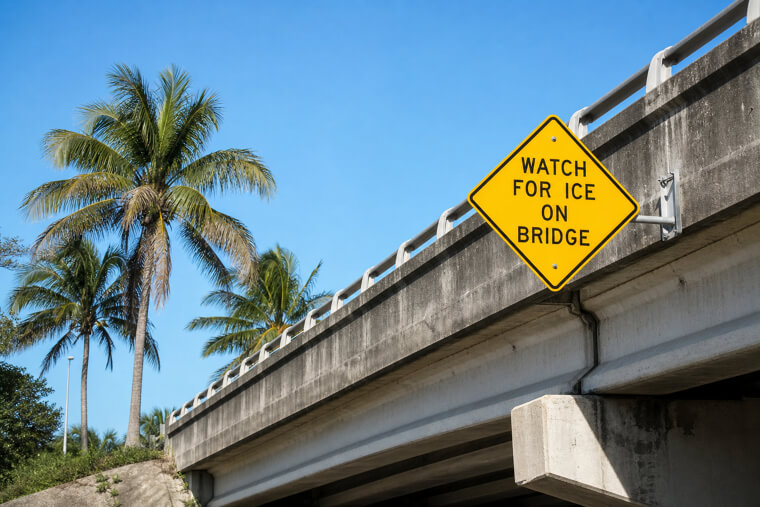
The explanation is pure government logic: federal bridge funding came with mandatory signage requirements, applied uniformly regardless of climate. So Miami got the same ice warning as Minneapolis. Locals adopted it as an unofficial monument to red tape, proof that paperwork doesn't care about weather. Next up, a sign that trades absurdity for existential crisis.
"End" Sign Standing Alone Sparks Existential Dread
It's just a white rectangular sign with one word — END — marking where a speed zone or construction area stops. But photograph it alone on a fog-draped road at dusk, and suddenly you've got something that belongs in a museum. These images circulate every January, every breakup season, every graduation week. People going through divorce, grief, or career changes share them with captions that hit harder than any poet intended.
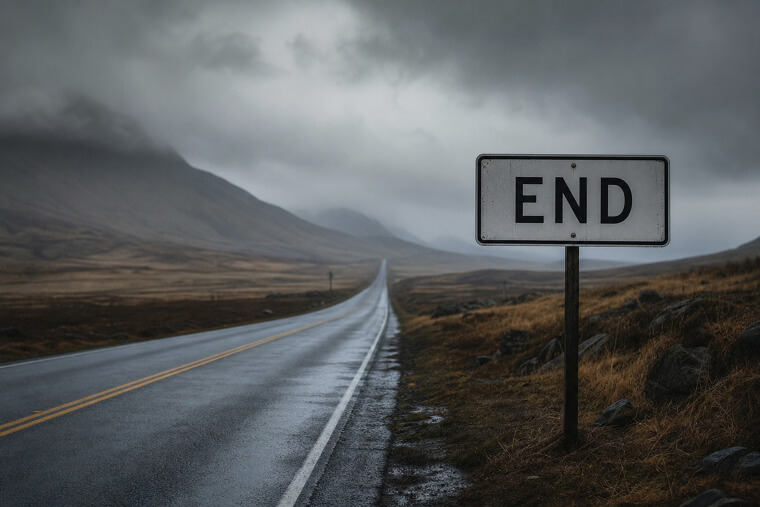
The sign means nothing profound. It's a bureaucratic period at the end of a regulatory sentence. Yet thousands of people have saved these photos to their phones like prayers — small reminders that everything, good and terrible, eventually reaches its marker. Speaking of signs with unexpected artistry, wait until you see Japan's hand-drawn bear warnings.
Japan's "Beware of Bears" Cartoon Masterpieces
Japan's bear warning signs aren't mass-produced — they're hand-painted by local officials, which means every prefecture has its own artistic interpretation. Collectors have cataloged hundreds of regional variations, and the differences are staggering. Hokkaido's signs tend toward genuinely menacing bears with bared teeth. Nagano's often feature a bear standing politely upright, paws at its sides, looking more like it wants to introduce itself than maul you.
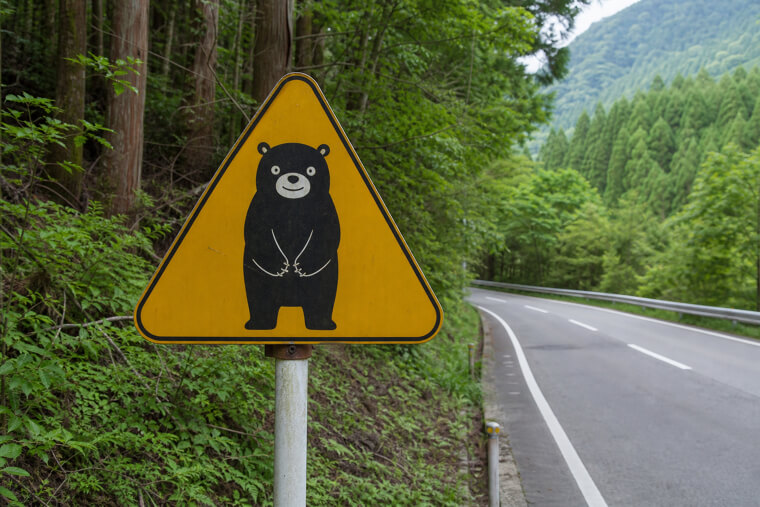
Some signs include bears chasing stick figures, others show bears simply vibing near trees. The unintentional effect is a nationwide gallery of folk art doubling as life-or-death advisories. Dedicated photographers travel between prefectures specifically to document the full spectrum from cuddly to terrifying. But nothing matches the existential comedy of the next sign — one warning about falling rocks you can't possibly dodge.
The "Falling Rocks" Sign Nobody Can Outrun
The falling rocks warning sign — a triangle showing boulders cascading toward a helpless vehicle — is perhaps the most honestly unhelpful sign ever erected. Comedians from George Carlin onward have posed the obvious question: what's the driver supposed to do? Speed up? Swerve? Pray? The answer, according to geologists and transportation lawyers, is nothing. The sign exists primarily so that when a boulder does flatten your sedan, the municipality can argue in court that you were warned.
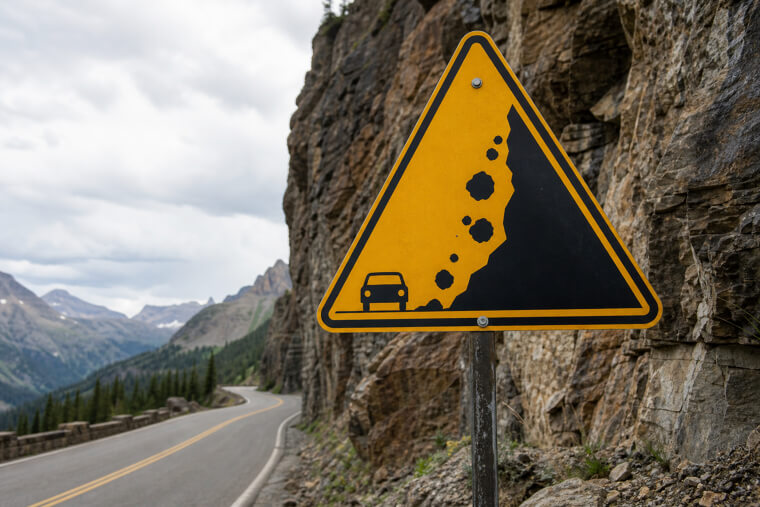
It's liability theater disguised as public safety, and that makes the comedy cut deeper. The sign doesn't protect you — it protects the budget of whatever agency posted it. You're still on your own against gravity. Up next, a sign where camels replace cars in ways that demand a photo stop.
"No Overtaking" Signs Where Two Camels Race
If you're driving through Oman's interior or along UAE desert highways, keep your camera ready for no-overtaking signs featuring two camel silhouettes racing side by side instead of cars. These official traffic signs follow the same red-circle format used worldwide, but the camel swap makes them irresistible photo ops. Several tour operators along Oman's Wahiba Sands route now include "camel sign spotting" as a scheduled activity on desert driving excursions.
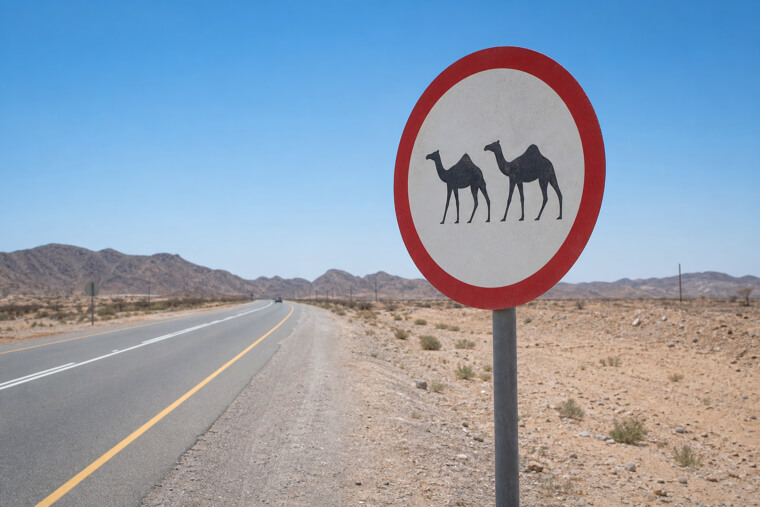
The best hunting grounds are secondary roads between Nizwa and Sur, where signs appear every few kilometers. Grab your shot quickly — pulling over on desert highways isn't always safe, and the irony of causing an accident at a traffic sign would be too perfect. Next up, a New Zealand sign that actually delivers on its adorable promise after dark.
New Zealand's "Penguins Crossing" Night Signs
Near Oamaru on New Zealand's South Island, illuminated penguin crossing signs flicker to life at dusk — perfectly timed with the nightly parade of little blue penguins waddling from the ocean to their hillside nests. To catch the full experience, drive the coastal road between Oamaru's historic district and Bushy Beach around sunset. Park safely, watch the signs glow amber, then wait. Within minutes, actual penguins appear, toddling across the asphalt like tiny, tuxedoed pedestrians validating every word on the sign.
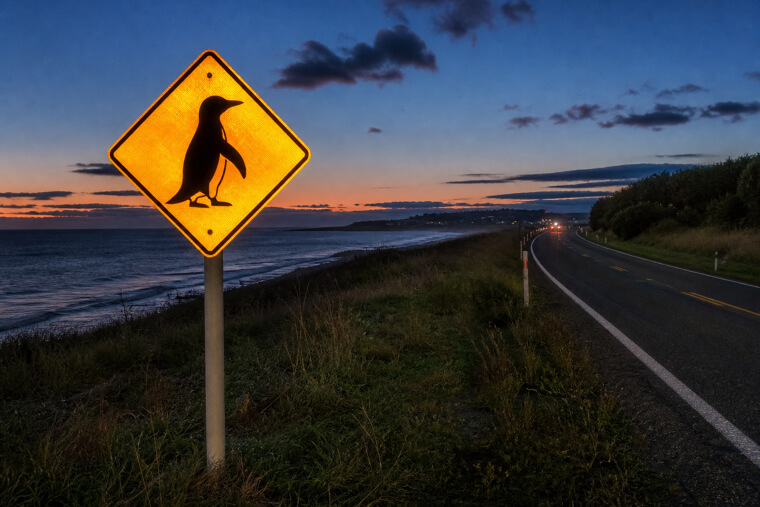
It's one of the rare cases where a funny road sign delivers living proof. Local guides recommend visiting between September and February for peak penguin traffic. But the next sign proves that sometimes the funniest signs aren't in remote locations — they're on one of Europe's most famous train platforms.
The "Llanfairpwllgwyngyll" Station Sign in Wales
The railway station sign at Llanfairpwllgwyngyllgogerychwyrndrobwllllantysiliogogogoch in Wales stretches an absurd 58 letters across the platform — and every single one was a calculated marketing decision. In the 1860s, a local cobbler convinced the town to lengthen its already long name specifically to claim the title of longest railway station name in Britain. The goal? Lure curious Victorian travelers off the train. It worked spectacularly, and it's still working today. Tourists queue up daily to photograph themselves beside the sign, attempting hilariously butchered pronunciations.
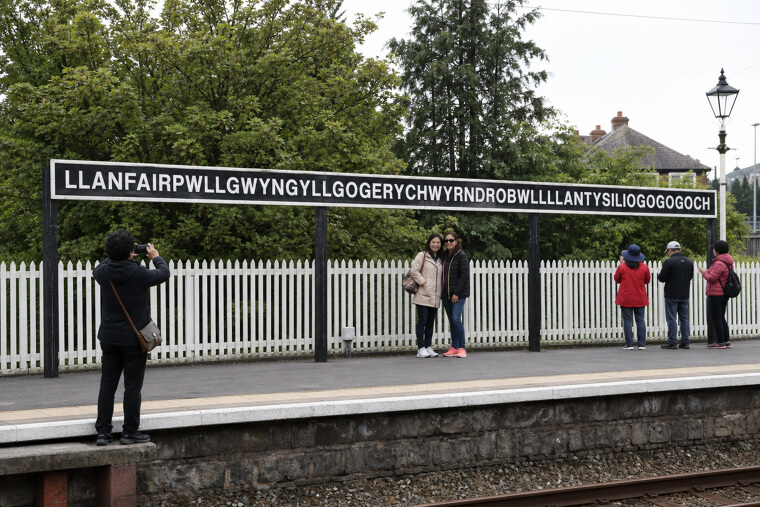
It's arguably history's first viral marketing campaign — invented a century before the internet existed. The town even sells platform tickets just so visitors can access the sign. But the next sign proves you don't need 58 letters to achieve philosophical greatness — sometimes just four words will do.
Why "Gusty Winds May Exist" Is Philosophically Perfect
Most wind warnings say gusts "may occur." But scattered across California and Nevada highways, you'll find signs reading "GUSTY WINDS MAY EXIST" — and that single word choice elevates a traffic warning into accidental philosophy. Linguists have had a field day with this one. "Occur" implies an event. "Exist" implies being. The sign doesn't warn that wind might happen to you — it quietly suggests that wind possesses its own state of existence, independent of whether you're there to feel it. It's Descartes for the interstate.
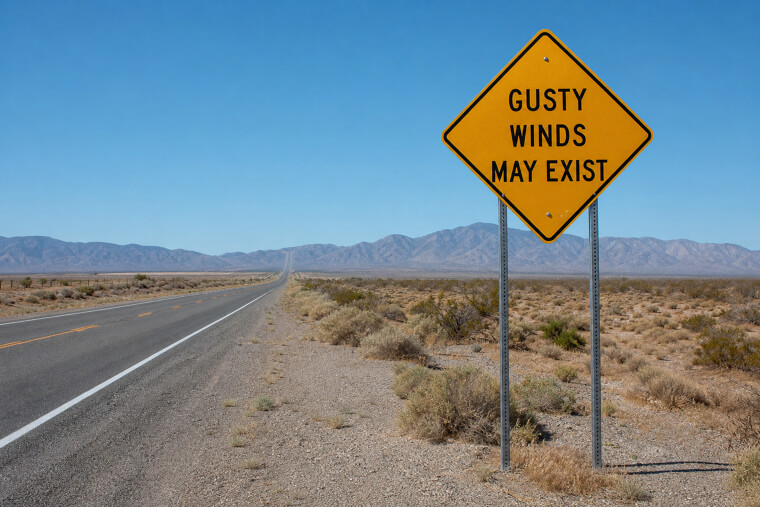
Transportation departments likely chose "exist" for bureaucratic reasons lost to time, but the result is a sign that makes physicists, philosophy majors, and stoned passengers equally delighted. It's been called the most unintentionally profound road sign ever made. Speaking of signs that provoke unexpected reactions — Iceland has one that makes first-time visitors genuinely nervous.
Iceland's "Blind Hill" Signs Terrify First-Timers
Driving Iceland's Ring Road, you'll encounter "BLINDHÆÐ" signs every few miles — stark yellow diamonds reading "BLIND HILL" in English beneath the Icelandic. They're warning you about a hill crest where you can't see oncoming traffic. Perfectly logical. But first-timers consistently interpret them as declaring the hill itself is blind, as though the landscape has a medical condition. Social media is littered with bewildered tourists tagging photos: "Why is Iceland warning me about a hill that can't see?"
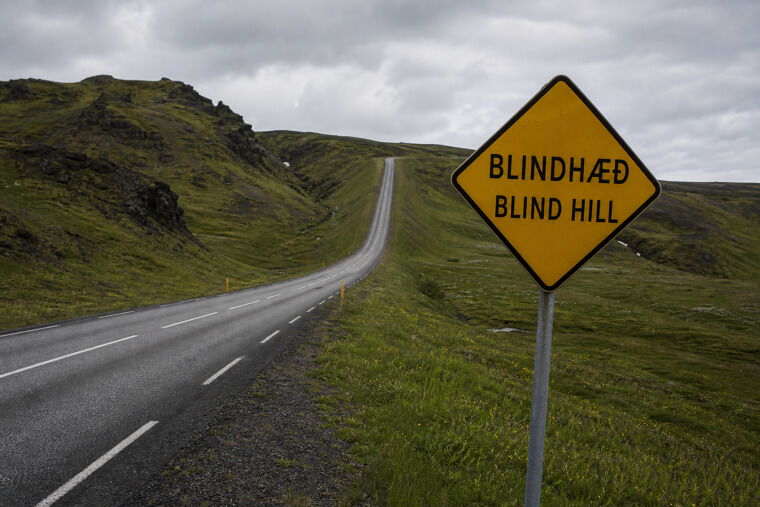
Plan for it — the Ring Road serves up dozens of these signs between Vik and Akureyri alone. Pull over safely, snap your photo, and join the tradition. Just remember the sign's actual purpose and slow down at the crest. Next up, an English country road delivers a genre shift no driver sees coming.
The "Tank Crossing" Sign on English Country Roads
You're winding through the English countryside near Salisbury Plain — thatched cottages, grazing sheep, hedgerows brushing your mirrors — when a diamond-shaped sign appears bearing the unmistakable silhouette of a military tank. "TANKS CROSSING." Your brain needs a moment. This isn't a museum exhibit or a quirky pub decoration. The British Ministry of Defence operates active training grounds here, and actual Challenger 2 tanks regularly lumber across public roads. Traffic stops. A 62-ton war machine rolls past your hatchback.
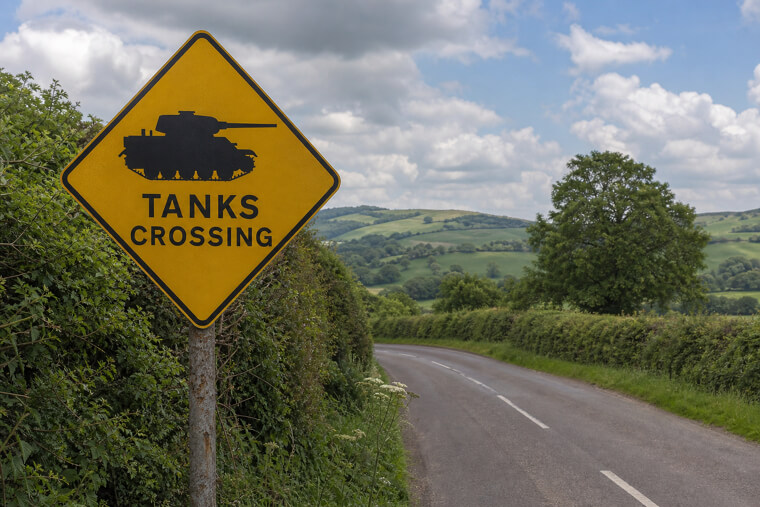
Locals barely glance up. For everyone else, the tonal whiplash — from Jane Austen to James Bond in three seconds flat — is unforgettable. Tourists report feeling like they've accidentally driven onto a film set. But the next sign proves that sometimes the most obvious warning is also the most essential.
"Do Not Pass When Opposing Traffic Present"
"DO NOT PASS WHEN OPPOSING TRAFFIC PRESENT" stretches across American two-lane highways like a sentence that escaped a bureaucratic memo. Comedians and social media users have roasted it for years — because when, exactly, would you pass by driving into oncoming cars? The sign reads like instructions for someone who's never encountered traffic before. But here's where the laughter stops. When several states removed these "obvious" signs from test corridors to reduce signage clutter, researchers documented a measurable spike in head-on collisions.
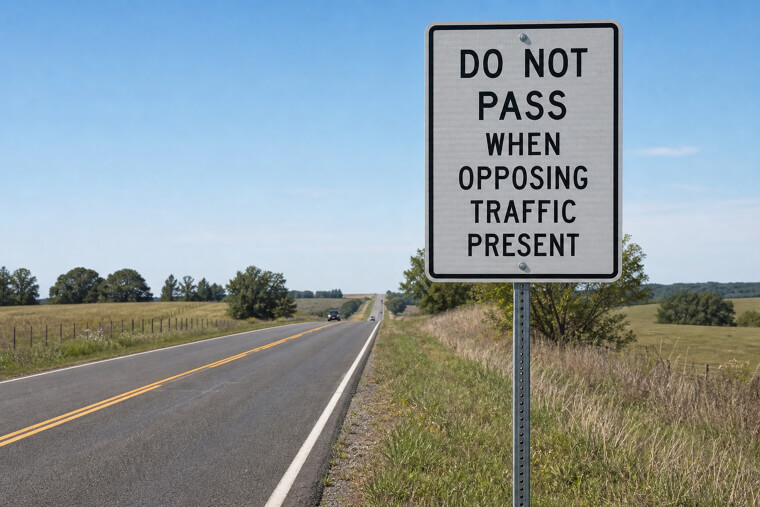
Drivers were actually attempting dangerous passes more frequently without the wordy reminder staring them down. The sign that sounds like it was written for no one turned out to be written for exactly the right people. Sometimes comedy and life-saving overlap perfectly. Up next, a sign with a cheerful animal silhouette hides one of Africa's deadliest realities.
South Africa's "Hippo Crossing" Signs Mean Business
The hippo crossing signs near Kruger National Park feature an adorable silhouette — a pudgy hippo mid-trot, looking like something from a children's cartoon. You'd be forgiven for smiling. Don't. Hippos kill roughly 500 people every year across Africa, making them far deadlier than lions or crocodiles. They sprint at 20 mph, outrunning most humans easily. Their jaws generate enough force to bite a canoe clean in half. That cheerful little silhouette represents a two-ton animal with a notoriously short temper and zero interest in being cute.
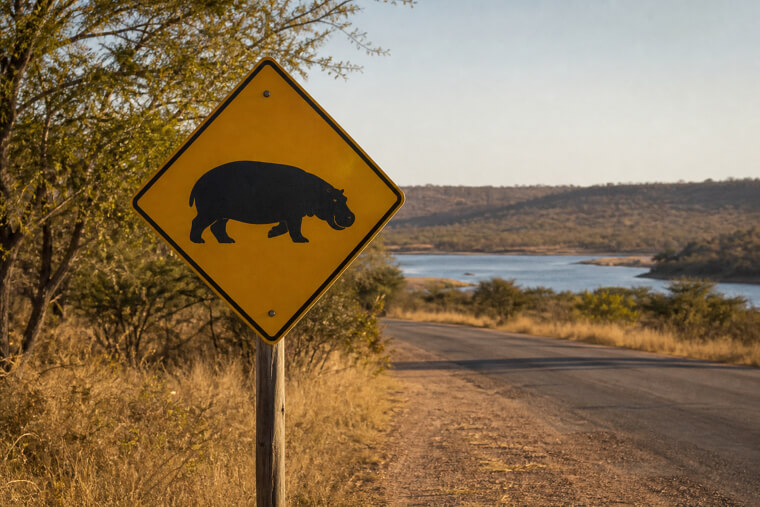
The sign's whimsical design arguably works against its purpose — tourists stop to photograph it instead of scanning the riverbanks. Local guides say the mismatch between the sign's tone and the animal's reality is genuinely dangerous. It's the rare case where a funnier sign might actually be a worse sign. Speaking of signs tied to raw human emotion, the next one made a painful day slightly more bearable.
The "Divorce Court" Road Sign in Pennsylvania
Nobody drives to divorce court in a good mood. But for years, a hand-lettered sign near a Pennsylvania courthouse reading "DIVORCE COURT" with a bold directional arrow gave people heading to their worst appointment something unexpected — a real laugh. It wasn't official. Someone had planted it like a small act of mercy, and the county left it standing. Locals said it worked like a pressure valve, breaking the tension at the exact moment everything felt heaviest.
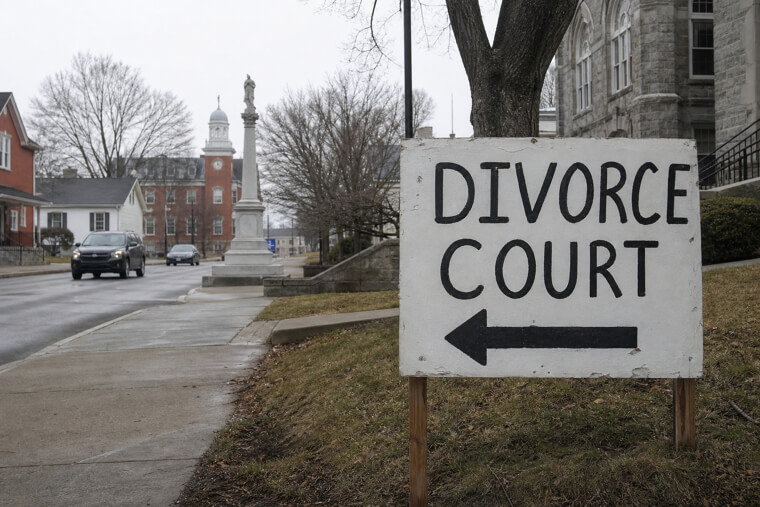
One woman reportedly told a court clerk the sign was the first time she'd smiled in weeks. Sometimes the funniest signs aren't funny at all — they're kind. Next up, a sign that turned every rural driveway into a spy novel.
"Hidden Driveway" Signs That Sound Like Spy Movies
Every kid who grew up on a country road knows the "HIDDEN DRIVEWAY" sign. It's a simple yellow warning, but to a seven-year-old staring out the back window, it was confirmation that someone nearby lived in a secret lair. You'd crane your neck trying to catch a glimpse through the trees, inventing entire lives for whoever lived behind that wall of overgrown forsythia. A retired spy. A witch. A millionaire who didn't want visitors.
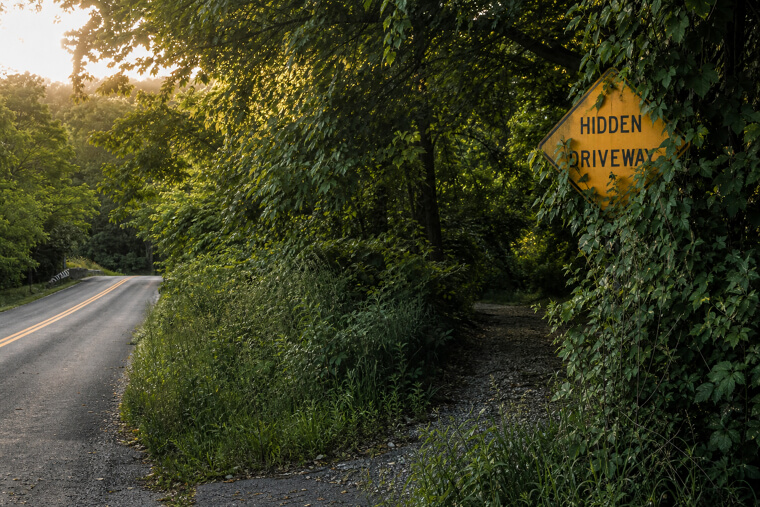
The sign meant nothing more than "slow down, a car might pull out" — but it handed rural childhoods a gift: mystery on an otherwise familiar road. Some of us still glance sideways every time we pass one, half-hoping to finally see what's hidden. Speaking of hidden gems, the next sign belongs to a town that turned its unfortunate name into a global destination.
The "Welcome to Boring" Sign in Oregon
Boring, Oregon doesn't just accept its unfortunate name — it throws a party around it. The town's welcome sign draws thousands of tourists annually who pull over for the most self-deprecating photo op in America. But the real move is visiting the Boring post office, where you can mail postcards stamped with the official Boring postmark. Birthday cards, wedding invitations, breakup letters — everything hits differently with that stamp. The town even formed an international alliance with Dull, Scotland, and Bland, Australia, calling themselves the "Trinity of Tedium."
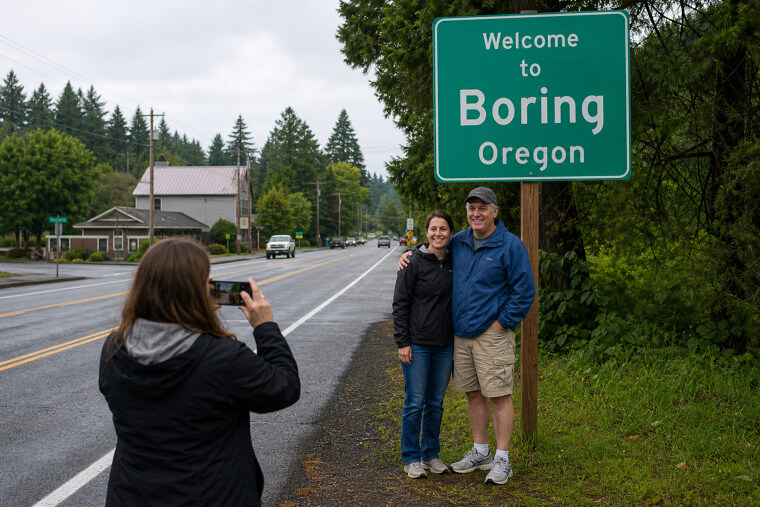
They celebrate together every August with a joint festival. If you're road-tripping through Oregon, the detour takes minutes but delivers a souvenir nobody forgets. Our final sign proves the simplest words sometimes carry the deepest meaning.
"Share the Road" — Grandpa's Favorite Life Advice
The "SHARE THE ROAD" sign was never trying to be profound. It just wanted cyclists and cars to coexist. But somewhere along the way, grandparents started quoting it at Thanksgiving. Teachers taped it above classroom doors. A retired postal worker in Vermont cross-stitched it onto a pillow for his granddaughter's wedding, and she cried. The sign works because it asks so little — just share. Share space, share time, share patience with the person beside you who's also just trying to get somewhere.
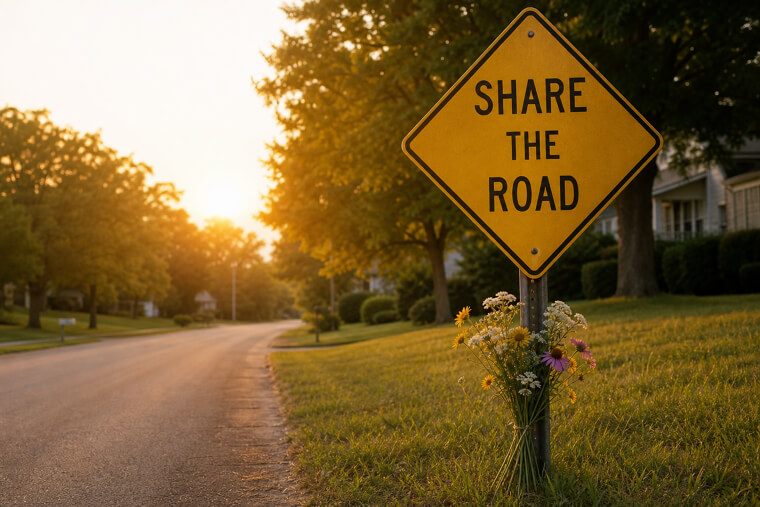
It's the road sign that stopped being about roads entirely. People put it in retirement speeches, birthday cards, even eulogies. Two simple words that somehow carry the weight of every lesson worth teaching. Maybe that's the best thing a sign can do — start as directions and end as something you actually live by.Disclaimer: This story is based on real events. However, some names, identifying details, timelines, and circumstances have been adjusted to protect the privacy of the individuals involved. The images in this article were created with AI and are illustrative only. They may include altered or fictionalized visual details for privacy and storytelling purposes