
Some of these aged terribly. Others somehow got cooler with time. Scroll through and decide for yourself.
The Rotary Phone: Clunky Relic or Design Triumph?
The rotary phone sat in nearly every American hallway from the late 1940s through the 1970s, and depending on your perspective, it either looks like a relic from a black-and-white film or a beautifully over-engineered object that modern phones will never match for sheer physical satisfaction. Western Electric made millions of them. The standard black model is chunky and utilitarian. But a pastel pink or turquoise model — especially a wall-mounted version — has a visual weight and color confidence that most contemporary design completely abandoned.
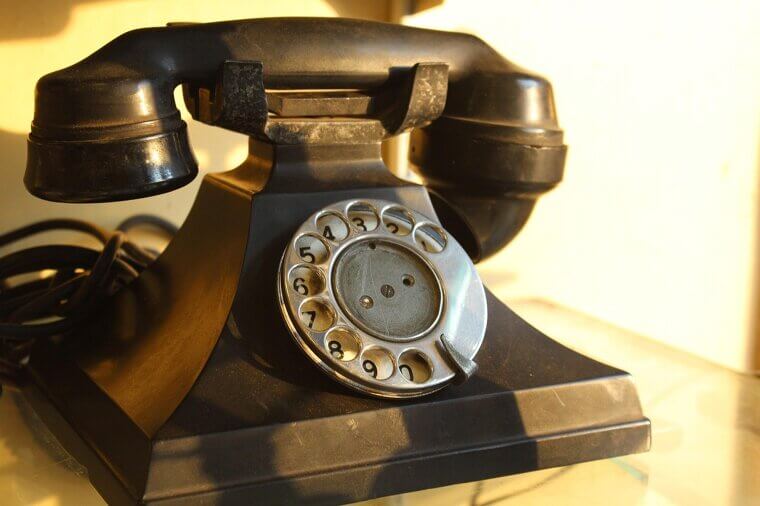
A working pink Western Electric 500 in original condition recently sold for $175 on eBay. Ridiculous paperweight or genuinely gorgeous object? The bidding history suggests people are landing firmly on one side of that question.
Those Folding TV Trays Were Peak Mid-Century
Four folding metal trays, a matching stand, and a printed surface featuring autumn leaves or abstract geometric patterns — the TV tray dinner set was domestic life in the 1950s and 60s distilled into a single object. Up close, the lithographed designs on better sets have a folk-art flatness that reads almost intentionally retro now. Others, with their floral arrangements and harvest-gold color palettes, look exactly as dated as you would expect. Whether that's ridiculous or charming depends entirely on your tolerance for mid-century optimism.
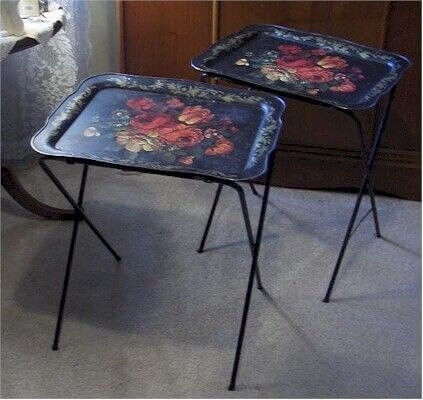
Complete sets of four with original stands sell for $35–$85 at estate sales. They are also, notably, still completely functional — which is more than can be said for most objects currently described as 'decorative accents.'
Aluminum Tumblers: Gorgeous, and Slightly Useless
Eight pastel aluminum tumblers nested inside each other, in pink, blue, green, and gold — this was the everyday glassware of the American 1950s household. Brands like West Bend and Mirro made millions of them. Visually, they occupy a strange middle ground: the colors are saturated and genuinely lovely, the cylindrical forms are clean and unfussy, and yet they conduct heat so efficiently that iced tea becomes lukewarm in roughly four minutes. Beautiful to look at. Deeply impractical to use. That combination is either ridiculous or perfect, depending on your priorities.
Rare colors like black or deep red command collector premiums, with original box sets in mint condition reaching $80 or more. The visual appeal aged surprisingly well. The physics of aluminum, less so.
The Swing-Arm Lamp Hid a $3,000 Secret
The swing-arm wall lamp was built entirely around function — pivot, extend, angle, illuminate — but the best versions ended up looking extraordinary in the process. American manufacturers like Lightolier produced clean, utilitarian models. Italian manufacturer Arredoluce, under designers like Gino Sarfatti, made versions that now belong in permanent museum collections. The visual range between a basic American model and an authenticated Italian original is enormous, and so is the price: $75–$200 for the former, $800–$3,000 for the latter. Same mechanical principle. Completely different visual statement.
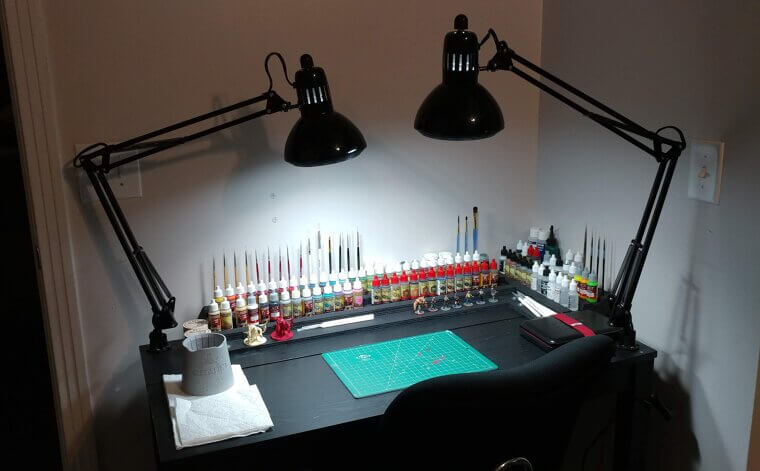
Sarfatti's swing-arm designs for Arredoluce are held by major design museums. When originals surface at auction, European and American collectors compete hard — which tells you everything about which side of 'ridiculous or beautiful' they've landed on.
Knotty Pine Paneling Is Somehow Cool Again
Knotty pine paneling was the mid-century basement's defining aesthetic — tongue-and-groove pine boards, orange-tinted varnish, and a smell somewhere between a ski lodge and a hardware store. For decades, homeowners covered it with drywall without a second thought. Now designers are specifying new knotty pine for accent walls and calling it 'warm modernism.' Whether the original stuff looks ridiculous or surprisingly beautiful turns out to be entirely a function of which decade you're standing in when you form the opinion.
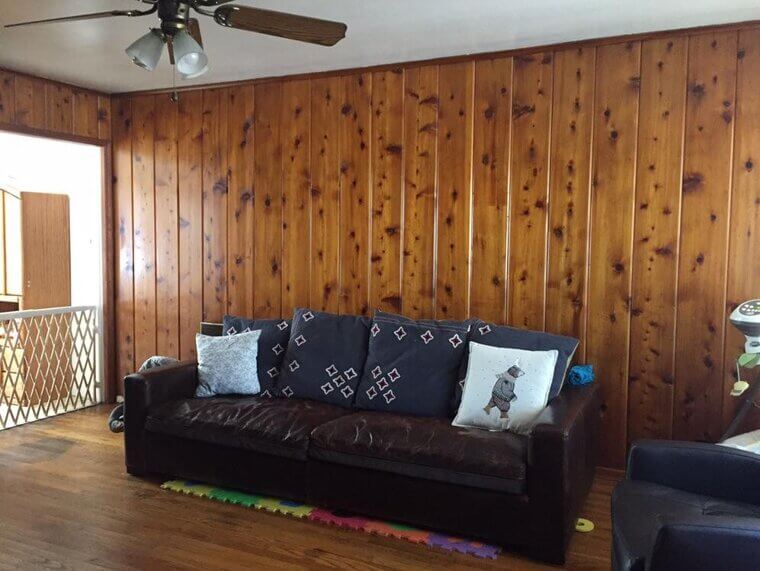
New knotty pine tongue-and-groove paneling runs $2.50–$4.50 per linear foot from lumber yards today. Homeowners are paying new prices to recreate what previous owners paid contractors to demolish. Design cycles are not always rational.
Pastel Formica: Joyful or Just Too Much?
Pink, mint green, butter yellow, coral — and sometimes stamped with boomerang or starburst patterns pressed directly into the surface. 1950s Formica countertops were cheap, cheerful, and aggressively of their moment. Under fluorescent light in a pastel kitchen, the effect was either joyful or overwhelming, depending on your taste. Original Formica in good condition is now actively sought by renovators doing period-accurate restorations, and new old-stock pastel sheets surface at salvage yards and sell quickly at $15–$40 per linear foot.
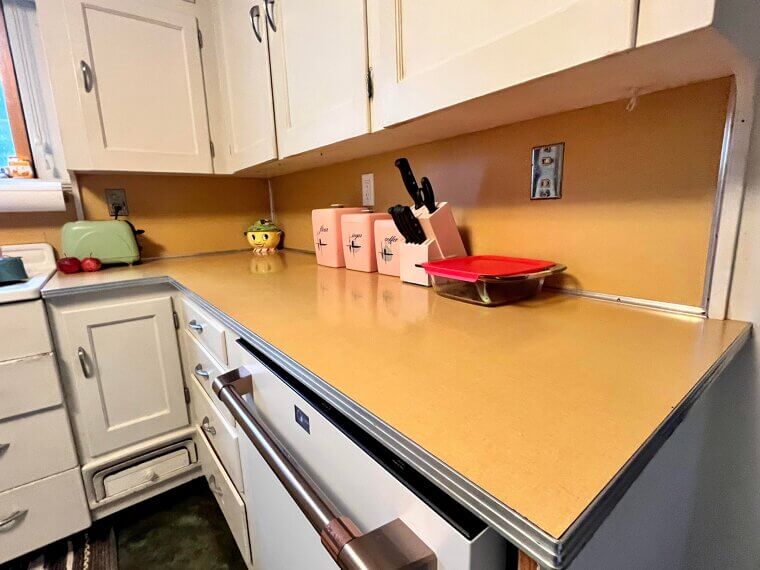
Wilsonart and Formica Group both manufacture reproduction patterns drawn from their 1950s archives. If you want the boomerang print today, you can order it. The fact that people do order it settles the ridiculous-or-beautiful debate fairly decisively.
Remember When Starburst Patterns Covered Your Everyday Dishes
Canonsburg Pottery and Salem China printed starburst patterns across entire dinnerware lines in the late 1950s — concentric rings, radiating lines, electrons orbiting nuclei — and millions of American families ate every meal off them without a second thought. There is something genuinely strange about that intimacy: breakfast cereal in a bowl decorated with atomic imagery, coffee in a mug that looked like a particle accelerator diagram. The graphic is bold enough to read as deliberately modern. The context it came from is unsettling enough to make you look twice.
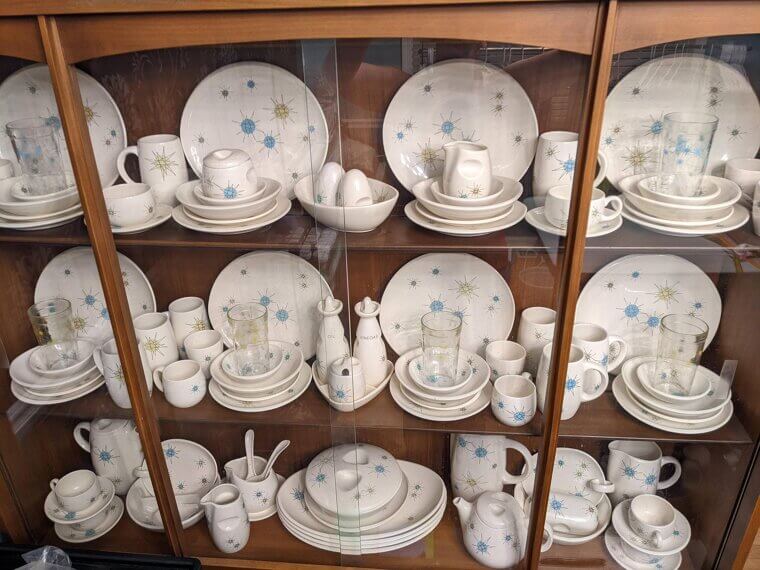
Complete starburst dinnerware services sell for $60–$180. Individual pieces turn up at thrift stores for $3–$8. Eating off them daily, as millions of families did, is either the most casual relationship with nuclear anxiety in American history or proof that good graphic design can make anything feel normal.
Tupperware's Pastel Colors Were Quietly Brilliant
Pastel-colored, semi-translucent, and sealed with a patented 'burping' lid — Tupperware from the early 1950s has a visual quality that hovers between functional object and small sculpture. The colors Brownie Wise used to build her direct-sales empire in the early 50s — pale celery, dusty rose, soft gold — were genuinely considered and are visually coherent in a way that later plastic housewares rarely matched. Whether a cereal set looks ridiculous or surprisingly appealing depends heavily on whether you're seeing it in a landfill or on a design blog.
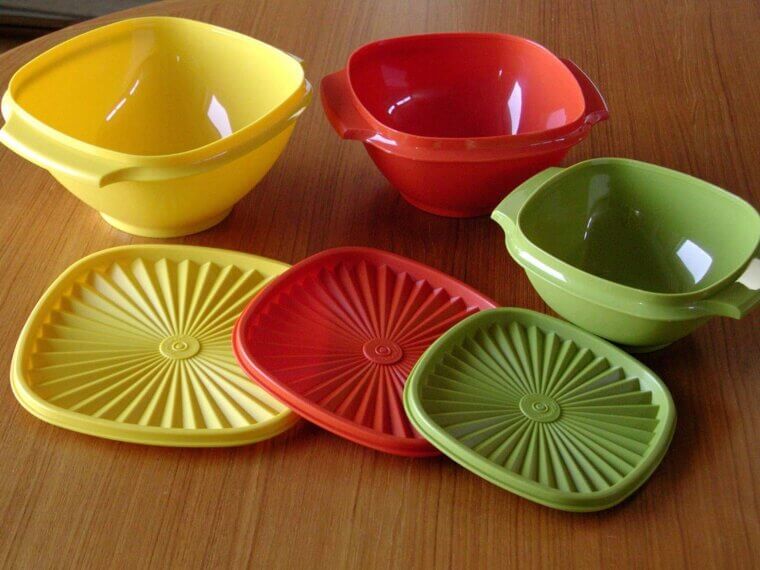
Brownie Wise became the first woman on the cover of Business Week in 1954, then was fired by Tupperware's founder a year later. The containers outlasted the politics. Early production sets in original colors now sell for $40–$150 among collectors.
The Credenza Silhouette Still Can't Be Beaten
Long, low, horizontal, and built in walnut with tapered legs — the mid-century credenza was the dining room's statement piece. A Paul McCobb 'Irwin Collection' credenza for Calvin Furniture sold for $12,000 at a 2023 auction. Even an anonymous well-made example in walnut with original hardware commands $400–$900. The form has a visual logic that holds up completely: its proportions were calibrated for rooms with 8-foot ceilings, which means in virtually any American home, it still reads exactly as intended — grounded, elegant, and slightly serious.
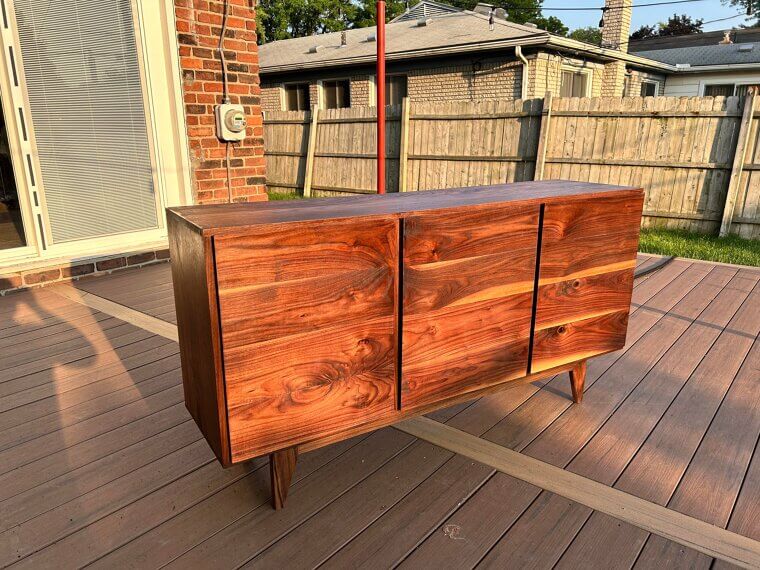
Makers like McCobb, Dunbar, and Widdicomb produced the most visually refined examples. But the credenza's staying power isn't really about provenance — it's about a silhouette that turns out to be nearly impossible to improve on.
Atomic Print Curtains: Cheerful or Unsettling?
Electrons orbiting nuclei. Stylized rockets. Abstract molecular chains. Atomic Age kitchen curtains hung in homes from Pasadena to Pittsburgh, printed on cotton and sold at Woolworth's for a few dollars a panel. Visually, they exist in genuinely uncertain territory — the graphics are flat and bold in a way that reads as almost deliberately modern, but the subject matter is so specific to Cold War anxiety that they're impossible to view without that context. Original atomic print fabric in good condition now sells for $15–$40 per yard at textile dealers.
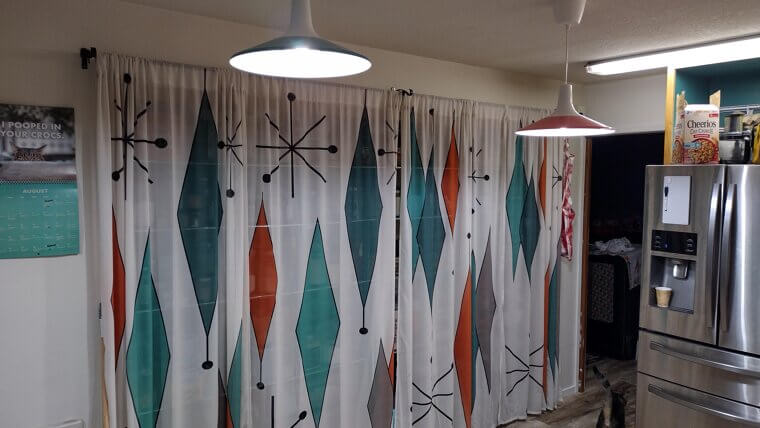
Museum textile collections actively acquire atomic-era printed fabrics as documentation of how Cold War anxiety translated into domestic design. The curtains your grandmother never thought twice about hanging are now behind glass in institutional collections.
Five Million Pink Bathrooms Can't Be Wrong
Five million pink-tiled bathrooms were installed in American homes between 1950 and 1965. Mamie Eisenhower's well-documented love of pink gave the tile industry a cultural permission slip, and suddenly bathrooms coast to coast were floor-to-ceiling pastel ceramic. For decades, homeowners ripped them out without a second thought. Now look at them. Preservationists photograph intact examples like sacred artifacts. Original pink tile bathrooms — four-inch squares, candy-colored grout and all — are listed as selling points in real estate ads. What once screamed dated now reads as a perfectly preserved time capsule.
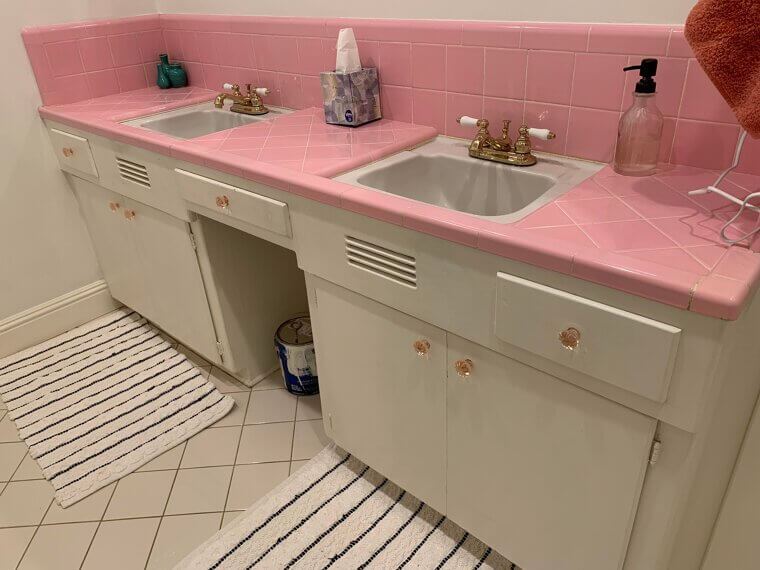
Replacement pink tile in the original 4x4 size is being manufactured again because restoration demand requires it. A bathroom that survived intact is now an asset on the listing sheet, not an apology.
Back When Chintz Fabric Covered Every Living Room Sofa
Chintz fabric — tightly woven glazed cotton printed with oversized florals — covered nearly every sofa and armchair in 1950s American living rooms aspiring to English country house elegance. It was cheerful, relentlessly busy, and visually impossible to ignore. Then the minimalist 90s arrived and chintz became a punchline. Now step back and actually look at a well-preserved chintz sofa from the era: the pattern scale, the sheen, the controlled riot of color. It hit different in person. The fabric made a full comeback around 2018. Original upholstered pieces sell for $300–$700. Schumacher still prints the archive patterns.
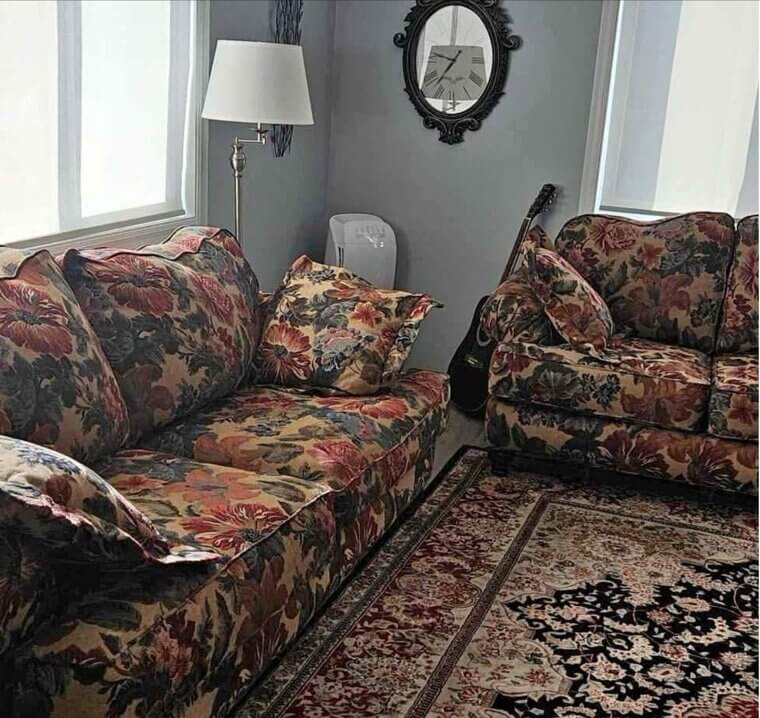
Colefax and Fowler maintain their original 50s chintz designs and print them on demand. A sofa recovered in period-accurate fabric is visually identical to an original — which makes authentication either fascinating or impossible.
The Wringer Washer Looks Like Brutalist Art
The wringer washing machine is one of those objects that looks like pure brutalist sculpture until you realize every element is purely functional. Cast iron frame, two rubber rollers on a steel arm, a heavy-gauge tub — Maytag and Speed Queen built these things to outlast the houses they sat in. Many still work. Fed wet clothes through the wringer and the machine squeezed water out mechanically, no electricity required for that step. Today restored versions sell for $150–$350. They look simultaneously like industrial art and like something that could seriously injure a finger.
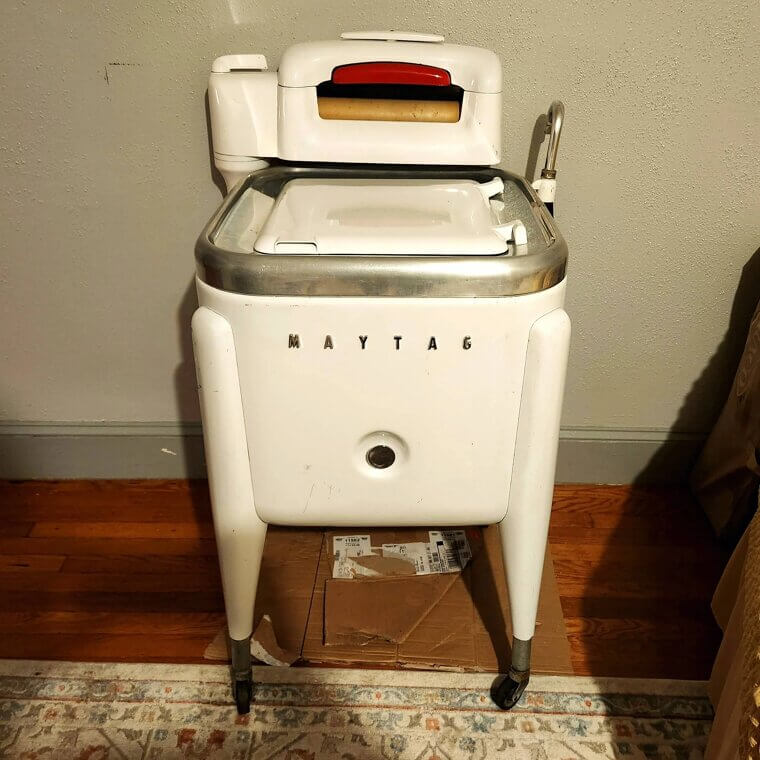
Wringer washers used roughly one-third the water of early automatic machines. That ratio is exactly why off-grid homesteaders still run them daily — and why they keep surfacing at estate sales in working condition.
Dad's Barcalounger Was Better Designed Than You Think
The Barcalounger arrived in American homes in the 1940s and spent the next three decades defining a very specific domestic visual: one man, one chair, absolute sovereignty over the television remote. The reclining mechanism — a linked footrest and backrest moving in one smooth motion — was a genuine engineering achievement dressed in nubby tweed or glossy vinyl. Look at original 50s and 60s models today and the aesthetic is surprisingly confident. Chunky, unapologetically comfortable, built like furniture meant to survive. Restored vintage examples sell for $200–$500. Barcalounger is still in business and has never stopped making them.
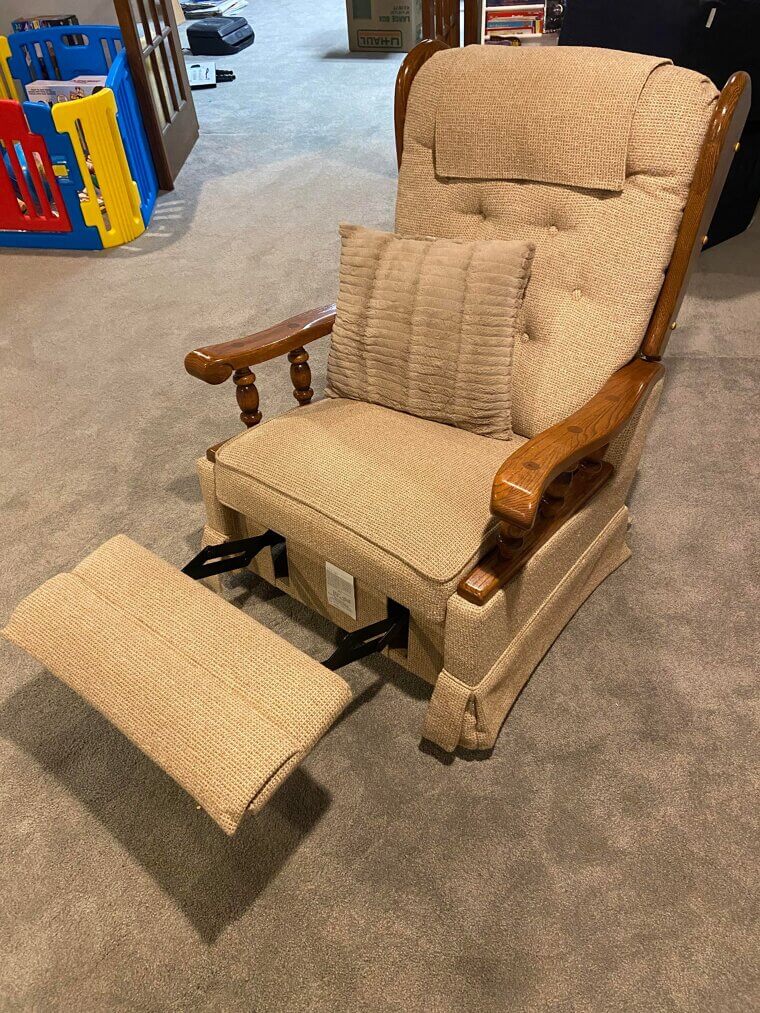
The company's inventor, Edward Knabush, reportedly tested early prototypes by napping in them at lunch. It is hard to argue with that design methodology when you see how many originals are still intact and fully functional.
The Wall-Hidden Ironing Board Was Pure Genius
Built-in ironing boards — the kind recessed into a dedicated wall cabinet in the kitchen or hallway — were standard features in 1950s new construction. Fold it out, press your shirts, fold it back, close the cabinet door. The design was both genuinely clever and visually satisfying: a seamless panel in the wall that opened into a fully functional workspace. Builders installed them by the thousands. Today an intact built-in ironing board cabinet reads as a period detail worth preserving, not removing. Replacement hardware and board surfaces are still manufactured by specialty suppliers for exactly that reason.
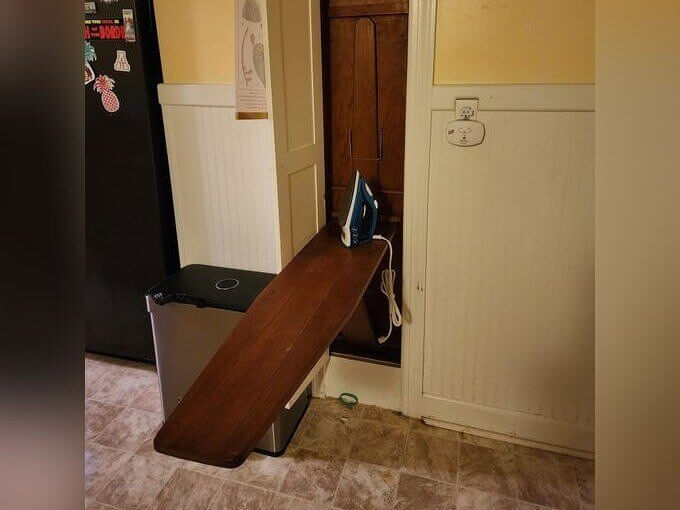
Broan has manufactured built-in ironing board cabinets continuously since the 1950s. A new unit runs $180–$300 installed, which puts the original one hiding in your hallway wall in a different light entirely.
Ceramic Cookie Jar Sat on Every Counter
The ceramic cookie jar occupied prime real estate on the mid-century kitchen counter — and the designs were anything but subtle. American Bisque, Metlox, and McCoy produced barns, smiling pigs, vegetables with faces, cartoon characters, and figures that would never survive a product pitch meeting today. Lined up together, they look like a fever dream of postwar optimism rendered in painted ceramic. Most common examples sell for $25–$60. But rare character jars from limited production runs can hit $300–$800 at specialized auctions. Look at them closely and the craft is genuinely impressive for mass-market objects.
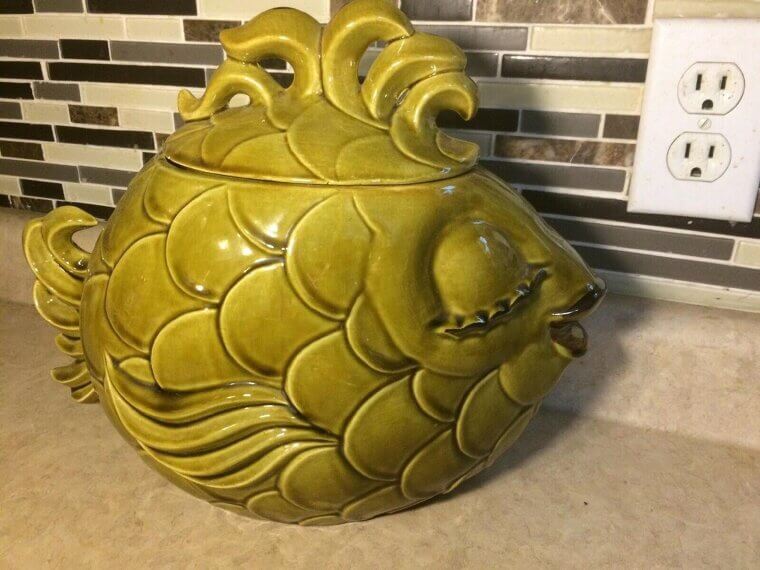
McCoy pottery cookie jars are among the most seriously collected American ceramics. A rare McCoy 'Mammy' jar in excellent condition sold for over $1,000 at a 2022 auction, confirming that the counter ornament was also an investment.
The Eames Rocker Earned Every Dollar
The Eames RAR — Rocking Armchair Rod base — arrived in American living rooms in 1950 and looked like nothing else on earth. Charles and Ray Eames designed a molded fiberglass shell in colors like seafoam green, parchment, and greige, then balanced it on a wire base with wooden rockers. The visual tension between the organic shell and the geometric base is still striking. Herman Miller still makes it. But an original 1950s production piece with intact fiberglass and original base starts at $4,000 in good condition. It earned every dollar of that price just by existing.
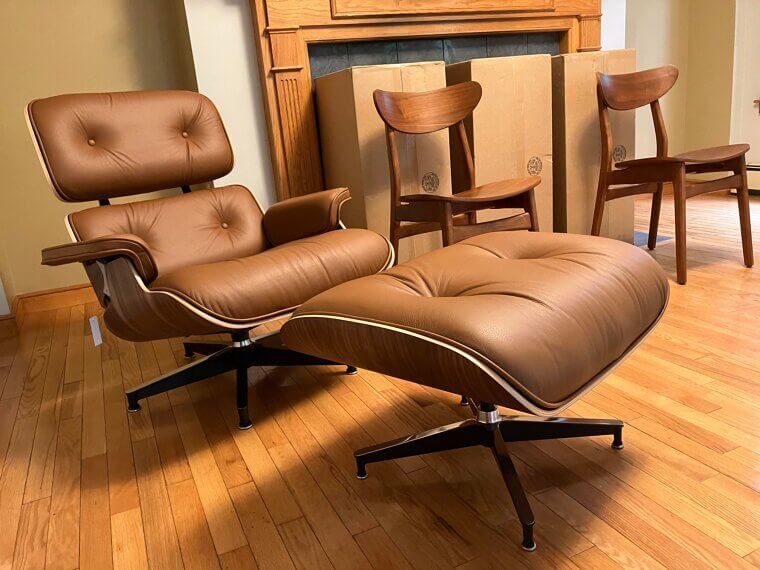
Original fiberglass shells have a slightly different texture and weight than Herman Miller reissues. Serious collectors identify them by touch. That is how visually and physically distinct the originals remain after seven decades.
Macrame Planters Hung in Every Sunny Window
Macrame planters — jute or cotton rope knotted into hanging cradles for spider plants and pothos — filled every sunny window in America through the late 60s and into the 70s. Then they disappeared completely. Then Instagram happened. Look at original handmade vintage macrame in person and the craft detail is striking: complex knot patterns, layered fringe, proportions scaled to hold a serious plant. Natural fiber degrades, so surviving examples are genuinely rare. When they surface at estate sales they sell for $15–$40. New handmade versions from Etsy artisans run $35–$120, proof that the visual appeal never actually left.
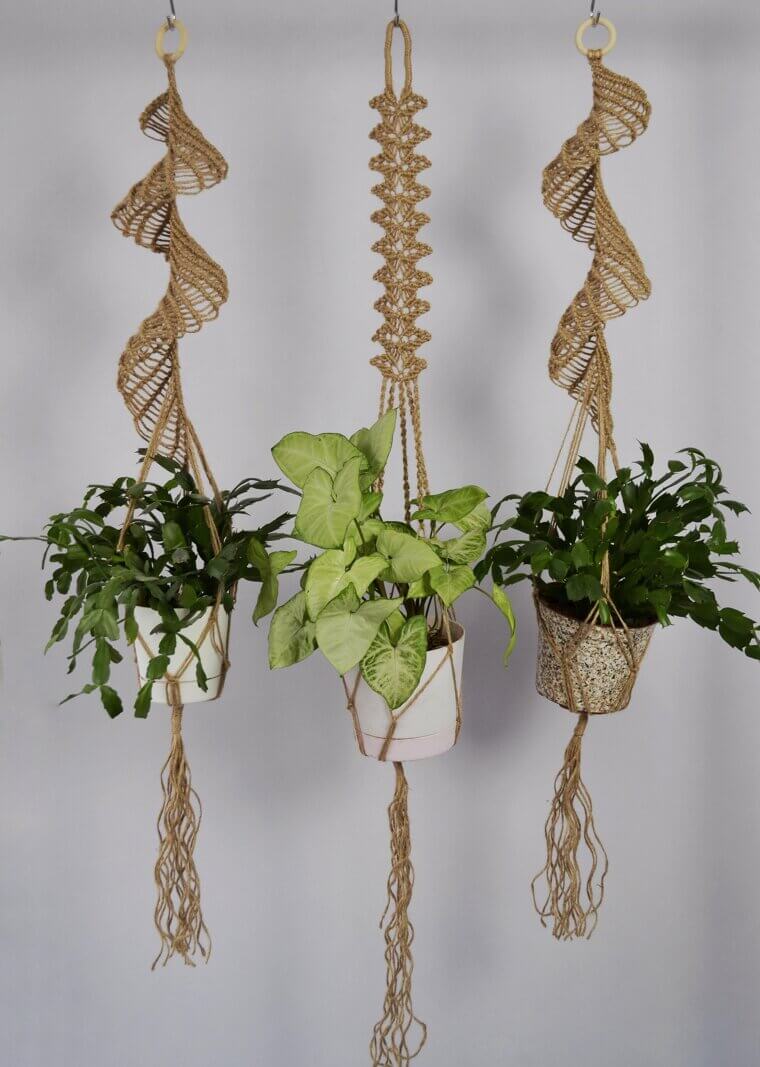
Macrame cord is now consistently among the top-selling DIY supplies at major craft retailers. The revival is not a trend moment — it is a sustained return to something that looked better than people admitted when they threw it out.
Terrazzo Floors Are Buried Under Your Carpet
Terrazzo floors — marble chips, granite, and glass fragments set in cement and polished to a mirror finish — were installed across mid-century homes, schools, and public buildings by the millions of square feet. They were labor-intensive, durable, and visually extraordinary up close: every surface unique, every slab a slow-motion abstract painting. Then wall-to-wall carpet covered most of it in the 60s. Renovation crews are still pulling back carpet today and finding terrazzo in perfect condition underneath. Restoring existing terrazzo costs $3–$8 per square foot. Installing new terrazzo runs $15–$30. The math on preservation is obvious.
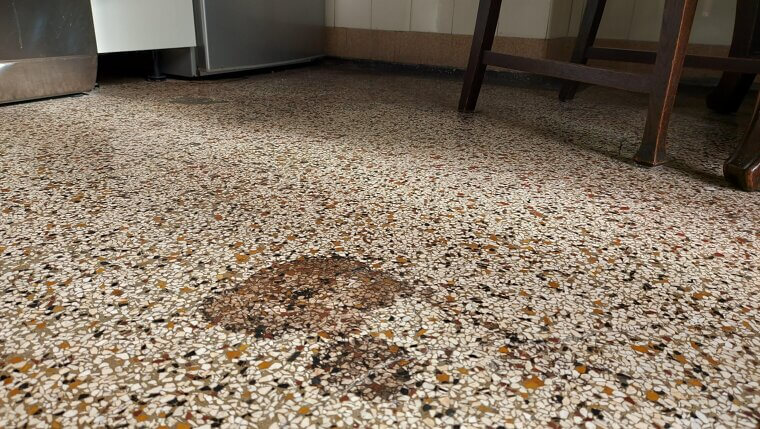
Mid-century restoration specialists describe finding intact terrazzo under carpet as discovering buried treasure. The material has outlasted linoleum, carpet, and laminate — every trend that was supposed to make it obsolete.
Flocked Wallpaper Made Dining Rooms Feel Theatrical
Flocked wallpaper was the boldest visual statement a 1960s dining room could make. Raised velvet-like patterns in deep crimson, forest green, and gold — damask and medallion designs that felt like touching a painting — covered the walls of homes that wanted dinner to feel like an event. It was expensive then. A full roll of original 60s flocked wallpaper costs up to $500 when it surfaces at architectural salvage dealers today. New reproduction flocked wallpaper from specialty manufacturers runs $85–$200 per roll. In a room that survived intact, the effect is genuinely theatrical.
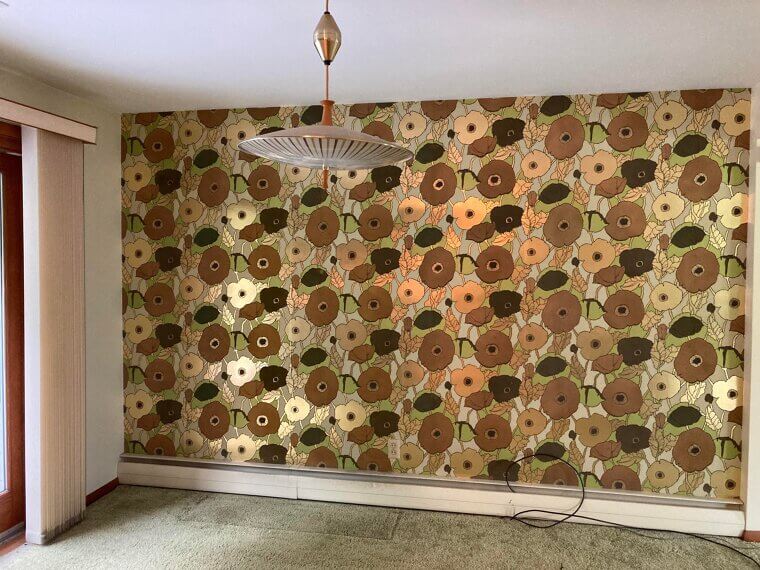
Flocked wallpaper fell so completely out of fashion that most of it was stripped without documentation. Preservation groups now photograph intact rooms before renovation begins, treating them as visual records worth keeping.
Wrought Iron Dividers: Absurd or Architectural?
Few household objects from the mid-century era look as simultaneously ridiculous and striking as a wrought iron room divider. These decorative screens — covered in scrollwork, leaves, or geometric patterns — separated dining areas from living rooms without walls or doors. They were everywhere in the 50s and 60s, sold through department stores and home décor catalogs. Stand one in a modern room today and the reaction is immediate: either it looks absurdly theatrical or breathtakingly architectural. Vintage examples in good condition sell for $120–$350, with large ornate floor-to-ceiling pieces pushing toward $500.
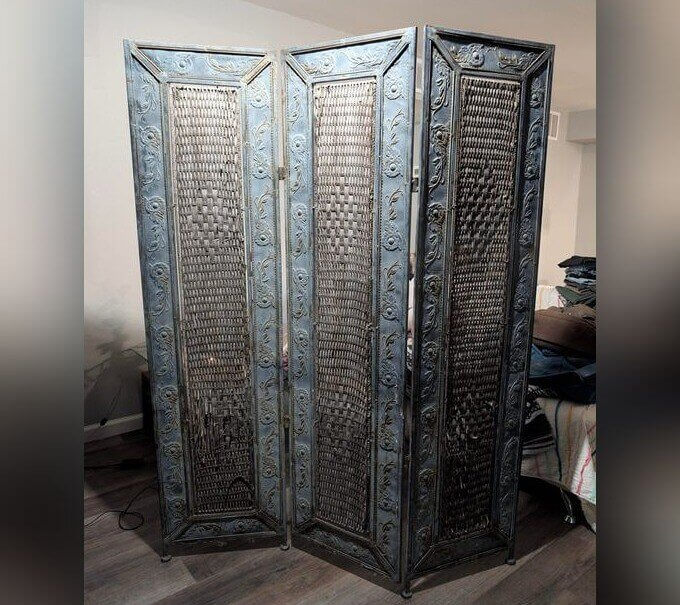
The open metalwork that once seemed fussy now reads as sculpture. Interior designers are actively sourcing vintage wrought iron dividers because the silhouette bridges mid-century character and contemporary minimalism in a way that feels genuinely striking.
Grandma's Braided Rug Was Secretly Beautiful
At first glance, a braided oval rug looks like something your grandmother made from old clothing — because she probably did. These tightly coiled wool, cotton, or synthetic creations were the hardworking floor covering of mid-century homes, warm and practical in equal measure. Department stores sold machine-made versions alongside handcrafted ones. But look closer at a finely made hand-braided wool example in an unusual color combination and something shifts: the pattern is genuinely beautiful, almost hypnotic. Handmade vintage examples sell for $80–$300, with large New England wool pieces pushing toward $600.
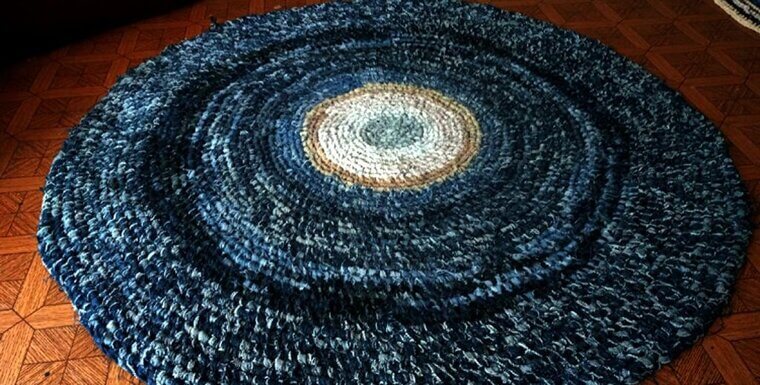
The braided rug tradition stretches back to colonial America but peaked in mainstream popularity during the 50s and 60s. Laid on a wide-plank hardwood floor today, a good vintage example looks less like a relic and more like a considered design choice.
The Sunburst Clock Split the Room in Two
Nothing says mid-century home quite like a sunburst clock on the wall — a small dial at the center, spokes of brass or teak radiating outward like a frozen explosion. They were everywhere in the late 50s. Today, reactions split sharply: some people find the drama completely overwrought, while others see exactly why design museums now display them. Howard Miller made the most coveted versions, with George Nelson designing standout models. A standard sunburst clock sells for $75–$150. A verified George Nelson design for Howard Miller commands $400 to $1,200.
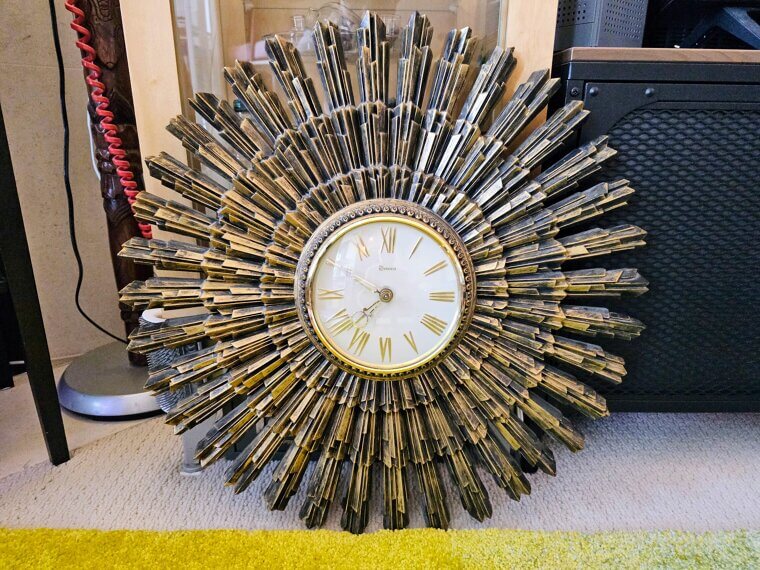
George Nelson's Asterisk and Ball clocks for Howard Miller crossed from household object into design icon status. Original examples with intact spokes appear regularly at major auction houses — proof that what once hung above the sofa now belongs in a gallery.
Back When Harvest Gold Took Over the Entire Kitchen
Walk through a period-accurate 1960s kitchen restoration and the first thing that hits you is the color: Harvest Gold, everywhere, on everything. Refrigerators, ranges, dishwashers, countertop appliances — all in that warm, slightly orange-yellow shade that arrived in the mid-60s and refused to leave for two decades. It outlasted avocado green, outlasted the Brady Bunch, outlasted almost everything. Ridiculous? Some would say absolutely. Surprisingly cohesive when seen all together? Collectors restoring period kitchens clearly think so — complete matched sets sell for $600–$1,500 today.
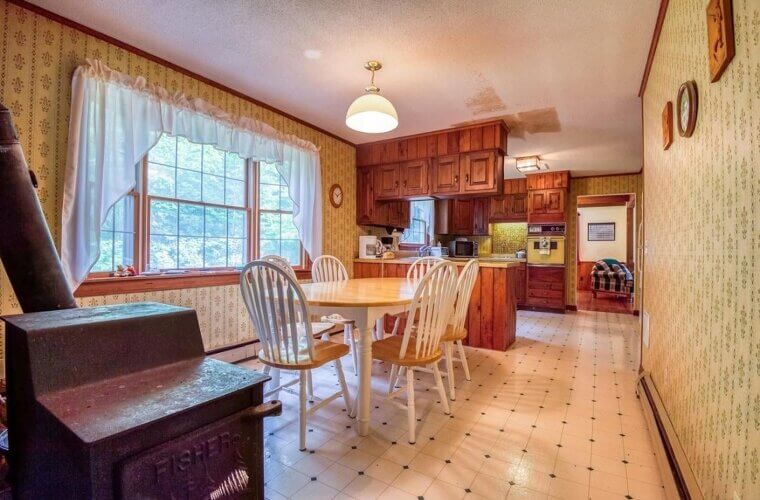
The great paradox of Harvest Gold: every individual appliance looked questionable. Every complete kitchen looked intentional. People spent decades replacing it piece by piece — and now spend serious money putting it back together. The color didn't change. The audience did.
The Sunbeam Mixmaster Sat on Every Counter
The Sunbeam Mixmaster doesn't look like a museum piece — it looks like it belongs on a counter, working. That chrome finish, those clean lines, that motor built to outlast the century: it's both a functional object and an unexpectedly beautiful one. Introduced in 1930 but hitting peak popularity in the 50s, it came with a dozen attachments and was handed down like an heirloom. Stand a clean, working Mixmaster next to a modern stand mixer and the older machine often wins on looks alone. Antique shops sell working examples for $45–$120.
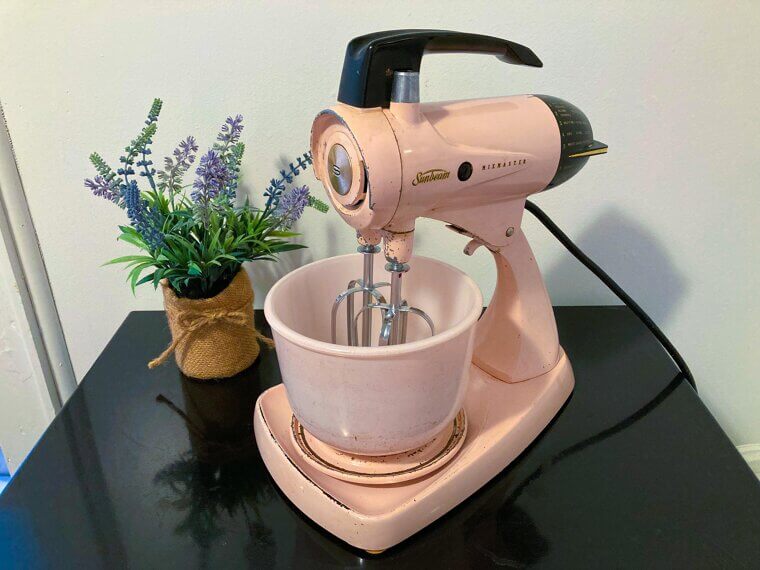
Replacement bowls and beaters are still manufactured, meaning a 60-year-old Mixmaster can be fully restored to working order. The chrome finish on well-kept examples has a depth and warmth that modern brushed stainless simply doesn't replicate.
Hollywood Regency Mirrors Were Pure Theater
Hollywood Regency style was designed to be looked at — hard. Oversized mirrors with sunburst or shell frames in gold leaf dominated the walls of aspirational mid-century homes, and subtlety was never the point. Today, reactions divide predictably: too much gilt, too much theater, too obviously trying. Or: theatrical, commanding, genuinely glamorous in a way nothing produced today quite matches. A large 50s or 60s Hollywood Regency mirror in original gilt finish sells for $400–$1,200. Pieces attributed to decorator Dorothy Draper reach $3,000 to $8,000 at major auction houses.
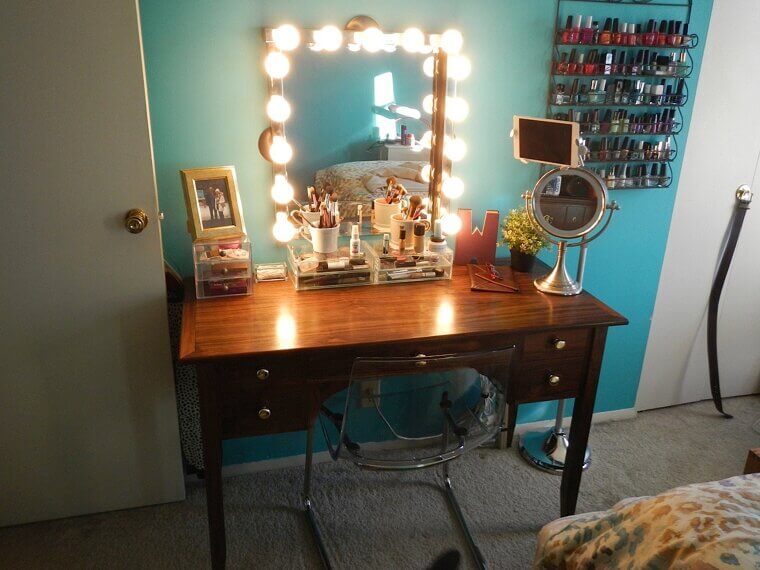
Dorothy Draper's interiors for the Greenbrier resort set the American standard for Hollywood Regency excess. Her authenticated mirror designs are among the most valuable American decorator pieces at auction — objects that once seemed over the top now seem visionary.
Shag Carpet So Deep Your Feet Vanished
The image is hard to forget once you've seen it: a living room floor buried under three inches of rust-orange or harvest gold carpet so thick that feet simply disappeared. Shag carpet arrived in American homes in the late 50s and held on for two full decades. Ridiculous? Many homeowners in the 1980s thought so and ripped it out without hesitation. Surprisingly beautiful? Interior designers specifying high-pile wool shag for modern spaces clearly see something worth revisiting. Vintage shag remnants in good condition still sell at estate sales for unexpectedly strong prices.
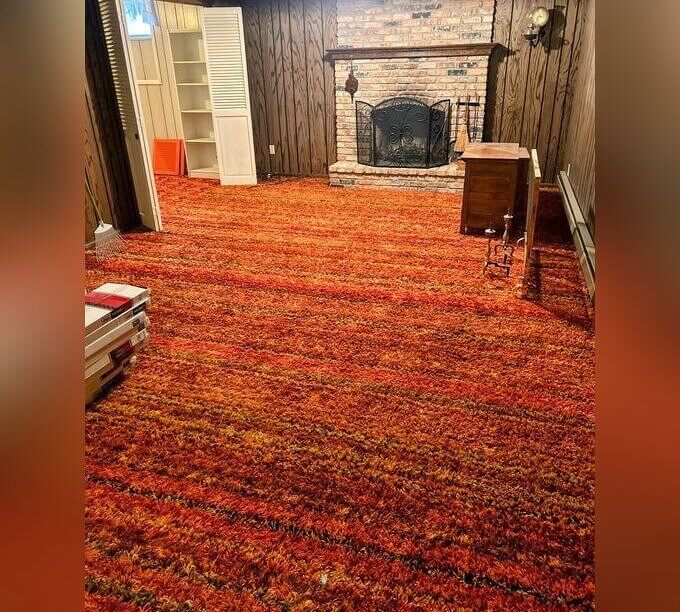
New shag carpet styled after 60s originals now runs $8–$20 per square foot from specialty retailers. The great irony of mid-century design: the things that looked the most dated in 1985 tend to look the most striking in 2024.
Boomerang Patterns: Kitsch or Confident Design?
The boomerang print looks almost aggressively of its moment — those kidney curves and abstract atomic shapes lifted straight from 1950s optimism, plastered across Formica tabletops, upholstery, and laminate furniture surfaces. At first glance it reads as pure period kitsch. Look longer and something else emerges: a confident graphic boldness that most contemporary furniture completely lacks. Coffee tables and side tables with boomerang-print laminate tops are among the most sought-after pieces in mid-century collecting today. Clean examples with original legs sell for $180–$450; even damaged pieces get snapped up by restorers.
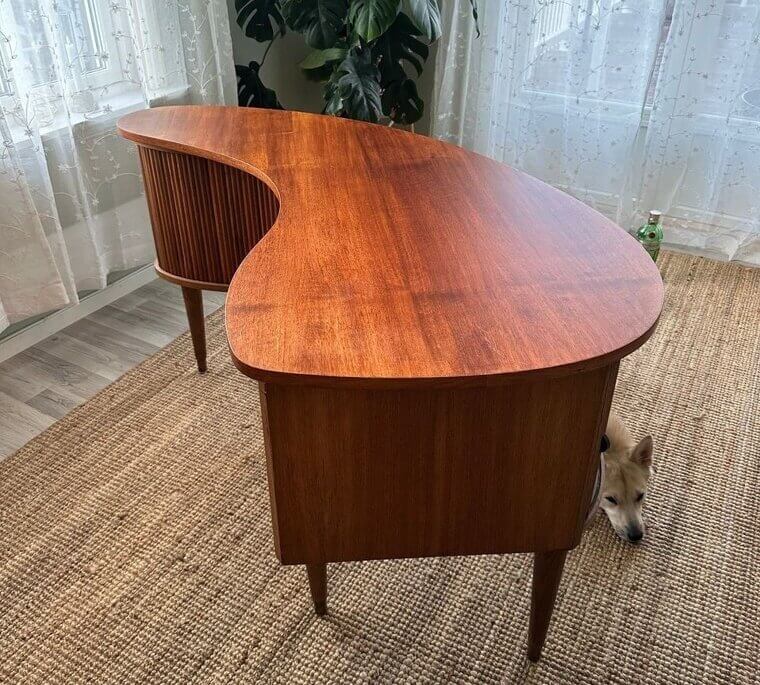
The boomerang shape borrowed its forward-curving optimism directly from post-war design culture. Sixty years later, that same graphic confidence reads less as dated pattern and more as exactly the kind of visual statement modern interiors tend to lack.
This 1950s Toaster Outlasted Everything Since
The Toastmaster pop-up toaster from the 50s looks exactly like what a toaster should look like — and that might be the problem with everything made since. Chrome body, clean horizontal lines, a mechanism engineered with enough precision that many examples still run in daily use today. Introduced in the 1920s and perfected through the 50s, it became the standard by which all other toasters were judged. Ridiculous that a toaster could be beautiful? Set a clean 1B14 model on a counter and reconsider. Working 50s examples in original chrome sell for $35–$85.
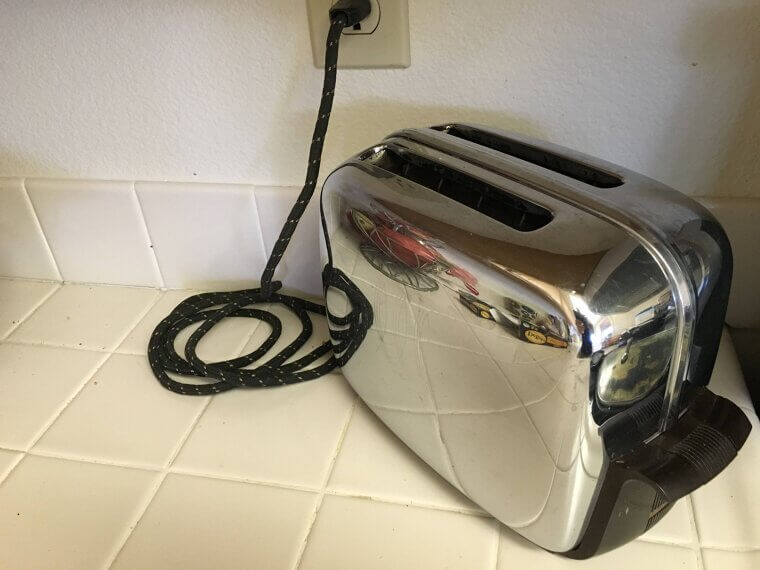
Toastmaster's engineering was so sound its patents shaped the entire toaster industry. The 1B14 model's art deco styling consistently commands the highest prices — because it turns out a kitchen appliance can have genuine visual presence.
The Kidney-Shaped Vanity Divides Everyonee
The kidney-shaped vanity dressing table might be the most visually polarizing piece of furniture the 50s produced. That soft organic silhouette, the trifold mirror, the padded stool, the surface loaded with perfume bottles and powder puffs — it either looks like an elaborate daily ritual given physical form, or like a prop from a fever dream. Well-appointed mid-century bedrooms considered it essential. Mahogany and walnut versions with original mirrors and matching stools sell for $250–$600 at auction today. The kidney shape specifically has graduated from furniture to collector's object.
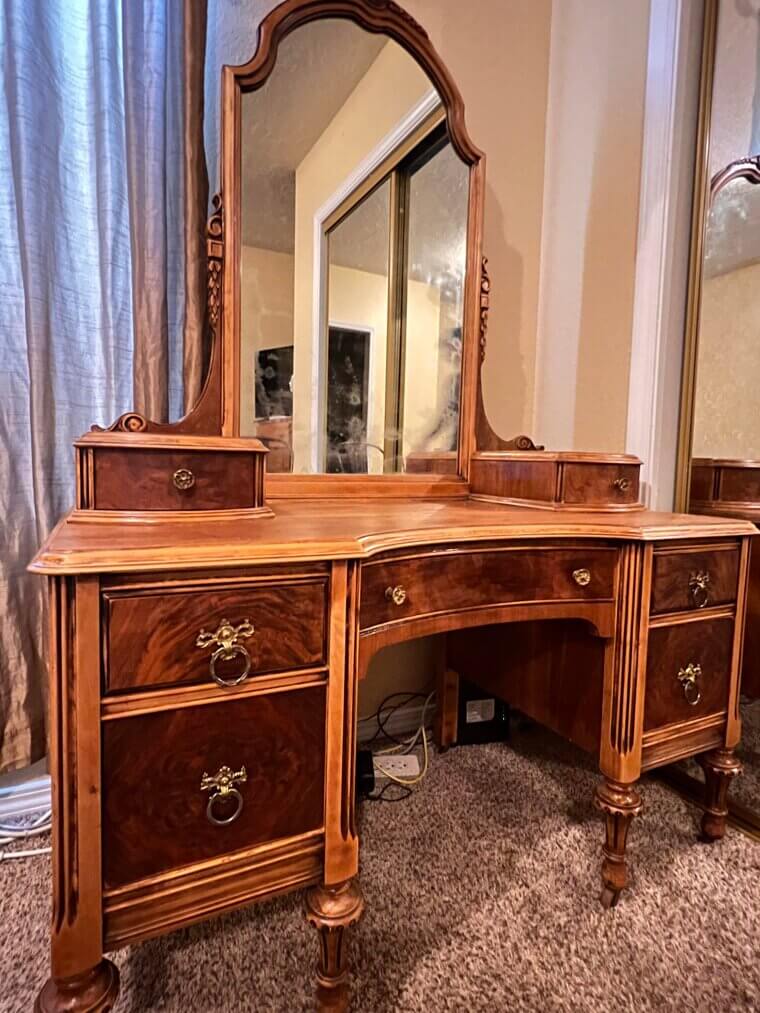
Reproductions of the kidney-shaped vanity now sell for $400 or more new — which means original vintage pieces in good condition are often the better deal and the more visually interesting one, with a warmth no reproduction quite captures.
Venetian Blinds Created Film Noir's Signature Look
Few household details photograph more dramatically than the shadow of Venetian blinds cutting across a sunlit wall. Those horizontal aluminum slats — cord-and-pulley, adjustable, endlessly clackable in a breeze — hung on virtually every window in mid-century America. Today they look either laughably dated or impossibly cinematic depending on the room. The visual effect they produce, that bold striped light, is so iconic that cinematographers still request them by name when shooting 1950s period pieces. Specialty window treatment companies now sell reproduction aluminum Venetian blinds in period-accurate widths and colors for $80–$200 per window.
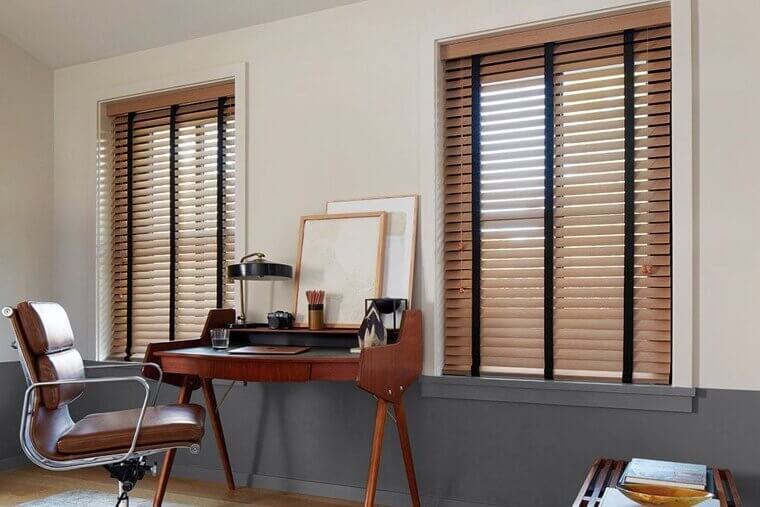
That striped shadow pattern became the defining visual shorthand for noir atmosphere in American film. What started as a budget window treatment accidentally created one of cinema's most recognizable lighting signatures — still requested on set today.
The Pole Lamp: Space-Age Clutter or Sculpture?
The pole lamp — a spring-tensioned floor-to-ceiling rod sprouting two or three adjustable lamp heads — has a look that divides people sharply. Ridiculous space-age clutter, or a genuinely elegant no-drill lighting solution? Sold by the millions through Sears and Montgomery Ward catalogs in gold, brass, and walnut finishes, these lamps filled mid-century corners from coast to coast. Visually, they were sculptural in an almost accidental way. Vintage examples with original shades sell for $45–$120 today, while versions with fiberglass or pleated fabric shades photograph particularly well and push considerably higher.
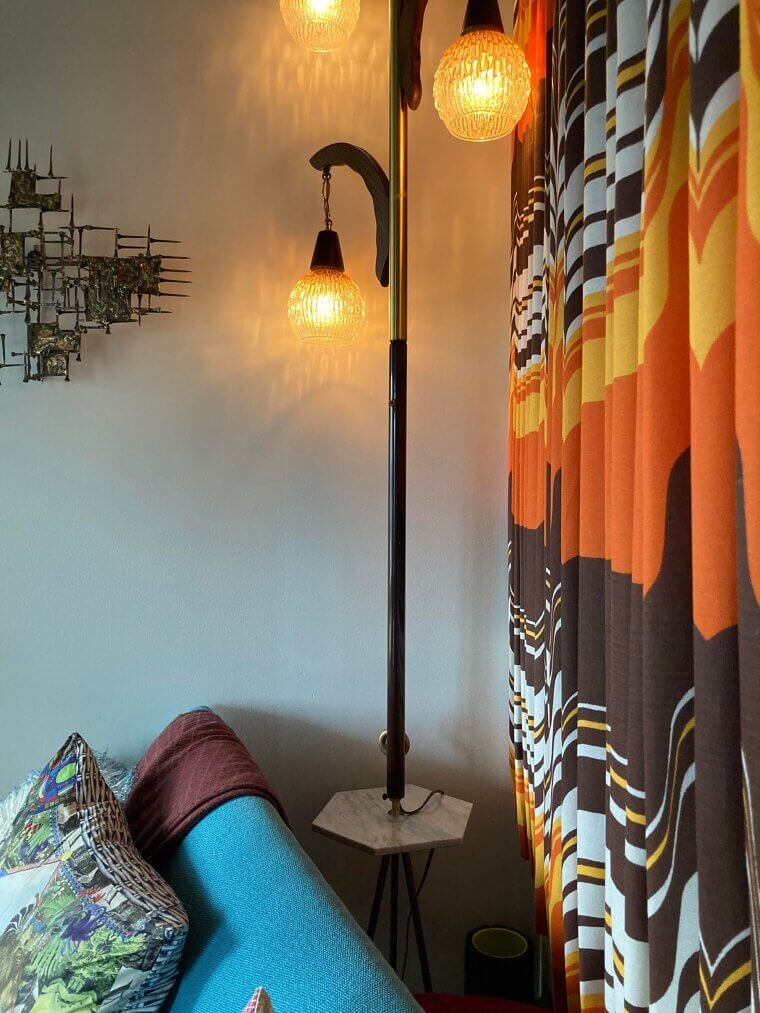
The pole lamp is one of the few mid-century objects that looks simultaneously absurd and completely at home in a modern interior depending entirely on context. Same lamp, different room — completely different verdict. That tension is exactly what makes them compelling.
The Lazy Susan Never Needed a Comeback
A spinning tray in the center of a dinner table sounds almost comically simple, but the lazy Susan was a genuine visual and functional statement in mid-century homes. They came in wood, chrome, glass, and Bakelite, and the better ones — especially inlaid wood versions with marquetry patterns — were genuinely beautiful objects in their own right. Built-in lazy Susans in dining room tables are now considered desirable period features. Standalone vintage examples sell for $15–$60 depending on material and condition. The ornate ones stop people mid-estate-sale to look twice.
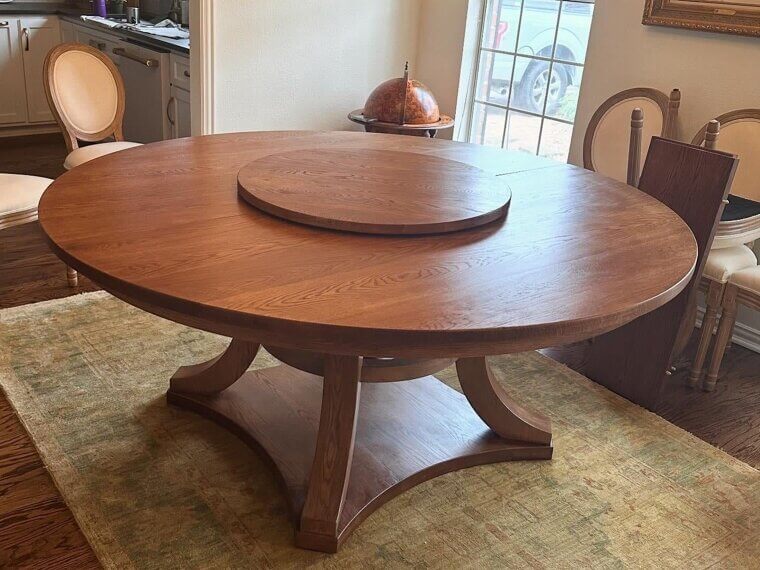
Of all the mid-century kitchen objects that have cycled through ridicule and revival, the lazy Susan never needed either. It just kept spinning, decade after decade, looking exactly as good — or as wonderfully odd — as it always did.
Avocado Green Went From Punchline to Comeback
Avocado green was not a subtle color choice. Someone in the late 1950s decided it belonged on refrigerators, stoves, dishwashers, and blenders — and the entire appliance industry agreed for the better part of two decades. Walking into a fully avocado kitchen today produces a reaction that sits somewhere between laughter and genuine admiration. Restoration Hardware and boutique appliance brands have released modern appliances in retro green colorways specifically chasing that visual, which suggests the color landed somewhere unexpected: timeless. A vintage avocado Westinghouse refrigerator in working condition now brings $400–$800 from mid-century modern enthusiasts.
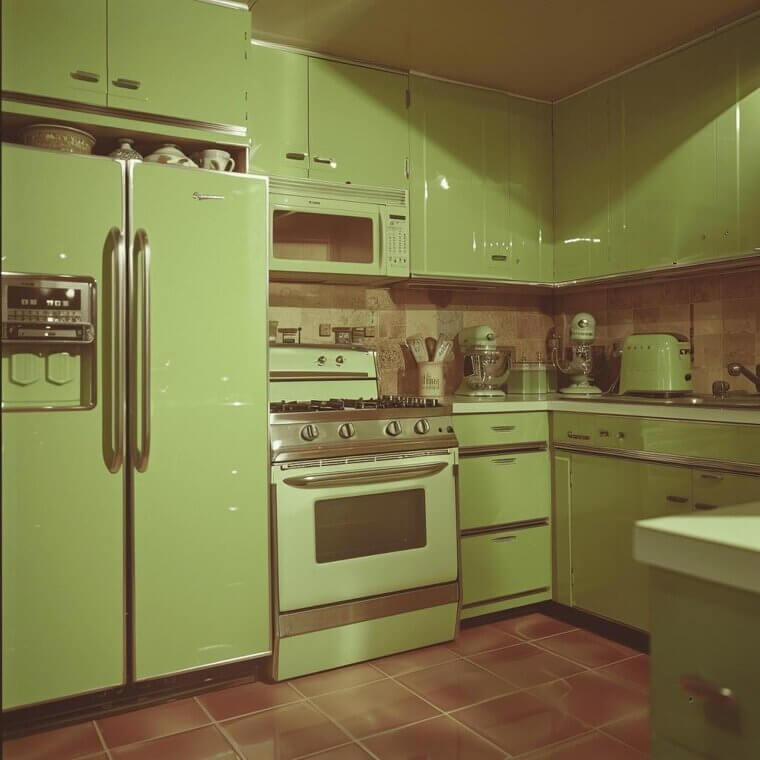
What was genuinely mocked for decades as the ugliest color in American kitchen history is now being deliberately recreated by premium appliance brands. Avocado green went from punchline to design statement without changing a single shade.
A Pegboard Tool Wall Is Secretly Beautiful
A well-organized pegboard tool wall is one of those things that looks completely ordinary until you actually look at it — and then it becomes strangely beautiful. Popularized in the 1950s after Masonite began mass-producing perforated hardboard, the pegboard wall let homeowners display every tool in plain sight, some families even tracing outlines of each tool in marker so every empty hook told a story. The visual result, rows of tools in perfect silhouette, has a graphic quality that designers and photographers now specifically seek out. A period-accurate garage pegboard setup, it turns out, photographs beautifully enough to sell houses.
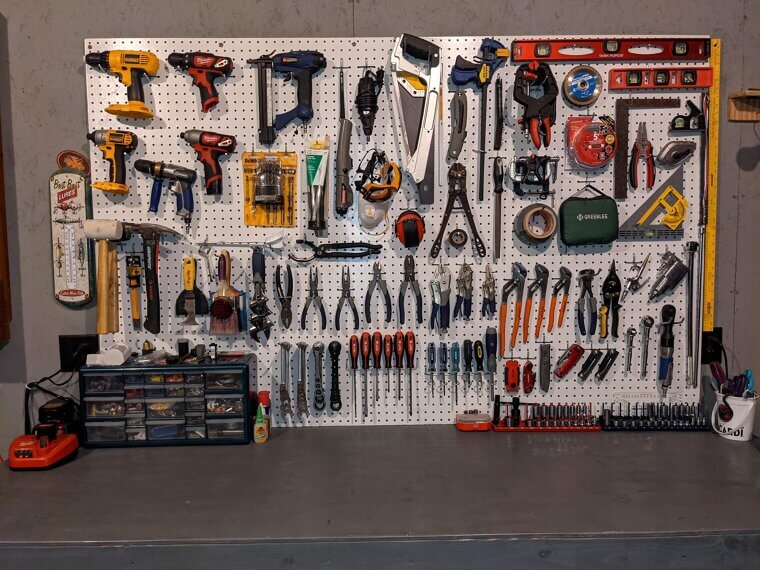
Stanley and Craftsman both sold branded pegboard hook sets in illustrated 1950s packaging that is now collectible on its own. The hooks go for a few dollars each. The original boxes sell for $20–$45. The wall they built? Priceless to the right buyer.
Hobnail Glass Lamps Cast an Unforgettable Glow
Hobnail glass — that raised-dot texture covering lamp bases, vases, and pitchers in mid-century homes — produces a quality of light that is almost impossible to replicate artificially. Fenton Art Glass made the most beloved hobnail pieces, and their white milk glass hobnail lamps glowed on nightstands across 1950s and 60s America with a warm, diffused light that looks achingly beautiful in photographs. A matching pair with original shades sells for $80–$200. Rare colored hobnail glass in cranberry or blue opalescent pushes individual pieces to $150–$400 — and looks almost nothing like something you'd call dated.
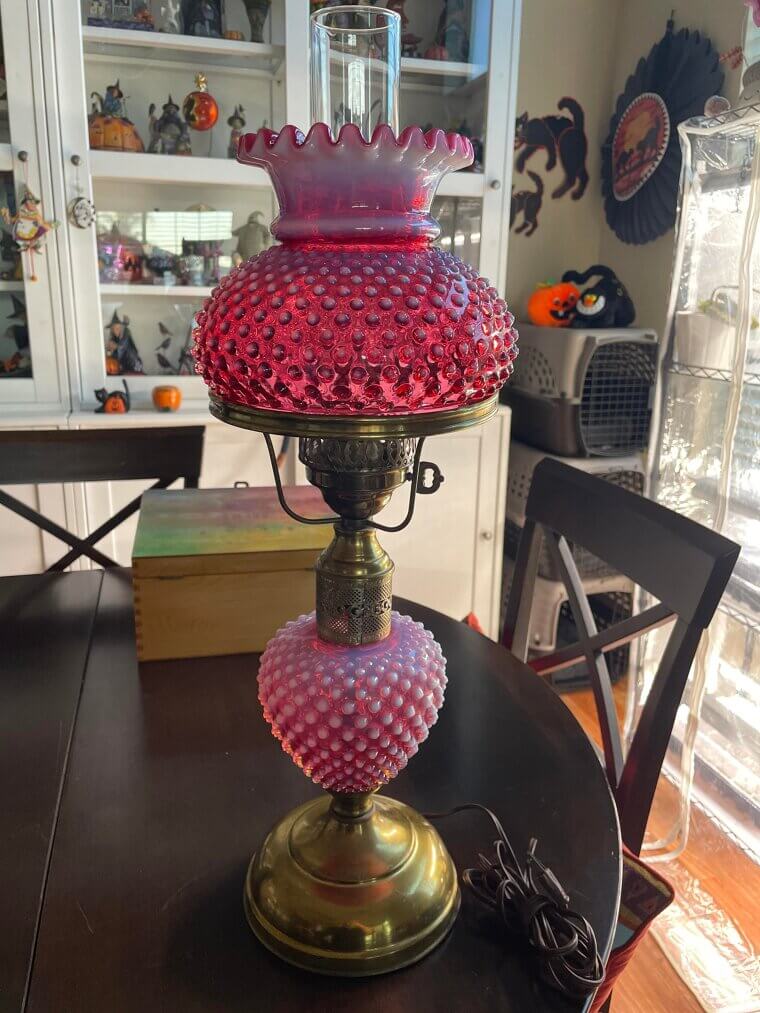
Fenton Art Glass closed in 2011 after 106 years of production. Collectors who had pieces in their homes suddenly understood they were looking at a finite visual legacy — and prices moved accordingly. The light those lamps cast has no modern substitute.
Matching Bedroom Sets: Overwhelming or Magnificent?
Walk into a bedroom furnished with a complete mid-century matched suite — headboard, dresser, mirror, nightstands all in the same walnut finish — and the visual effect is either overwhelming or magnificent. Bassett, Broyhill, and Drexel dominated this world, building from solid wood and real veneer that has survived decades in ways particleboard never could. A complete Drexel Heritage bedroom set with all original hardware sells for $800–$2,500 today. Broyhill's Brasilia line, with its sculptural carved headboards, photographs so dramatically that it has become one of the most actively collected mid-century bedroom suites in America.
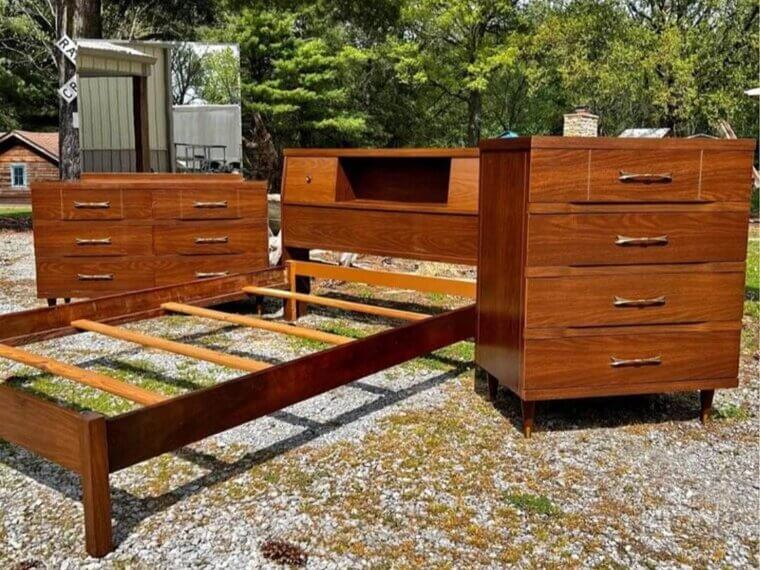
Broyhill's Brasilia line features headboards carved with an almost architectural boldness that looks either magnificently dramatic or wildly excessive depending entirely on your tolerance for statement furniture. Complete suites in excellent condition command serious premiums — and serious attention.
The Davenport Was Every Living Room's Workhorse
The Davenport sofa bed was a visual object of almost aggressive practicality — large, overstuffed, convertible, and built for a postwar America that needed guest rooms it didn't have. The name became so universal that millions of Americans used it generically, the way 'Kleenex' replaced 'tissue.' Whether the Davenport looks ridiculous or impressively substantial today depends on the reupholstery. Original 1950s frames with intact fold-out mechanisms and fresh fabric sell for $250–$600. The working mechanism is the key value factor — and, visually, nothing dates a piece faster than a broken fold-out bed frame.
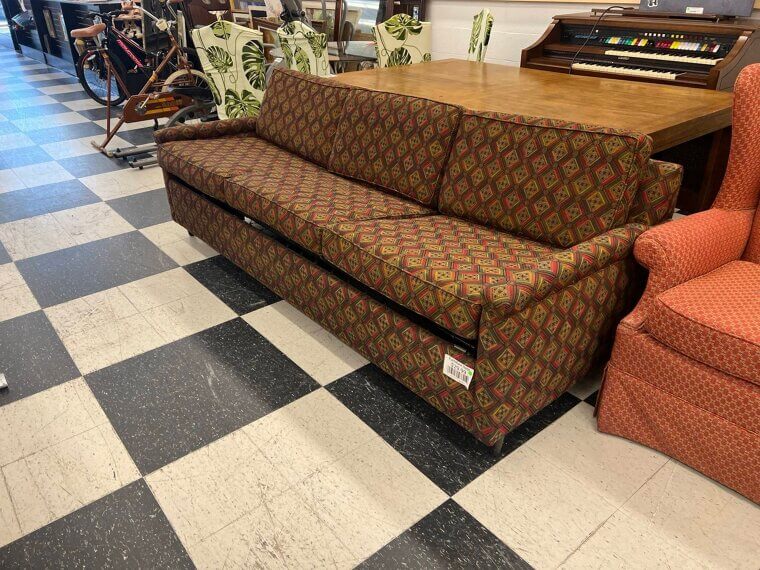
The word 'davenport' as a synonym for sofa survives almost exclusively in the Midwest, where linguists have tracked its use as a map of mid-century furniture retail patterns. The object it named is rarer now. The visual bulk it brought to living rooms is genuinely hard to recreate.
Milk Glass Glows Like Nothing Made Today
Milk glass — opaque, slightly translucent, pressed into vases, candy dishes, lamp bases, and compotes — filled mid-century shelves with a color that was somewhere between white and light itself. Fenton Art Glass and Anchor Hocking produced the most recognizable pieces, and arranged on a windowsill, milk glass glows in natural light in a way that photographs beautifully and looks genuinely lovely in person. Most pieces still sell for just $5–$25 at thrift stores and estate sales. But rare colored examples in pink or black, and large centerpiece pieces like Fenton epergnes, can reach $150–$320 at auction.
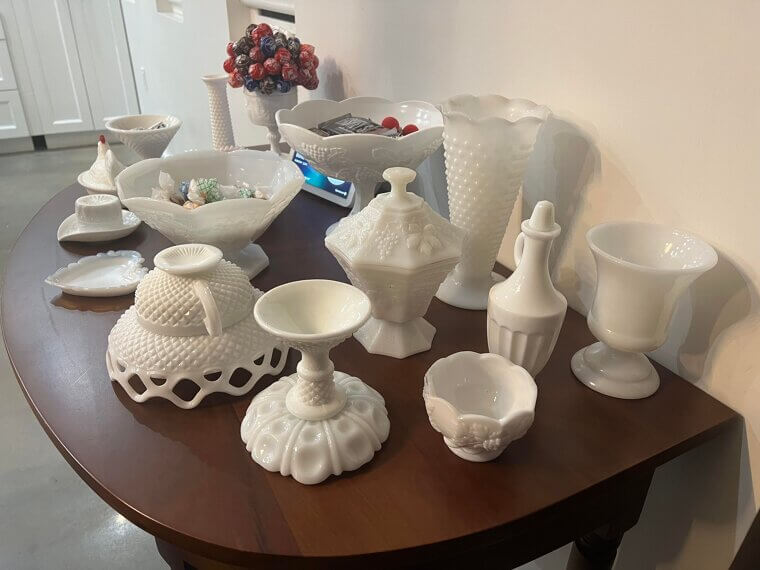
A Fenton milk glass epergne — a multi-arm centerpiece piece — sold at a 2023 auction for $320. Visually, it looks like something designed yesterday. Knowing the makers and molds is the difference between a five-dollar find and a three-hundred-dollar statement piece.
Back When Fiesta Ware Brightened Every Table Setting
Fiesta Ware's visual identity is almost violent in its cheerfulness — those saturated solid colors stacked on open shelves still stop people in their tracks. Introduced by Homer Laughlin in 1936, discontinued in 1973, and relaunched in 1986, the original production run achieved its iconic red-orange color using uranium oxide in the glaze. The visual result is beautiful. The fact that original red pieces register on a Geiger counter makes them extraordinary. A full original service for eight in mixed colors sells for $300–$600 today, with original red pieces commanding a specific premium for the uranium glaze alone.
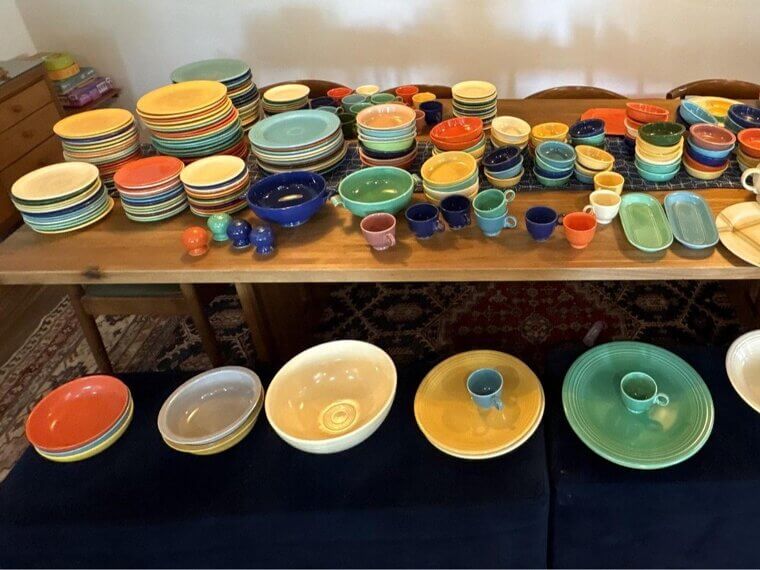
Homer Laughlin still manufactures Fiesta Ware today in dozens of colors, but collectors draw a hard visual and material line between pre-1973 originals and post-1986 reissues. The weight, glaze texture, and depth of color are all measurably different — and the difference shows.